Art galleries
Artist-led galleries are building a more generous exhibition culture.
Artist-led galleries offer a distinct kind of hospitality: one built around shared risk, conversation, and the conviction that exhibition-making can remain close to its makers.
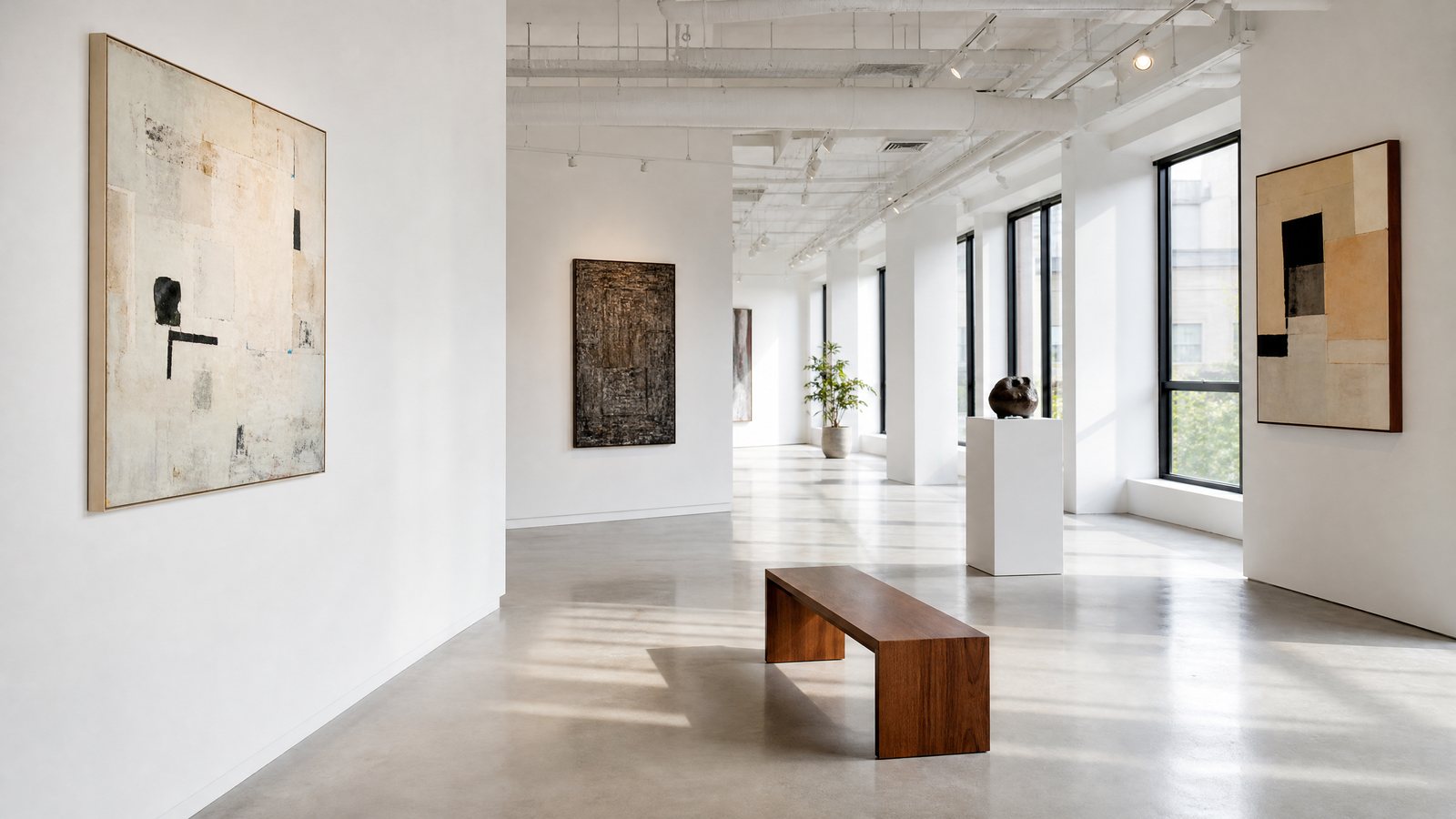
Artist-led spaces often begin with a room that needs imagining into use. These are frequently modest settings—former storefronts, industrial units, or spare rooms—that require architectural optimism to function. The transformation is rarely about hiding the history of the space; instead, it involves a negotiation between the structure and the new demands of showing art. A scuffed floor or an exposed beam is treated as a reminder of the room’s working life. This physical groundedness sets the tone, signaling that the gallery is a living extension of the studio. In these environments, exhibition-making is stripped of corporate veneer, allowing the raw intent of the artist to occupy the center. By embracing the idiosyncrasies of their locations, artist-led galleries create an atmosphere where the architecture participates in the dialogue rather than merely containing it.
The curatorial philosophy within these spaces is shaped by the fact that the organizers are makers themselves. When an artist takes on the role of a curator, decisions about hanging and lighting are informed by a deep understanding of the creative process. This leads to exhibition-making that is precise without being polished into a generic sameness. There is a tangible respect for the materiality of the work, as the person arranging the room knows the struggle of the medium. This proximity allows for an intuitive approach to display, where the layout can evolve in response to the work rather than forcing it to fit an institutional template. The result is a presentation that feels authentically connected to the artist’s vision, offering a clarity of intent often lost in traditional settings.
At the heart of the artist-led model is a distinct kind of hospitality built around shared risk. In a commercial gallery, the exhibition is often presented as a finished statement. In contrast, an artist-run space acknowledges that every show is an experiment—a gamble taken by both the maker and the gallery. This transparency creates a welcoming environment for visitors, as the pressure to perform expertise is removed. The gallery becomes a site where the artist and the audience meet on equal footing, united by a shared curiosity about what the work might do. This hospitality is not about providing luxury, but about offering a space where uncertainty is treated as a productive force. By inviting the public into this zone of experimentation, the gallery fosters a deeper, more honest connection between the art and its viewers.
The most generous galleries make room for unfinished ideas alongside completed works. While the traditional art world prioritizes the polished object, artist-led spaces recognize that the process of thinking is as valuable as the result. An exhibition might include sketches, failed attempts, or works in flux, providing a rare window into the labor of creation. This approach demystifies the artistic process, showing that art is not the result of a sudden stroke of genius but the product of patient, often messy, iteration. By valuing the "unfinished," these galleries encourage a different kind of looking—one attentive to the marks and revisions that define a work’s history. This creates an inclusive culture where the viewer is invited to consider the potential of an idea rather than just its finality.
The audience in an artist-led space is rarely a passive consumer; instead, they are invited into a conversation. The strongest examples of these galleries create real encounters between artists, neighbors, and regular visitors, turning the exhibition into a social catalyst. The scale of these spaces facilitates direct interaction, where the maker might be the same person who greets you at the door. This lack of distance transforms the gallery into a "third place"—a civic room that is neither home nor work, but a site for communal gathering. The conversation that begins in front of a painting often spills out into the street, connecting the gallery to the broader life of the neighborhood. In this way, the artist-led space functions as a vital piece of social infrastructure, providing a platform for dialogue that is free and local.
Resisting the urge to conform to professional polish allows artist-led galleries to maintain a sense of experimentation. In many larger institutions, the need to appeal to broad audiences can lead to a safe, predictable program. Artist-run spaces, however, operate with an independence that allows them to take significant aesthetic and conceptual risks. They can host exhibitions that are challenging or overtly political without the fear of institutional blowback. This freedom is essential for the health of the broader artistic ecosystem, as it provides a testing ground for new ideas that may eventually find their way into the mainstream. The "lack of finish" that characterizes these spaces is not a sign of amateurism but a choice to prioritize the vitality of the idea over the perfection of the presentation. It is a reminder that art is at its most potent when it is allowed to be raw.
A gallery of this nature is not only a place where art is shown; it is a place where a local culture learns what it can become. By providing a platform for emerging voices and unconventional practices, these spaces help to define the identity of the community they inhabit. They offer a sense of agency to local artists, showing them that they have the power to create their own structures rather than waiting for external validation. This grassroots energy is contagious, often inspiring other local initiatives and contributing to the vibrancy of the area. The gallery becomes a repository for local stories and a site for the collective imagination, helping to build a cultural legacy rooted in the specificities of the place. In an increasingly globalized world, the local focus of artist-led spaces provides a necessary counterweight, celebrating the unique perspectives that can only emerge from a specific neighborhood.
Ultimately, the legacy of an artist-led gallery is measured not by its longevity but by the quality of the connections it fosters. Even if a space only exists for a few years, the impact it has on the artists and the people who visited can be profound. It leaves behind a network of relationships and a strengthened conviction that culture is something we build together. The model of the artist-led space is a powerful argument for the importance of self-organization and the value of keeping exhibition-making close to its makers. It reminds us that the most meaningful cultural experiences are often those that are the most human in scale—built on trust, conversation, and a willingness to take risks. As long as there are rooms that need imagining into use and artists who are willing to share the labor of curation, the artist-led gallery will remain a vital and generous part of our cultural landscape.