Art galleries
Slow looking is giving contemporary art back its texture.
Slow looking is not a test of patience but a practical method for revealing the physical history of an artwork. By resisting the urge for immediate explanation, the gallery allows the eye to discover the textures and revisions that a glance misses.
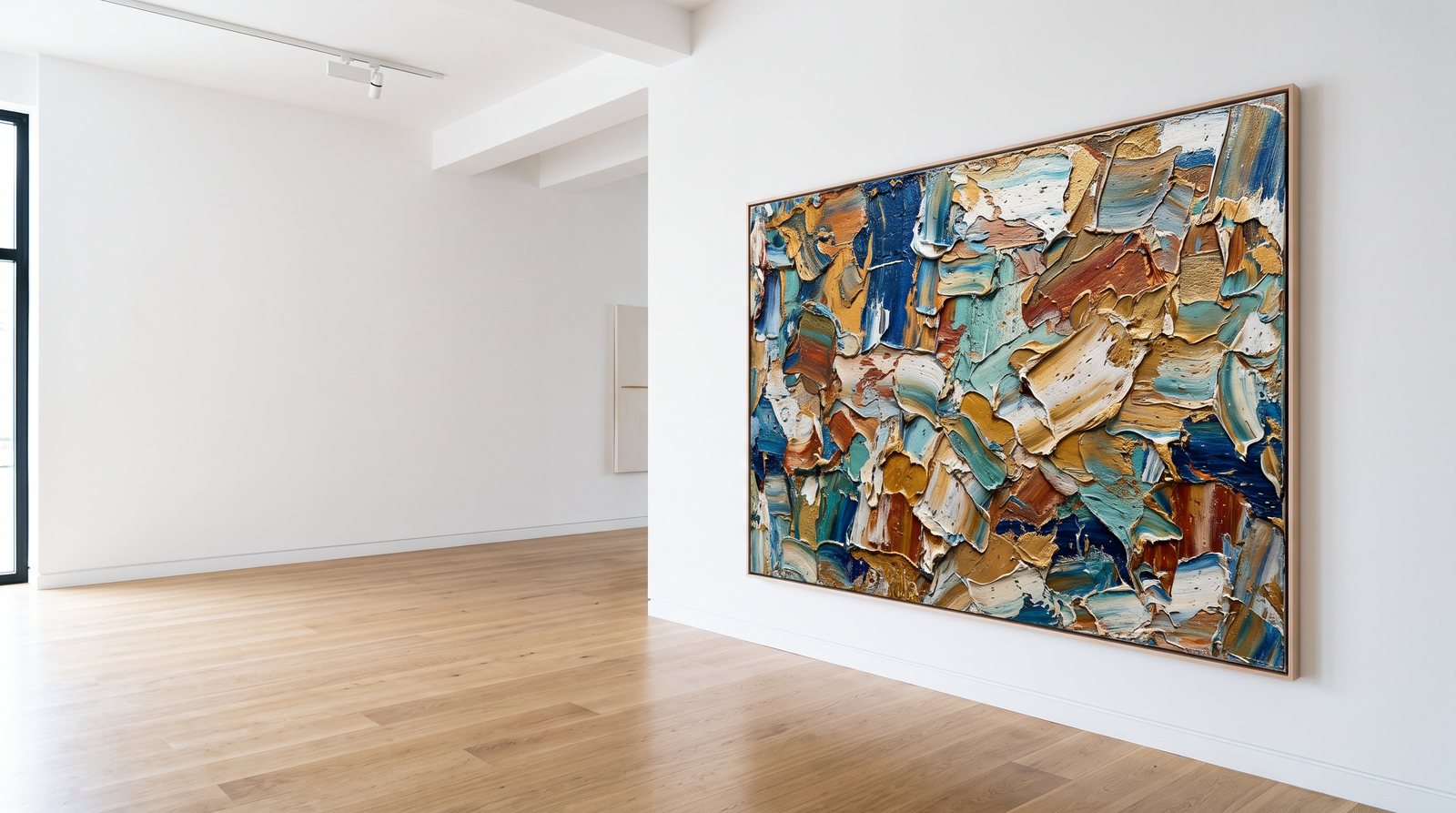
The modern gallery experience is often characterized by a paradoxical speed, where the density of works and the flow of visitors encourage a rapid, transactional form of viewing. We have become accustomed to the "glance"—a quick assessment of subject matter and style that allows us to move to the next object in a sequence. However, a growing movement within contemporary art spaces is championing the practice of "slow looking." This is not an appeal to a moral virtue or a test of endurance; rather, it is a practical curatorial strategy designed to let a work reveal the marks, decisions, and revisions that a quick glance inevitably misses. When we slow down, the artwork ceases to be a static image and begins to function as a living record of its own creation, offering a depth that is otherwise obscured by the haste of modern life.
The architecture of a gallery plays a critical role in this shift of pace. An exhibition can encourage deep attention simply by resisting the urge to explain everything at once. When a room is curated with "breathing room"—the deliberate use of empty space between works—it lowers the visual noise that often leads to sensory fatigue. The inclusion of a simple bench is perhaps the most powerful tool in the curator’s kit. It signals to the visitor that the encounter is not a route to be traversed, but a place to be inhabited. By providing a physical anchor, the gallery invites the viewer to settle into a sequence of works with different "visual temperatures," allowing the eye to adjust to the specific light and scale of the room without the pressure of constant movement.
As the visitor stays, the materiality of the work begins to reassert itself. In a world dominated by high-resolution digital screens, we often forget that paint is a physical substance with weight, depth, and history. Under the patient gaze, a seemingly flat surface opens into a complex topography of layers, pressure, scraping, and repair. The viewer begins to notice the hesitation in a brushstroke or the aggressive energy of a palette knife, identifying the moments where the artist’s hand moved with certainty or doubt. These are not just aesthetic details; they are the physical evidence of the artist’s labor and decision-making process. Slow looking allows us to see the "texture" of thought—the way an artist changed their mind, covered a mistake, or pushed a color until it achieved a specific resonance.
This engagement with materiality leads to a profound realization about the nature of time in art. A gallery is less a route through information and more a place to notice how an object holds time. An artwork is a concentrated vessel of the hours, days, or years spent in its production, a physical manifestation of a duration that is otherwise invisible. When we glance and move on, we are only skimming the surface of that temporal depth, treating the work as a finished product rather than a process. Slow looking acts as a release mechanism, allowing the time stored within the object to unfold at the viewer’s pace. The encounter becomes a dialogue between the time of the maker and the time of the observer, creating a unique temporal space that exists nowhere else.
The freedom afforded by this practice is one of the most significant aspects of contemporary art. It allows the viewer to set the duration of the encounter, rather than being dictated to by a museum guide or a digital interface. This agency is a form of hospitality; the gallery provides the space and the object, but the viewer provides the attention that completes the work. In this sense, the artwork is never truly finished until it is seen with the level of focus that its creation demanded. This relationship transforms the visitor from a passive consumer of culture into an active participant in the realization of the work’s meaning, granting them the permission to find what is personally resonant rather than what is historically mandated.
Curatorial restraint is essential to fostering this environment of discovery. When walls are cluttered with excessive text and dense didactic panels, the viewer is often led to look for the "answer" rather than the experience. By stripping away the pressure of immediate comprehension, the gallery allows for a more intuitive and sensory connection to the art. The details emerge not through the reading of a label, but through the act of looking itself, which is a far more intimate form of knowledge. This approach acknowledges that some aspects of an artwork are beyond language—they are felt in the gut or recognized in the peripheral vision. A well-designed exhibition trusts the work to speak and the viewer to listen, creating a room lit from within by curiosity.
The result of this patient observation is a more durable and textured memory of the artistic encounter. When we look slowly, the image is not just recorded by the eye; it is felt by the body and integrated into our own sense of space. We remember the way the light caught a specific ridge of impasto or the way a large-scale installation made the air in the room feel heavier. These sensory memories are far more resilient than the fleeting impressions gathered during a hurried tour. Slow looking turns the gallery visit into a series of meaningful encounters that stay with the visitor long after they have left the building, providing a mental archive of textures and moments that can be revisited in the mind’s eye whenever a similar quality of light or space is encountered.
Ultimately, the practice of slow looking returns the gallery to its essential purpose: a sanctuary for the eye in an increasingly distracted world. It is a reminder that the most profound insights often lie in the details that require time to surface, and that beauty is often a function of attention rather than spectacle. By making room for what is already there—the shifting light, the cast shadows, the physical mark of the artist—the gallery becomes a place of genuine discovery rather than mere display. The details emerge when the room allows the eye to arrive slowly, proving that the most generous decision a curator can make is to provide the time and space for the viewer to truly see. In the end, slow looking is not about what we find in the art, but what the art finds in us.