Art galleries
The small gallery is learning to let daylight become part of the exhibition.
A small gallery can turn daylight into its most precise curatorial material—if the room is arranged to let the work change gently with the hour. This attentive design creates a living exhibition that honors both the art and the environment.
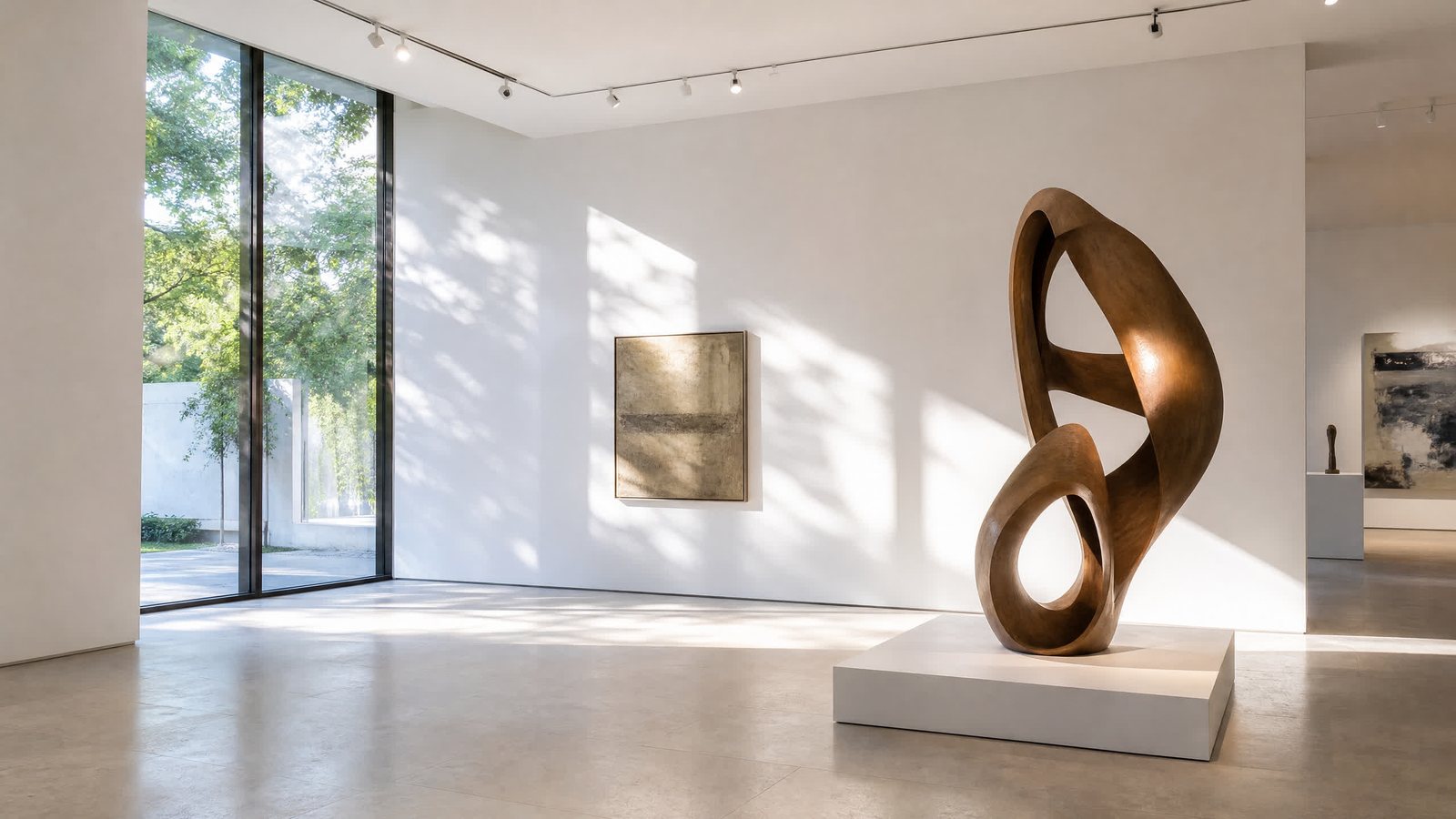
The most memorable small galleries often begin with a modest but profound architectural fact: the light has somewhere to go. There is an increasing movement away from the sterile, windowless "white cube" that has dominated the art world for decades. Instead, curators and architects are rediscovering the value of a room that breathes, where a north-facing window, a pale wall, and enough empty floor can give a work of art an atmosphere that no artificial spotlight quite recreates. This shift represents a fundamental change in the relationship between the viewer, the work, and the environment. It acknowledges that art does not exist in a vacuum but is part of a larger, living ecosystem. By allowing natural light to enter the space, a gallery ceases to be a sealed vault and becomes a responsive chamber, one that honors the transience of the day as much as the permanence of the objects on display.
This is not an argument for leaving installation to chance. It is a more attentive form of planning than the standard approach of uniform artificial illumination. It requires a curator to consider where a shadow will settle by late afternoon and how a painted blue will cool when clouds pass overhead. It is a form of curatorial choreography that works with the sun rather than against it. By mapping the movement of light across the gallery’s surfaces, designers can create a sequence of encounters that feel both deliberate and organic. The result is a space that feels less like a controlled experiment and more like a thoughtful domestic environment, where the art is allowed to settle into the room’s natural rhythms.
For the visitor, the presence of daylight quietly resets the pace of looking. In many large institutions, the lack of external reference points can lead to a sense of suspended time, contributing to museum fatigue. A small gallery that embraces natural light offers a different experience. It makes the space feel less like a sealed display case and more like a room connected to the city outside. The sight of a passing cloud or the shifting angle of a shadow provides a subtle temporal anchor, allowing the viewer to remain present. This connection to the external environment does not distract from the art; rather, it provides a necessary breath of air, making the encounter with each work feel more grounded and less clinical.
The temporal nature of natural light also adds a layer of complexity to the works themselves. A painting viewed at ten in the morning is not the same object when viewed at four in the afternoon. The changing color temperature of the sun—from the crisp, blue-tinged light of the morning to the warm, golden hues of the late day—alters the way pigments are perceived and how textures are revealed. It is a living entity that evolves throughout the day, offering a unique experience to every visitor depending on the hour of their arrival. This variability is a gift to the attentive viewer, encouraging multiple visits and a deeper engagement with the nuances of the work. It serves as a reminder that our perception is always mediated by our environment, and that there is beauty in the fleeting, unrepeatable moment.
Architecturally, the integration of daylight requires a commitment to simplicity and restraint. The most successful small galleries are those that resist the urge to over-design. They prioritize high-quality surfaces, thoughtful window placement, and a layout that allows light to travel deep into the interior. This restraint is itself a form of curatorial generosity. It provides the art with the "breathing room" it needs to be seen clearly. When a gallery is arranged to let the work change gently with the hour, it demonstrates a respect for the artist’s intentions and the viewer’s intelligence, suggesting that the most important thing a gallery can provide is a specific kind of silence. By stripping away the unnecessary, the gallery allows the work to speak for itself, supported by the natural transitions of the environment.
The result of this approach is a useful reminder for the broader field of exhibition design: it does not always need to add another layer of technology. In an era where many museums are increasingly reliant on digital interfaces and complex lighting systems, the small gallery offers a compelling alternative. Sometimes the most generous decision a designer can make is to make room for what is already there. By focusing on the fundamental elements of space and light, a gallery can create a sense of intimacy and presence that is often lost in larger, more managed environments. A well-placed window is not just a hole in a wall; it is a curatorial tool as precise and effective as any high-end LED array. It requires no power, no maintenance, and offers a level of nuance that artificial systems struggle to replicate.
Furthermore, this philosophy extends to the way a gallery functions as a civic space. A room that is open to the light of the city is also open to the city itself. It feels more accessible and less intimidating than a windowless fortress. For the casual passerby, a glimpse of art through a window can be a powerful invitation, a reminder that culture is not something hidden away but something that exists in the same light as the street. This transparency fosters a sense of community and belonging, suggesting that the gallery is a shared resource rather than an exclusive club. In this way, the small gallery performs a vital social function, providing a place for quiet reflection in the heart of the urban environment. It becomes a sanctuary that is nonetheless deeply connected to the pulse of the surrounding neighborhood.
In conclusion, the small gallery’s embrace of daylight is a testament to the power of attentive design and curatorial restraint. By treating light as a primary material rather than a secondary utility, these spaces offer a more rewarding experience for both the artist and the viewer. A gallery’s light can be as deliberate as its hanging plan, and when that light is allowed to follow its own natural course, it brings a sense of life to the work that no artificial system can match. The modest fact that light has somewhere to go is what makes these small spaces so significant. They provide a place where we can see the world, and the art within it, with greater clarity and a deeper sense of connection. By honoring the environment, the gallery ensures that the art remains a vital, changing part of our daily experience.