Travel
Forty-Eight Hours in Kyoto: A Weekend of Tea, Torii, and Tactical Snacks
A two-day Kyoto plan for people who enjoy beautiful things but do not wish to spend their weekend queuing in the sun with a limp convenience-store sandwich.
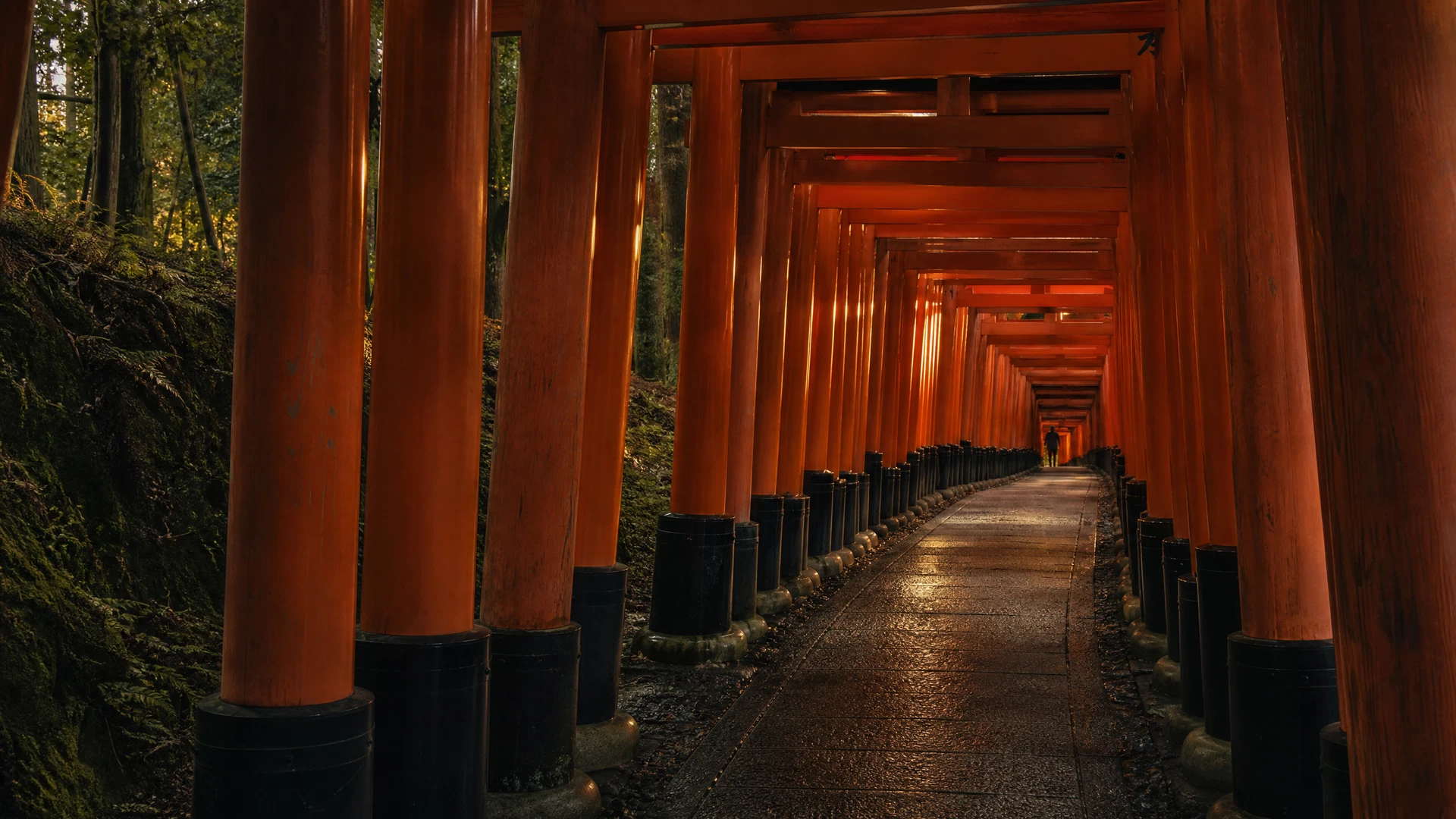
Kyoto has the confidence of a city that does not need to explain itself. It has temples, lanes, gardens, markets, riverbanks, old timber houses, excellent noodles, and enough ceremonial calm to make an inbox feel like a distant administrative rumour. The practical problem is that everybody knows this. A weekend there therefore requires a mild amount of strategy, not because Kyoto should be conquered—absolutely not—but because it deserves more than a frantic procession of landmarks. The aim is not to see every famous gate, bowl, roof tile, and matcha object in forty-eight hours. The aim is to leave with a few scenes that stay vividly put: a quiet orange tunnel before breakfast, the precise steam on a bowl of noodles, the sound of a lane changing from morning to evening. Start with the modest ambition of enjoying yourself. Kyoto is very good at rewarding that sort of restraint.
Friday evening begins at Kyoto Station, which has the energy of a beautifully organised small planet. The station is enormous, polished, and mildly theatrical, with trains arriving as if punctuality were an Olympic discipline. Resist the instinct to convert the first twenty minutes into a logistics emergency. Put your bag down at the hotel, drink some water, and walk toward the Kamo River as the city begins to loosen its collar. The river is not a performance; it is simply where people go when the day is over. Students sit on the bank, runners make tidy laps, couples negotiate takeaway dinners, and herons behave as though they own the zoning approvals. If the weather is kind, eat something uncomplicated nearby—grilled fish, a bowl of soba, whatever looks busy for reasons that are not neon—and let the first evening be a landing rather than a checklist.
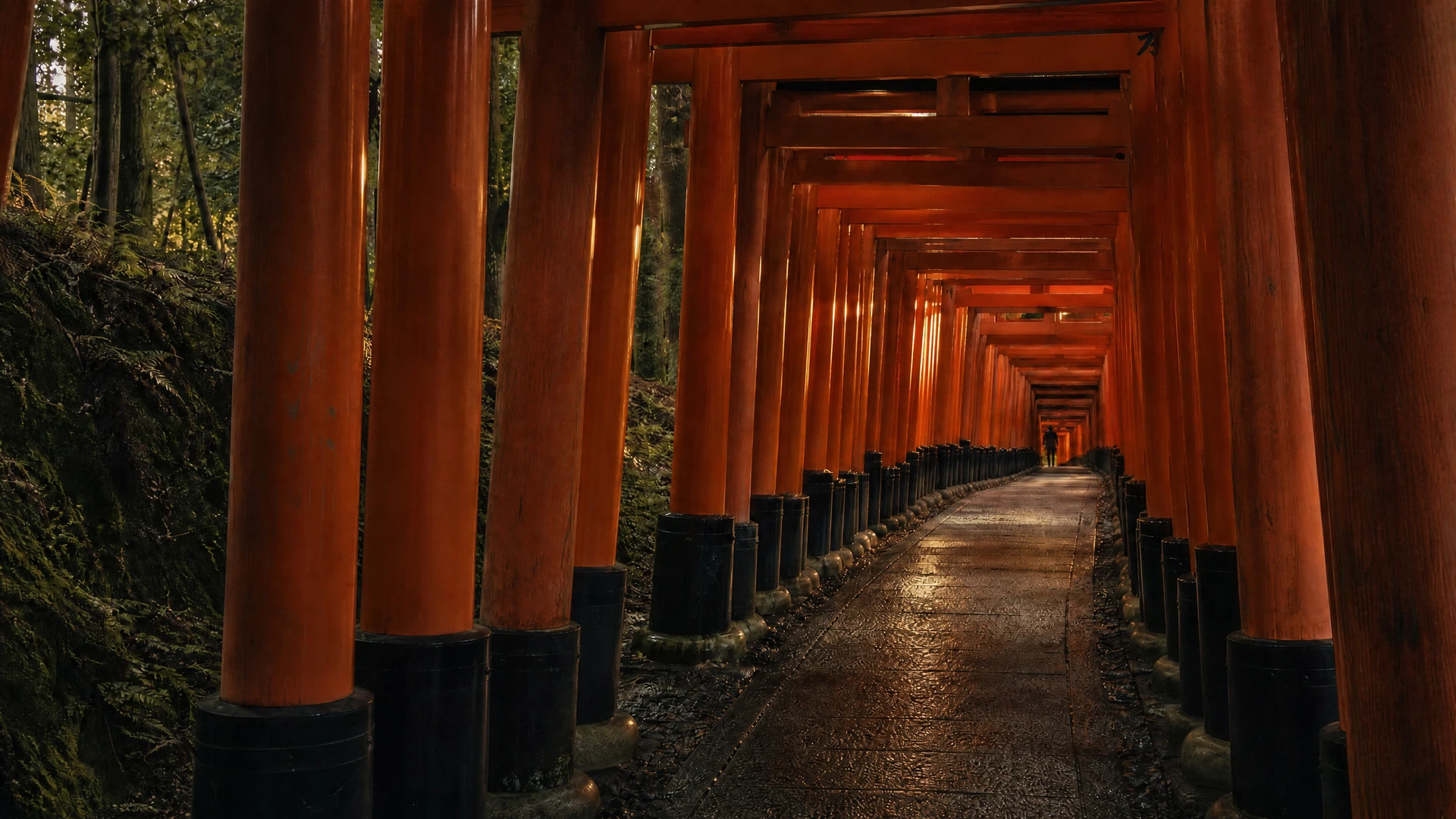
Saturday requires an early alarm, but not a heroic one. This is not a personality test. It is simply easier to meet Fushimi Inari before the day becomes a portrait session for the whole internet. The shrine is reached quickly from Kyoto Station, and the approach begins with the vermilion gates that have become one of Japan’s most recognisable images for a reason: in person, their colour changes as you walk. In the dawn shade they are deep and lacquered; in open light they become almost electric. The gates belong to a shrine dedicated to Inari, associated with harvests and prosperity, and the pathway continues much farther up the mountain than a casual first glance suggests. You do not need to complete the whole hike to have a proper experience. Walk steadily, step aside for faster climbers, notice the smaller altars and fox figures, and stop when the view begins to look like a view rather than an obligation.
The most useful etiquette in Kyoto is pleasingly unglamorous: do not block a path, read the signs, lower your voice when a place asks for quiet, and remember that many revered sites sit beside ordinary homes. At temples and shrines, follow the guidance on site rather than performing a version of Japanese manners acquired from one travel reel and a strongly held opinion. Elsewhere, queues are real queues, public bins can be scarce, smoking has designated places, and a thank-you is more useful than an improvised tip. None of this reduces the joy of the city. It does the opposite. Once you stop treating every setting as a backdrop, you begin to see the small systems that make it livable: the people getting to work, the shopkeepers lifting shutters, the resident carrying groceries past a famous lane with the air of someone who has seen enough cameras for one lifetime.
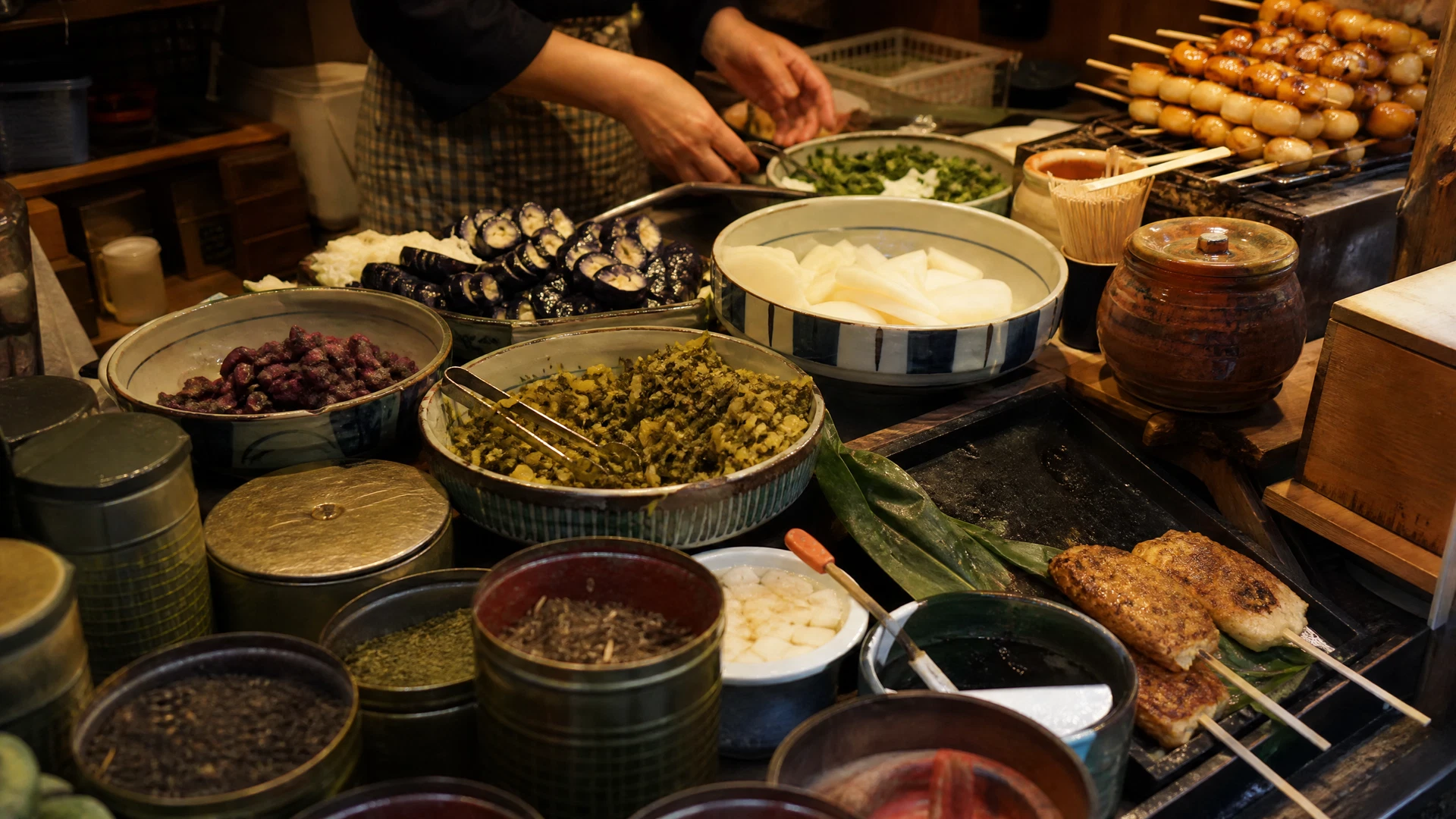
By late morning, take the train back toward central Kyoto and give yourself permission to become interested in food. Nishiki Market is sometimes described as Kyoto’s kitchen, which sounds grand until you realise that kitchens are where the best things happen. The covered market is a corridor of pickles, tea, skewers, knives, fish, sweets, tofu, seasonings, and shops whose displays have more visual confidence than many art galleries. Browse with a little discipline. Buying six snacks in rapid succession is not a cultural immersion; it is just a way to become tired while holding a damp napkin. Choose one warm thing, one unfamiliar thing, and one thing you will be genuinely annoyed about not trying. Eat where permitted, keep the flow moving, and save some appetite. Kyoto rewards pacing, even when the pacing is between croquettes and roasted tea.
The afternoon is for Higashiyama, where the streets rise and fold around wooden facades, small workshops, tea rooms, and views that make even the most hardened traveller briefly consider buying a hand-painted fan. Kiyomizu-dera sits above the slope with its broad wooden stage and a sweep of city beyond it. The trick is to give the area time. Wander side streets instead of standing in the most obvious bottleneck. Look through open shop doors, listen for the sudden clack of a ceramic studio, and let the crowd thin before deciding you have seen enough. There is no prize for rushing. The most effective way to enjoy historic neighbourhoods is to act as though people still use them, which they do. If shoes must come off somewhere, take the cue seriously and wear socks you would not mind introducing to civilisation.
A proper Kyoto Saturday has a low-energy interlude. Find a small café, order tea or coffee, and sit down long enough for your feet to stop sending legal letters. Matcha can be many things here: ceremonial, casual, whisked at a counter, folded into a sweet, or turned into a drink whose colour appears to have been approved by a very tasteful lawn. The point is not to develop an expert palate in twelve minutes. The point is to notice the ritual of a pause. Kyoto has long cultivated an idea of beauty that includes ordinary care—clean surfaces, seasonal ingredients, a vase placed well, a room that does not ask to be crowded. A weekend visitor can borrow that attentiveness without becoming precious about it. Put the phone away for one cup. It will still contain the same messages when you come back.
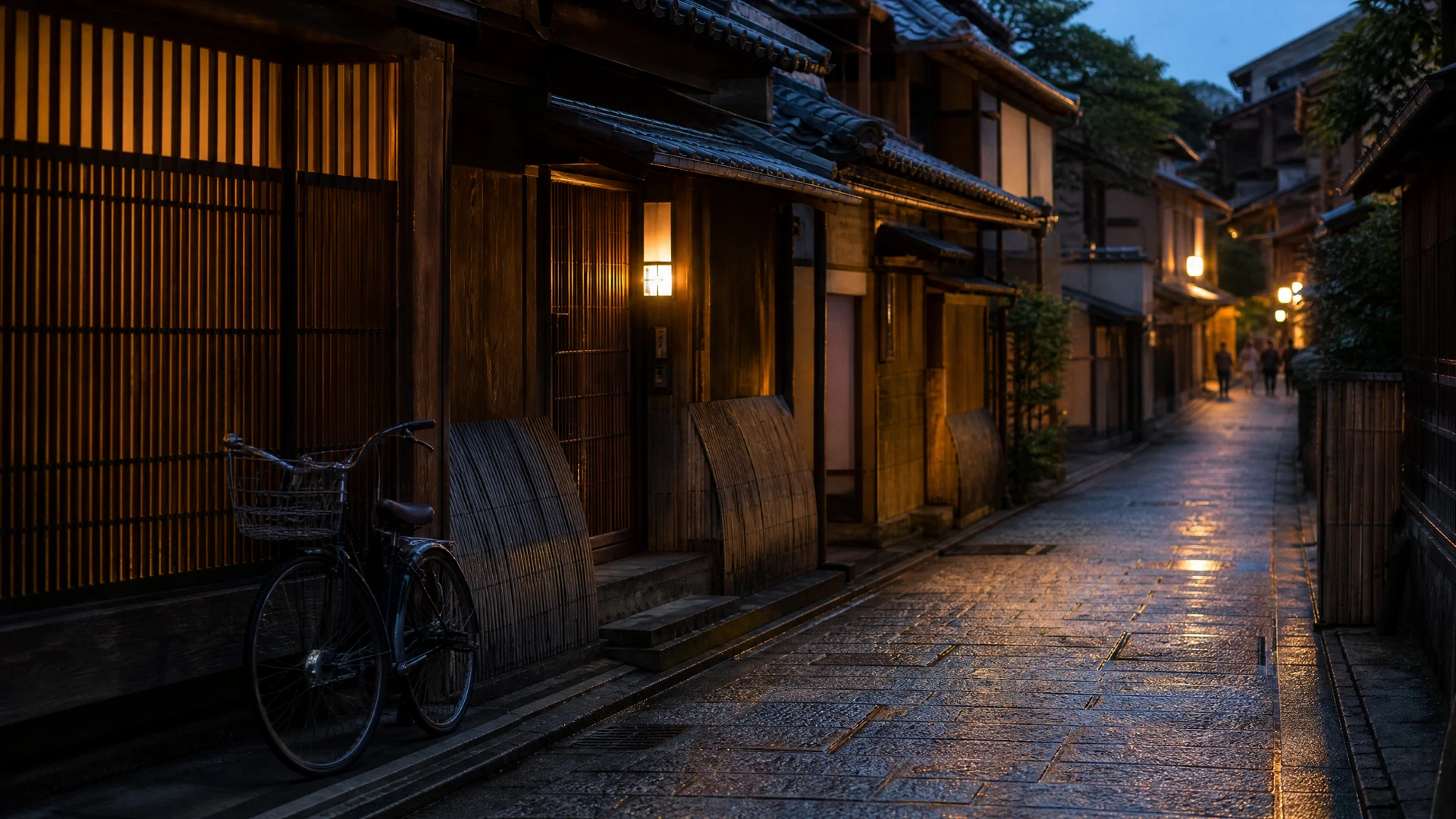
As afternoon turns gold, head toward Gion without making a wildlife documentary out of other people’s working lives. The district is atmospheric because it is a neighbourhood of timber buildings, lanterns, narrow lanes, restaurants, and daily routines—not because it owes anybody a dramatic encounter. A good evening plan is modest: walk Hanamikoji with your eyes open, turn down a quieter lane when the busiest stretch becomes too busy, and book dinner somewhere that gives the evening a shape. Kyoto does not require a rarefied meal to feel special. A small counter, a warm bowl, a seasonal vegetable, and the pleasure of being indoors when the air cools can be plenty. If you do see a maiko or geiko moving quickly to an appointment, let that be a glimpse, not a mission. The city is better when its people are allowed to get where they are going.
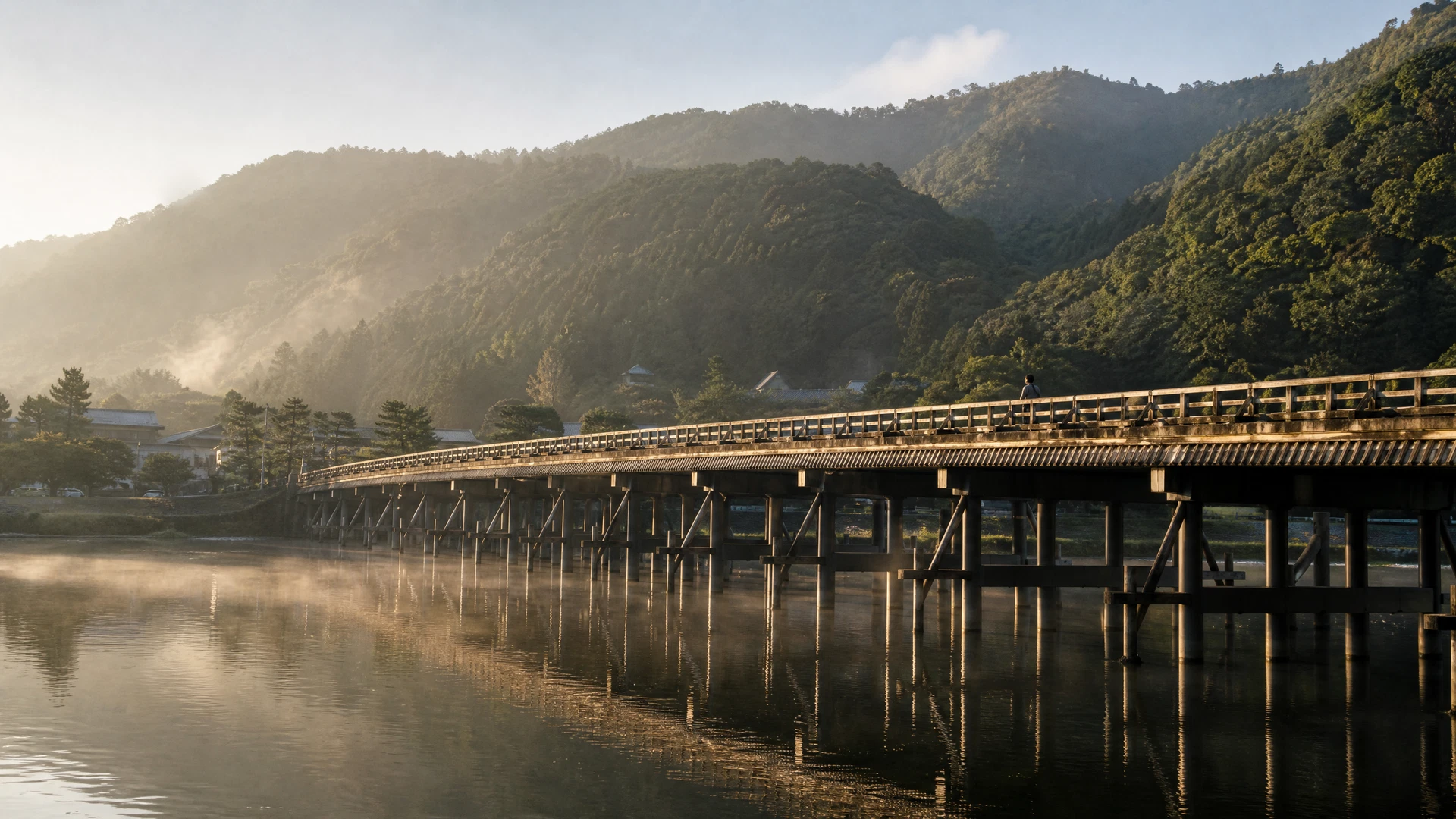
Sunday begins on the western side of the city in Arashiyama, which is most sensible before breakfast crowds have arranged themselves into a human spreadsheet. The bamboo grove is quieter when entered early, though quiet in a popular place is always relative. Stand for a moment, look up, then keep walking. The bamboo is impressive because it is tall, flexible, and strangely architectural; it does not need anyone to prove it by staying for forty minutes. Continue toward the river, where the mountains come down close to the water and the area feels more open. A coffee, a pastry, a stroll across Togetsukyo Bridge, perhaps a look toward the wooded hills: this is a reset after the denser streets of Saturday. Kyoto works best in contrasts—stone and water, temple bell and train announcement, quiet garden and busy market.
For lunch, make the weekend less photogenic and more delicious. A bowl of soba, a set meal, tofu prepared with attention, or a plate of yudofu can do the job beautifully. Eating in Kyoto often teaches the useful lesson that a simple dish is not the same as an accidental dish. Broth can have clarity, rice can have personality, and a tray of apparently modest things can leave you unreasonably happy. This is a reasonable point to remember that no tipping is expected. Pay the stated amount, offer a sincere thanks, and allow the exchange to be complete. Travel becomes much less tiring when every interaction is not treated as a test you might fail. Observe, ask politely, and move through the day with enough humility to recognise that someone else has been doing this route much longer than you have.
The final afternoon belongs to whichever version of Kyoto has caught your attention. You might choose a quieter garden, a bookstore, a ceramics shop, the canals around Fushimi, or a slow walk back along the Kamo River. The city’s official visitor guidance is right to encourage curiosity beyond the marquee sights: Kyoto is not a museum arranged in a single corridor. Its character shifts between districts, seasons, and times of day. A weekend plan becomes better when it leaves an hour unclaimed. That spare hour may become an unexpectedly good dessert, a bench beside a canal, a record shop, a local train you take one stop too far, or simply the satisfying act of being early for the ride back to the station.
There is a particular kind of travel optimism that arrives when you land with one small carry-on bag and a colour-coded map. It lasts until you realise that the map has sent you toward a bus stop with three queues, four destinations, and a sign that is perfectly clear to everyone except you. Kyoto is an excellent place to retire the fantasy that a clever itinerary can remove all uncertainty. Instead, leave margin. Ask a staff member before boarding. Stand where people are standing. Notice that the polite choreography of public transport is not a puzzle designed to humiliate visitors; it is a collective agreement that a city works better when people do not shoulder their way through it. The reward for this minor surrender of ego is remarkably good: a window seat, a view of tiled roofs, and the opportunity to watch an ordinary Saturday happen between the famous stops.
A weekend in Kyoto also offers many chances to admire objects you cannot realistically carry home. Ceramics are the obvious danger. You will enter a shop intending to look at one cup and emerge forty minutes later with a detailed emotional position on the difference between a bowl that is merely beautiful and a bowl that appears to understand winter. The sensible rule is to enjoy the craft before trying to acquire the craft. Ask whether photographs are welcome. Notice the uneven glaze, the tiny variations in shape, the way a maker has allowed a surface to be quiet. If you do buy something, choose the piece you will actually use, not the piece you imagine displaying under a spotlight like a small museum director with too much confidence. A tea cup that appears at breakfast is a better souvenir than a fragile monument to good intentions.
There is room, too, for the ordinary maintenance of a weekend: filling a water bottle, checking the weather, finding a laundromat near the hotel, and deciding that you do not need a fourth souvenir bag. These are not glamorous details, but they are how a short trip stays pleasant. Kyoto can be humid in warm months and brisk in cooler ones, so the cleverest travel accessory may be a layer you can remove without turning yourself into a public packing demonstration. Carry enough cash for small purchases, but do not make cash management the story’s main character. Keep your phone charged, keep your luggage compact where possible, and use lockers or delivery services when they make the day easier. A beautiful city becomes more beautiful once you are no longer dragging a suitcase over cobblestones while pretending this was your chosen aesthetic.
Kyoto has an almost unfair ability to make small transitions feel important. A walk from a broad road into a narrow lane can change the air temperature, the sound level, and the pace of your own thoughts. One minute you are negotiating a crossing beside buses and bicycles; the next you are looking at a garden wall with a single camellia pushed gently through the leaves. This is the part that rarely fits into travel highlights. Nothing dramatic occurs. Nobody hands you a certificate. You simply become aware that you have stopped rushing. The city encourages this through details: a shop curtain moving in a doorway, water gathered in a stone basin, the ordered chaos of a market stall, a perfectly wrapped sweet that suggests its maker has feelings about tape. The weekend grows richer when you let such moments count.
Rain, if it arrives, should be treated as a change of lighting rather than a personal betrayal. Kyoto in wet weather is almost excessively composed. Stone darkens, wooden facades deepen, umbrellas move through lanes like low, practical flowers, and the steam from a noodle shop acquires cinematic ambition. It is tempting to flee immediately to the hotel, but a waterproof jacket and a short walk can be a more memorable plan. Stop at a bookshop or café, dry your hands, order something hot, and watch the street through the window. Wet pavement turns the city’s lamps into reflections, while everyone else adjusts their pace with the competence of people who own umbrellas that were not purchased in panic. A rainy hour can be an itinerary’s best act of editing: it removes the urge to keep scoring attractions and replaces it with the far better task of being somewhere.
Food is the weekend’s least controversial teacher. After two days of it, you may discover that the most satisfying meal was not necessarily the famous one but the one where you were hungry at the right time, seated in a small room, and given a tray whose proportions made immediate sense. Kyoto’s food culture is vast and varied; no short visit should pretend otherwise. Still, the visitor can approach it with a useful mixture of curiosity and restraint. Learn the easy phrases, point when necessary, ask about ingredients when you need to, and avoid treating unfamiliarity as a performance opportunity. The result is a sequence of meals that feel like part of the place rather than proof that you have collected it. Also, buy the second sweet if you are thinking about it. This is not recklessness. This is research.
The best travel companion on this sort of weekend is not a person with seventeen restaurant reservations and an alarm system for every sunrise. It is the friend—or the version of yourself—who can notice when the plan has become too much. Kyoto provides plenty of opportunities to practise this. If the temple courtyard is crowded, pause at the edge rather than forcing the centre. If the café has a queue, walk one block. If a lane is closed or a museum is sold out, do not turn the whole day into a tribunal. There will be another roofline, another bowl of noodles, another small thing arranged with care. The city is generous to travellers who leave room for it to respond. The comedy of a weekend trip is that we often plan every minute in the hope of feeling free; Kyoto quietly demonstrates that leaving a little blank space is the more sophisticated technique.
By Sunday evening, the weekend’s plans should be dissolving at the edges. You have likely missed something excellent. That is normal and, in a way, ideal. Cities worth returning to need to retain a few secrets. Maybe you never reached the garden someone recommended. Maybe the queue at a tiny noodle counter was too long. Maybe you walked past a gallery just as it closed and promised yourself a future trip. The urge to finish a place is one of travel’s least useful habits. Kyoto is not waiting to be completed; it is busy being a city. Let the unfinished parts remain invitations. They will make the train out feel less like an ending and more like the moment after placing a bookmark in a book that has become better than you expected.
When the weekend ends, Kyoto Station returns you to the practical world with its platforms, lockers, escalators, and extremely competent signs. You will leave with a camera roll full of gates, bowls, shadows, and possibly one photo of a cat that has no editorial purpose but remains emotionally essential. More importantly, you may leave with a better sense of how to travel through a crowded, beautiful place: wake early when it helps, eat slowly when you can, respect the fact that sacred and residential spaces are not sets, and remember that a good itinerary is mostly a way of making room for attention. Kyoto does not ask you to become a different person over a weekend. It merely makes a persuasive case for walking a little more carefully through the life you already have.