Travel
Between Stone and Water: A Patient Day in Hạ Long Bay
In Hạ Long Bay, limestone, tide, and small boats make a landscape best understood slowly, at the scale of a paddle and a changing sky.
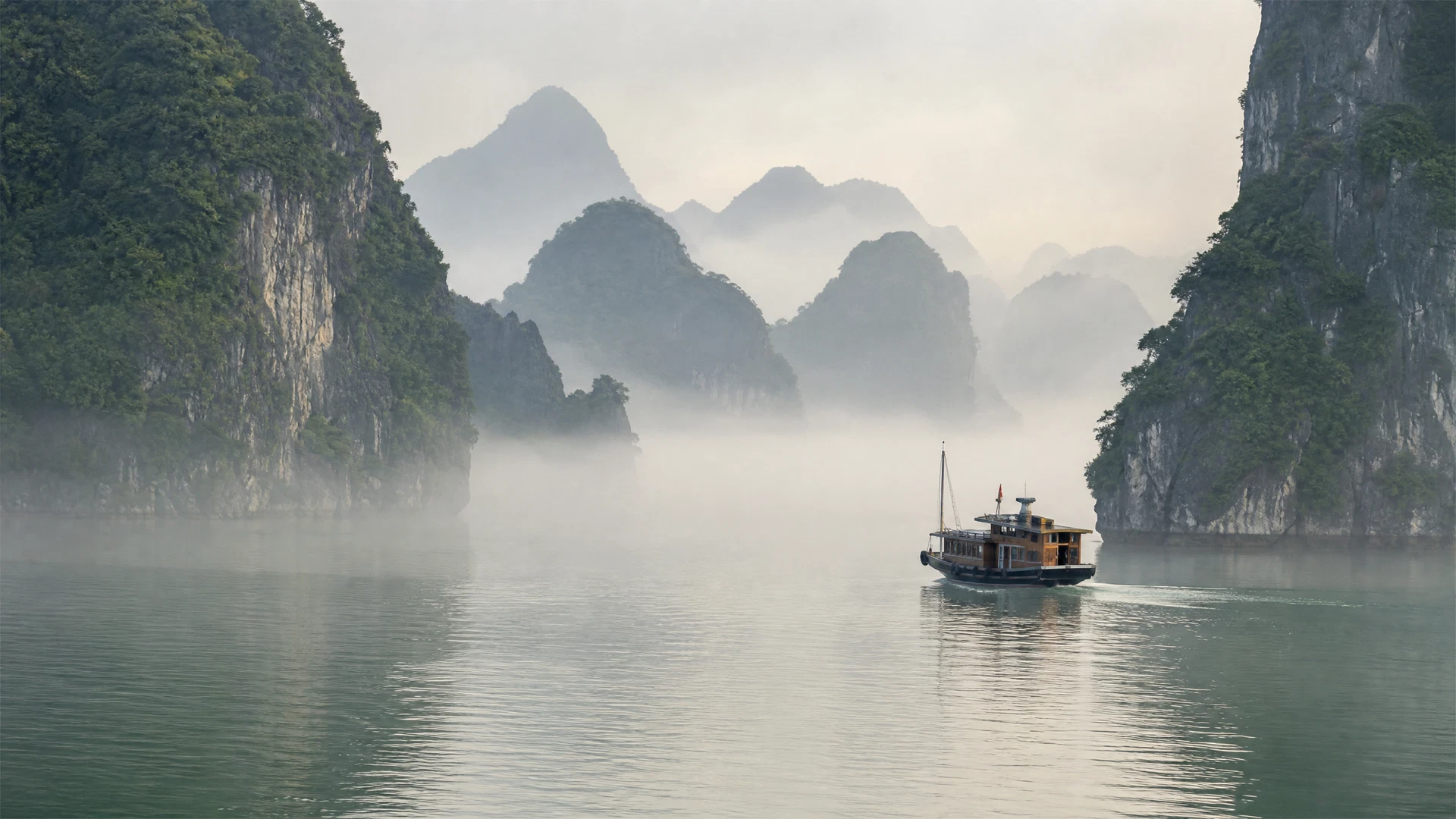
The morning begins not with a sunrise, but with a slow, deliberate unveiling of the world. In the Gulf of Tonkin, the transition from the solid mainland to the fluid ambiguity of the water is marked by a pervasive, silver-gray mist that clings to the skin. As the wooden junk boat—a vessel of weathered timber and high, ribbed sails—pushes away from the pier, the sounds of the harbor begin to dissolve. The clatter of commerce and the rhythmic thrum of motorbikes fade, replaced by the soft slap of water against the hull and the occasional creak of the mast. Here, the geography is a presence; the legendary "descending dragon" of Vietnamese folklore feels less like a myth and more like a tangible explanation for the sudden, vertical rise of limestone pillars emerging from the haze. These karsts, thousands of them scattered across the emerald expanse, appear at first as ghostly silhouettes, their jagged peaks softened by moisture, creating a landscape suspended between the sky and the sea.
To travel by water in this corner of the world is to submit to a pace fundamentally different from the frantic energy of Vietnam’s urban centers. The boat moves with a patient dignity, weaving through the labyrinth of stone with a low-impact grace that respects the ancient silence of the bay. On deck, the air is thick with the scent of salt and the faint, earthy aroma of wet stone, a reminder that these islands have been sculpted over millions of years by the patient hands of rain and tide. The traditional design of the vessel, with its dark wood and wide decks, encourages observation that is both outward and inward. As the boat glides past the "Kissing Rocks"—two limestone formations that lean toward one another in a frozen, eternal embrace—one is struck by the scale of the geological theater. There is a profound humility that comes from standing on a small wooden deck beneath a five-hundred-foot wall of vertical stone, realizing these formations stood long before the first sails appeared and will remain long after they have vanished.
Weather in the bay is a temperamental artist, constantly shifting the palette and mood of the day. By mid-morning, the silver mist begins to thin, shredded by a sun that is more felt than seen at first. As the light breaks through, the water undergoes a dramatic transformation, shifting from a leaden gray to a vibrant, translucent emerald. The transition occurs in patches, with pools of light illuminating the white sand of hidden beaches and the deep green of the scrub brush clinging to the steepest cliffs. This shifting weather is part of the bay’s essential character; it demands a readiness to adapt, a willingness to pull on a raincoat one moment and seek the shade of the cabin the next. It is in these moments of transition that the bay feels most alive, as the play of light and shadow across the karsts creates the illusion of movement, as if the stone giants are shifting their weight to watch the passage of the tiny, wooden intruders.
The journey eventually leads to the mouth of a cave, a dark, inviting rupture in the base of one of the larger islands. Stepping off the boat and onto the damp stone of the entrance, the temperature drops noticeably, and the air takes on the cool, still quality of a cathedral. The transition from the bright, expansive world of the water to the enclosed, intimate space of the cave is a sensory shock. Inside, the bay reveals its hidden architecture—a subterranean maze of stalactites and stalagmites that have been growing at the pace of a single drop of water every few decades. The silence here is absolute, broken only by the occasional, crystalline ping of water hitting a pool in the darkness. As one navigates the winding paths, the torchlight catches the glint of minerals in the stone, turning the walls into a tapestry of shimmering textures. It is a place where time is measured not in hours or minutes, but in the slow accumulation of calcium and the steady erosion of the limestone, a stark contrast to the fluid world outside.
Deep within the cavern, the scale of the formations is staggering, with massive pillars of stone reaching from floor to ceiling like the legs of some ancient, petrified beast. The cultural context of these spaces is broadly established in the local consciousness; they are often seen as the dragon’s lair or the sacred chambers of the earth itself. There is a respectful quiet among the visitors, a shared understanding that this is a space to be observed rather than occupied. The path leads through chambers of varying sizes, some so vast that the ceiling is lost in shadow, others so narrow that one must brush against the cool, damp stone to pass. The tactile experience of the cave—the roughness of the walls, the humidity that hangs in the air, the unevenness of the ground—serves to ground the traveler in the physical reality of the bay, providing a counterpoint to the dreamlike quality of the journey across the water.
Emerging back into the daylight, the brightness of the sun reflecting off the water is momentarily blinding. The afternoon brings a different kind of stillness, a lull in the wind that turns the surface of the bay into a perfect, green mirror. In this quietude, the presence of the floating villages becomes more apparent, though they remain at a distance, a collection of brightly painted houses and tethered rafts that seem to bob on the water like corks. These communities represent a unique way of life, intimately tied to the rhythms of the sea and the protection offered by the karsts. While the traveler is merely a passing guest, the residents of these villages are the bay’s permanent stewards, their lives a testament to the possibility of a low-impact existence in a fragile environment. The sight of a small oar-powered boat moving between the houses is a reminder that, despite the grandeur of the landscape, the human element remains a vital part of the bay’s story, a thread of continuity stretching back through the generations.
As the boat continues its slow circuit, there is time for a more intimate engagement with the water. Lowering a kayak into the emerald depths allows for a perspective that the larger junk boat cannot provide. At water level, the karsts seem even more imposing, their undercut bases revealing the power of the tides that have hollowed them out over the millennia. Paddling into a small, secluded lagoon, the sound of the boat’s engine is replaced by the rhythmic splash of the blade and the distant call of a sea eagle circling high above. The water is remarkably clear in these sheltered spots, revealing the dark shapes of rocks and the occasional flash of a fish beneath the surface. It is a moment of profound connection, a chance to feel the pulse of the bay in a way that is both personal and quiet. The low-impact nature of the kayak ensures that the only trace left behind is a temporary ripple, a fitting tribute to the delicate balance of this ecosystem.
The return journey in the late afternoon is a time for reflection, as the sun begins its descent toward the horizon, casting long, dramatic shadows across the water. The colors of the bay shift once again, moving through shades of gold and amber before settling into a deep, bruised purple as the light fades. The karsts, which were so sharply defined in the midday sun, begin to blur once more, their outlines merging with the darkening sky. There is a sense of completion in this return to the harbor, a feeling that the day has been a complete cycle of discovery and contemplation. The "descending dragon" is now settling back into its watery bed, the jewels it spat out now safely tucked away in the shadows of the night. The traveler leaves with more than just photographs; there is a lingering sense of the bay’s enduring power, a recognition that some places are not meant to be conquered, but simply witnessed with a quiet and respectful heart.
In the final moments before the boat reaches the pier, the lights of the mainland begin to twinkle in the distance, a reminder of the modern world waiting just beyond the reach of the water. Yet, the memory of the bay remains vivid—the feel of the mist, the silence of the cave, the sight of the emerald water stretching toward the horizon. It is a landscape that stays with you, a reminder of the beauty found in the slow, the quiet, and the ancient. To visit Hạ Long Bay is to step out of time for a brief moment, to join the ranks of those who have marveled at its stone sentinels and wondered at the legends that birthed them. As the wooden hull finally touches the dock, the transition back to the solid earth feels almost jarring, a sudden return to a world of straight lines and hard surfaces after a day spent in the fluid, curved embrace of the dragon’s bay. The narrative of the water continues, however, a story written in stone and salt that will go on long after the last traveler has gone home.