Travel
A City That Keeps Moving: A Slow Day in Hanoi
A day in Hanoi becomes clearer at walking pace: lake light, old learning courtyards, small streets, and the patient work of noticing what remains.
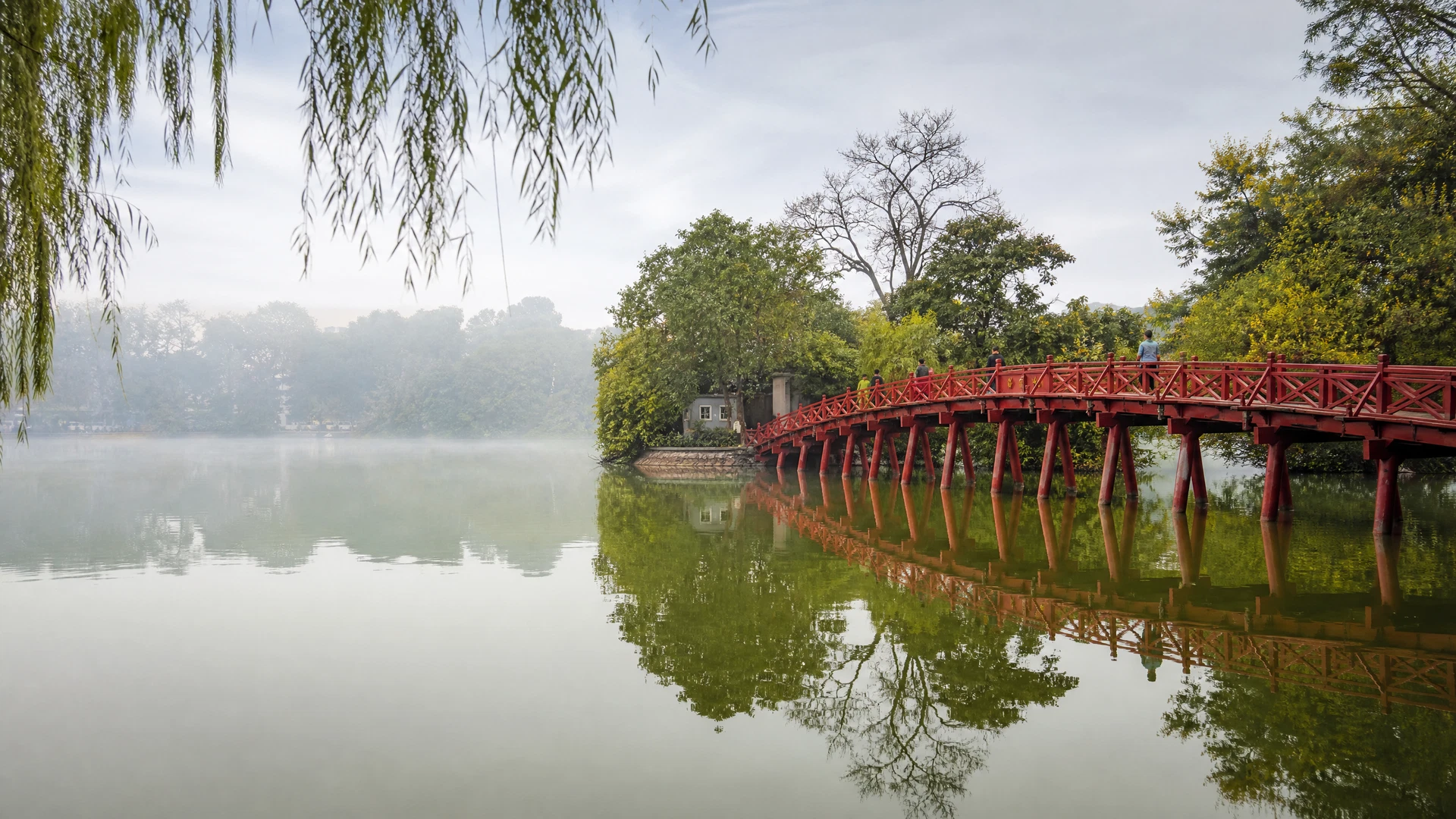
The dawn in Hanoi unfurls like a bolt of pale silk, damp with the breath of the Red River. At Hoan Kiem Lake, the water remains a mirror of polished pewter, holding the reflection of the Turtle Tower in suspended animation while the city begins its slow inhalation. This is the hour of silver light, where humidity acts as a soft-focus lens, blurring the edges of weeping willows that dip into the cooling depths. To stand at the water’s edge at five in the morning is to witness a quiet reclamation; before the mechanical roar takes hold, the lake belongs to the whispers of the wind and the soft padding of feet on stone. There is a profound stillness here that anchors the capital even as the modern world presses against its ancient boundaries. The air is thick with the scent of wet earth and the faint promise of jasmine, a fleeting moment of purity that exists only in the fragile space between the last stars and the first cup of tea. It is a time for observation, where the most significant moments happen in the quietest intervals.
As the light shifts to a pale, buttery gold, the lake’s edge transforms into a communal theater of movement. Here, the city’s elders engage in a choreographed ritual of longevity, their limbs tracing slow arcs through the humid air in the practice of Tai Chi. There is a quiet dignity in their synchronization, a collective defiance against time that mirrors the endurance of the city itself. Nearby, groups of women in colorful athletic gear move to the upbeat rhythms of portable radios, their laughter punctuating the morning mist as they perform aerobics under the watchful eyes of stone statues. The Huc Bridge, a vibrant slash of scarlet against the emerald water, begins to glow as the sun catches its lacquered wood, leading to the Ngoc Son Temple where the scent of burning sandalwood drifts across the water. This bridge is more than a walkway; it is a transition point between the physical world and the spiritual history of the Hanoian people, a place where legends of giant turtles feel like the living pulse of the landscape. The lake serves as the city’s lungs, providing space to breathe before the Old Quarter pulses with the energy of transit.
Leaving the sanctuary of the lake, one enters the labyrinthine embrace of the Old Quarter, where the silence of dawn is swiftly replaced by the symphonic discord of the motorbike. It is a transition that requires a shift in perspective, a willingness to surrender to the flow of a river that never stops. The streets here are narrow, ancient veins that have carried the weight of trade for over a thousand years, and to cross them is to engage in a delicate dance of trust and momentum. One does not wait for a gap in the traffic; rather, one steps out with a steady, predictable pace, allowing the sea of two-wheeled vehicles to part and flow around them like water around a stone. The air begins to vibrate with the low hum of engines and the friendly chirp of a horn, a language of navigation that is more about presence than aggression. Shops, often no wider than a few meters, reveal stacks of silk, pyramids of spices, and hammered tin. This is the heartbeat of Hanoi, a place where every square inch of pavement is a potential stage for a meal, a conversation, or a transaction.
To look upward in the Old Quarter is to read the architectural history of Vietnam in the layers of its "tube houses." These narrow, elongated structures were born from a tax system that once penalized the width of a storefront, leading to a skyline of slender facades that reach toward the clouds like tall, thin trees in a crowded forest. Each building is a vertical timeline, where French colonial shutters in faded ochre sit atop traditional tiled roofs, and modern air conditioning units nestle among tangled webs of electrical wires that drape across the streets like urban vines. The balconies are miniature jungles, overflowing with potted palms, hanging orchids, and the occasional birdcage, providing a touch of wild green against the weathered masonry. The streets themselves are named for the guilds that once defined them—Silk Street, Silver Street, Hemp Street—and while the goods have evolved, the spirit of specialization remains. Walking here, one feels the compression of time, where the walls exhale the stories of generations who have lived within their narrow confines.
By mid-morning, the heat settles into the narrow streets, prompting a collective migration toward the shaded depths of the city’s cafes. Hanoi’s coffee culture is not a hurried affair but a deliberate pause, often found at the end of a nondescript alleyway or up a flight of steep, narrow stairs that seem to lead nowhere. In these hidden sanctuaries, the air is cooler and the sounds of the street are muffled, replaced by the rhythmic drip of coffee through a metal phin filter. A local specialty, the egg coffee, serves as a liquid metaphor for the city’s ingenuity—a rich, velvety concoction of whisked yolks and condensed milk that sits atop a dark, potent brew like a cloud of golden custard. To sip this drink while perched on a tiny wooden stool, overlooking the chaos from a second-story balcony, is to experience the quintessential Hanoian perspective: a position of calm observation amidst the storm of activity below. The cafe is a neutral ground where students, retirees, and travelers converge, their shared silence or low-toned conversations creating a temporary community bound by the appreciation of a well-made cup. In these moments, the city’s complexity becomes manageable, allowing the mind to process the morning’s sensory overload.
As the sun reaches its zenith, the street vendors become the protagonists of the urban drama, their rhythmic cries weaving through the air like a melodic thread. These resilient figures, often wearing conical hats that cast deep shadows over their faces, carry the weight of the city on their shoulders, balanced across bamboo poles laden with seasonal fruits, flowers, or steaming bowls of noodles. There is an incredible grace in their movement, a steady gait that navigates the uneven sidewalks and the constant flow of traffic with practiced ease. The sidewalks themselves are a multipurpose landscape; a barber sets up a mirror against a brick wall, a group of men huddle over a game of Chinese chess, and a woman expertly cleans a pile of morning glory while seated on a low plastic stool. This is the informal economy that keeps Hanoi breathing, a system of convenience and community where every street corner offers a solution to a daily need. The sounds of the afternoon are a textured tapestry—the clinking of ice in glasses of lime juice, the sizzle of dough hitting hot oil, and the constant, underlying hum of human interaction. It is a world where boundaries between public and private space are fluid.
When the sky begins to soften into shades of violet and bruised plum, a new olfactory layer settles over the Old Quarter: the intoxicating scent of charcoal smoke and grilled pork. This is the hour of Bun Cha, when small plastic tables and stools spill further into the streets, and the air becomes thick with the promise of the evening meal. The harsh light of the afternoon fades, replaced by the warm, flickering glow of fluorescent tubes and the first few lanterns being lit in the doorways of ancient temples. There is a palpable shift in the city’s energy, a collective exhale as the workday ends and the social life of the neighborhood takes center stage. The motorbikes continue their flow, but their headlights now cut through the gathering dusk like fireflies, creating long ribbons of light that dance along the narrow corridors. Families gather on their doorsteps, sharing stories and food, while the steam from large communal pots rises to meet the cooling air. This transition is a change in temperament; the pace of commerce gives way to the rhythms of connection, reminding us that the soul of Hanoi is found in shared experiences.
As night fully descends, the area around the lake transforms once again, especially on the weekends when the roads are reclaimed by pedestrians. The space becomes a vibrant, open-air living room for the entire city, where children chase glowing toys, street performers draw large circles of onlookers, and young couples stroll hand-in-hand under the illuminated canopy of the trees. The Turtle Tower, now bathed in a soft, ethereal light, stands as a silent sentinel in the middle of the dark water, its reflection shimmering like a ghost of the city’s past. The air is cooler now, carrying the scent of the lake and the distant sounds of music from a nearby stage, creating an atmosphere that is both festive and intimate. In the nearby night market, a sea of white tents stretches into the distance, filled with the vibrant colors of traditional crafts, modern fashion, and the endless variety of street snacks that define Hanoian nightlife. The energy is infectious, a collective celebration of the city’s ability to reinvent itself every evening, turning the functional streets of the day into a playground for the spirit. It is a time for wandering, letting the lights guide the way through the crowds, feeling the pulse of a community that thrives in the night.