Photography
The physical print is still the moment an image becomes an object.
The transition from a digital file to a physical print represents more than a change in medium; it is the definitive moment an image acquires weight, texture, and a permanent place in the material world, resisting the fleeting nature of the screen.
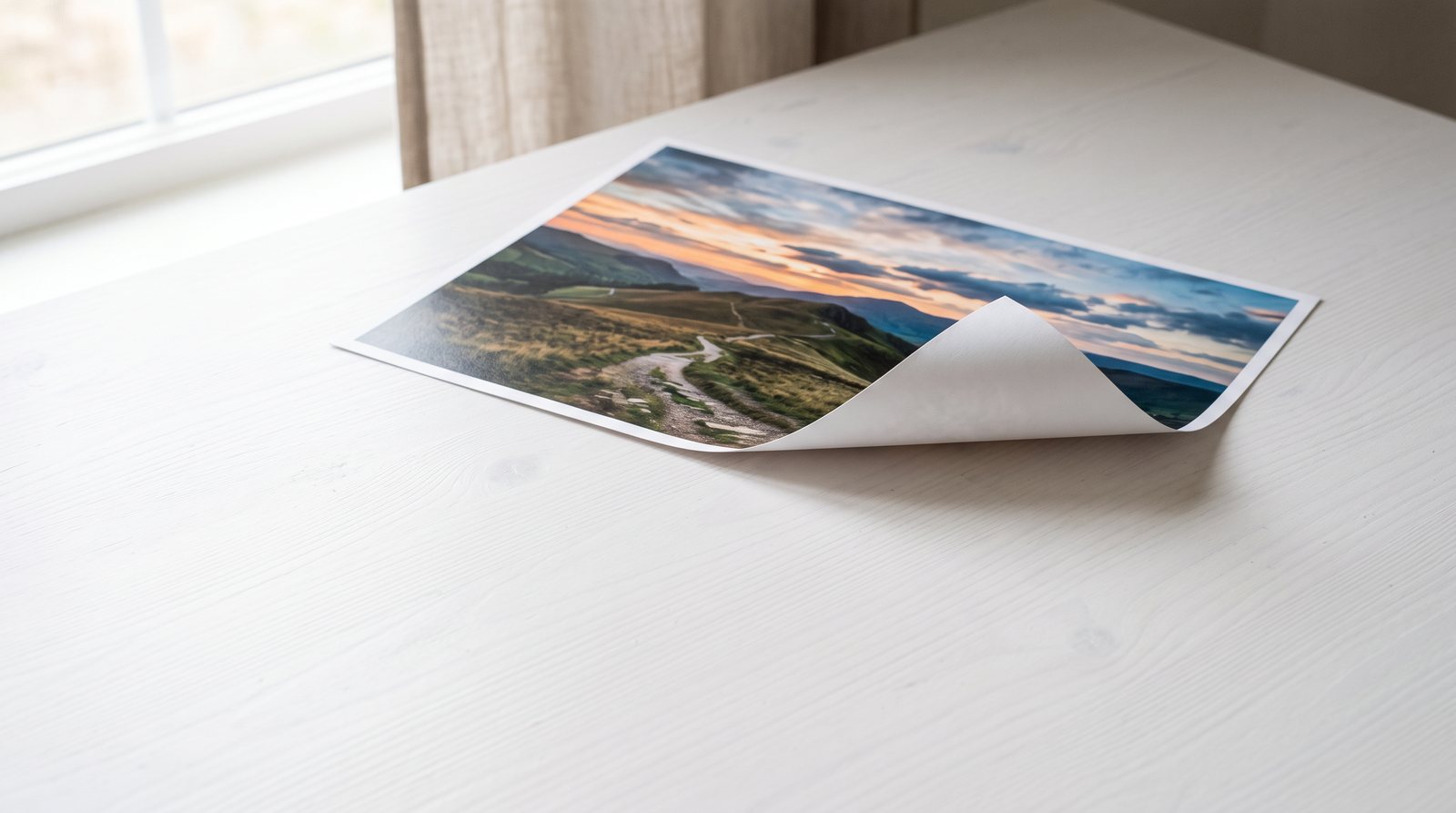
The digital image exists in a state of perpetual potential, a stream of data that requires a backlit screen to become visible. It is fluid, infinitely replicable, and inherently weightless. However, when that data is translated onto a physical substrate—be it silver gelatin, pigment on cotton rag, or a polaroid—the image undergoes a fundamental transformation. It ceases to be a ghost in the machine and becomes an object. This transition is the central ritual of photography, where light is not just captured but anchored. To hold a print is to engage with a photograph not as a fleeting arrangement of pixels, but as a tangible artifact that occupies three-dimensional space. In this moment of materialization, the image gains a presence that a screen can never replicate, demanding a different kind of attention.
The choice of paper is the first step in this alchemy, a decision that dictates how the image will interact with the world. A heavy baryta paper, with its subtle sheen and deep blacks, lends a photograph a sense of gravitas and classical authority. In contrast, a soft matte cotton rag can turn a sharp landscape into something tactile and painterly, absorbing light rather than reflecting it. This physical choice is a curatorial act that defines the viewer's relationship to the subject. The texture of the grain and the weight of the sheet in the hand contribute to a multisensory experience. The print becomes a surface that can be touched and a weight that must be reckoned with, grounding the visual information in a specific, material reality.
In the digital realm, an image is often viewed in a state of distraction, subject to the erratic glow of varying device settings. The physical print, however, imposes its own conditions. It has fixed dimensions and a static frame that cannot be pinched or zoomed. This limitation is its greatest strength. By removing the possibility of manipulation, the print forces the viewer to confront the image as it was intended to be seen. The eye is allowed to wander across the surface, discovering details in the shadows that are often lost in the compressed glare of a smartphone. This slow looking is a form of respect for the craft, allowing the image to reveal itself at its own pace rather than the frantic speed of a scroll.
There is a unique solitude in the physical print, a sense that it is a singular object even if part of an edition. Each print carries the subtle marks of its creation and the history of its existence. Over time, a print may develop a slight patina, its edges might soften, or it may react to the environment. These are not flaws, but the evidence of its life as an object. Unlike a digital file, which remains theoretically perfect until it becomes unreadable, a print ages with grace. It exists in the same timeline as the viewer, subject to the same physical laws of light and decay. This shared mortality creates a bridge between the observer and the observed, making the photograph feel like a living witness.
The archival nature of the print is its most practical justification in an era of digital obsolescence. We live in a time where billions of images are uploaded daily, yet their longevity is tethered to the survival of servers and proprietary software. A physical print, stored in acid-free conditions, requires no power source to be seen and no software to be decoded. It is a self-contained vessel of information that can wait in a drawer or hang on a wall for centuries. For the photographer, the print is a hedge against the future, a way of ensuring that their work survives the inevitable churn of technology. It is a commitment to the idea that some images are worth keeping as physical evidence of a vision that once existed.
Beyond the technical, the print serves as the ultimate realization of a photographer’s intent. In the professional world, the print is the currency of the exhibition and the foundation of the book. It is the form in which the work is finalized, where every decision regarding color and composition is locked into place. When a photographer presents a portfolio of prints, they are offering a curated experience that is entirely under their control. The sequence of the pages and the physical act of turning the paper all contribute to a narrative that is lost in a digital gallery. The print is where the process ends and the conversation begins, providing a stable platform for appreciation and historical record that remains consistent regardless of the environment.
The emotional resonance of a physical photograph is tied to its role as a memento. We do not frame digital files; we frame prints. We tuck them into wallets and pass them down through generations. The act of giving a print is an act of sharing a physical piece of memory. When we hold a photograph of a loved one, the tactile connection reinforces the emotional one. The image becomes a touchstone, a way of reaching back through time to a specific moment that has been given a permanent, tangible form. In a world mediated by screens, the physical print remains a vital anchor, a reminder that our experiences are not just sequences of light, but are rooted in a world we can touch and hold.
Ultimately, the physical print is a declaration of value. To choose to print an image is to say that it matters enough to occupy space and consume resources. It is a rejection of the disposable culture of the instant upload and a return to the deliberate craft of making something real. As we navigate a landscape dominated by fleeting social media feeds, the print stands as a testament to the human eye. It is the moment an image stops being a representation and starts being a presence. By turning light into an object, the photographer gives the image a soul, ensuring that it will continue to speak to those who find it, long after the screens have gone dark.