Photography
Street photography is learning to show the city without treating people as scenery.
Street photography requires a shift from viewing the urban environment as a static stage to recognizing it as a living collection of individual lives, where the camera serves as a tool for empathy rather than just a means of capturing composition.
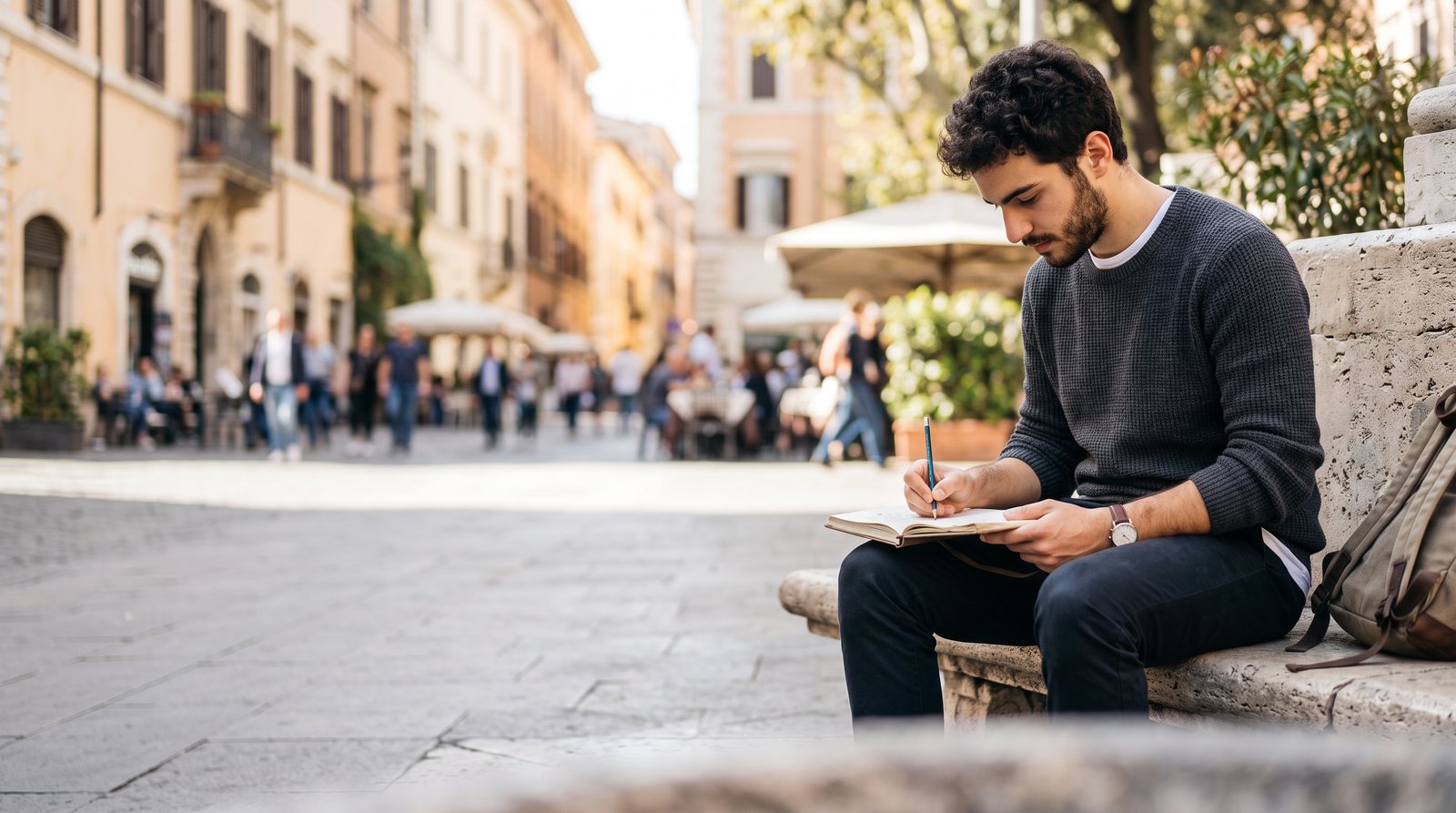
The practice of street photography is often misunderstood as a simple act of documentation, a way to freeze the chaotic motion of the city into a single, legible frame. However, for those who truly inhabit the sidewalks with a camera, the process is more nuanced than capturing what is already there. It is a discipline of looking that requires the photographer to navigate a delicate balance between the urban environment and the people who populate it. To show the city without treating its inhabitants as mere scenery is to acknowledge that every individual in the frame possesses a narrative as complex as the photographer’s. This shift in perspective transforms the street from a stage for aesthetic experimentation into a space for genuine human encounter, where the camera acts as a bridge toward understanding the collective rhythm of metropolitan life.
In many contemporary photographic circles, there is a lingering temptation to prioritize composition over connection, reducing the human form to a convenient shape or a splash of color that balances a geometric arrangement. While these formal qualities are essential, they become a limitation when the person in the photograph is stripped of their agency and relegated to the status of a prop. A silhouette against a sunset or a blurred figure in a crowded station can be visually striking, yet such images often fail to convey the specific weight of a life being lived. The challenge for the street photographer is to maintain the integrity of the scene while honoring the presence of the subject. This requires a rejection of the predatory gaze that seeks to "take" a photograph, replacing it instead with a receptive state of mind.
Learning to see the city as a living organism rather than a backdrop involves a profound commitment to patience and observation. It is not enough to walk through a neighborhood; one must learn to wait for the moment when the architecture and the human element converge in a way that feels both inevitable and surprising. This patience is particularly vital when working in the shifting light of the evening, where the long shadows and artificial glows of the city can easily overwhelm the human subject. A streetlamp casting a harsh light on a rainy sidewalk creates a dramatic setting, but the photograph only truly begins to breathe when a person enters that light, not as a decorative element, but as the emotional anchor of the composition. The photographer’s task is to ensure that the environment serves the person.
The ethical dimension of street photography is perhaps its most demanding aspect, yet it is also what gives the work its lasting value. There is an inherent vulnerability in being photographed in public, and the photographer must carry this responsibility with a sense of quiet restraint. Treating people with dignity does not necessarily mean asking for permission in every instance—which can often destroy the spontaneity that defines the genre—but it does mean approaching every shot with a fundamental respect for the subject. It is about recognizing the difference between a moment of shared public life and an intrusive violation of privacy. When a photographer succeeds in this, the resulting image does not just show a person in a city; it shows a person of the city, fully integrated into their surroundings.
Night photography brings an additional layer of complexity to this pursuit, as the technical constraints of low light demand a deliberate approach to equipment and movement. The choice of a camera, the speed of the sensor, and the aperture of the lens all become part of the photographer’s philosophical toolkit. Using a small, unobtrusive camera allows the photographer to move through the city with less friction, becoming a participant in the night rather than an outside observer. This lack of intrusion is essential for capturing the quiet, unguarded moments that occur when the city begins to slow down. In the darkness, the relationship between the photographer and the subject becomes intimate, as the shared space of the street is narrowed by the limited reach of the available light.
As the photographer moves through different neighborhoods, they begin to notice how the character of the city changes, not just in its buildings, but in the way people occupy the space. A bustling market in the morning has a different human frequency than a quiet residential street in the late afternoon. To capture these variations without falling into stereotypes requires a deep familiarity with the local terrain. It is a process of unlearning the generic "urban" aesthetic and replacing it with a specific, localized understanding of place. By spending time in a single area, the photographer learns the patterns of the residents and the subtle gestures that define the community. This knowledge allows them to anticipate the moment when a person’s presence will transform a mundane scene into a profound observation of city life.
The ultimate goal of this approach is to create a body of work that serves as a testament to the richness of the human experience in the modern city. Such photographs do not seek to provide easy answers; instead, they offer a series of quiet questions about how we live together in close proximity. They remind the viewer that the stranger walking toward them on the sidewalk is not a background character in their own story, but a protagonist in a narrative of equal importance. When street photography is practiced with this level of empathy, it becomes a powerful tool for social cohesion, breaking down the anonymity of the city and replacing it with a sense of shared belonging. It is a reminder that the city is not made of concrete and glass, but of people.
In the end, the most successful street photographs are those that leave room for the viewer to bring their own imagination to the scene. They are images that do not explain everything at once, but instead invite a slower kind of looking. By refusing to treat people as scenery, the photographer allows the subject to remain a mystery, a person whose life continues long after the shutter has closed. This respect for the unknown is what gives street photography its enduring power. It is a practice that requires constant revision and a willingness to be wrong, as the city is always changing and the people within it are always finding new ways to exist. For Noa Venn, the street is not just a place to make art; it is a place to learn how to be a more attentive observer.