Photography
The contact sheet is back because editing still needs a view of the whole attempt.
The resurgence of the photography contact sheet reveals a growing desire for a more deliberate editing process, one that values the visible trajectory of a photographer’s choices over the immediate finality of the digital frame.
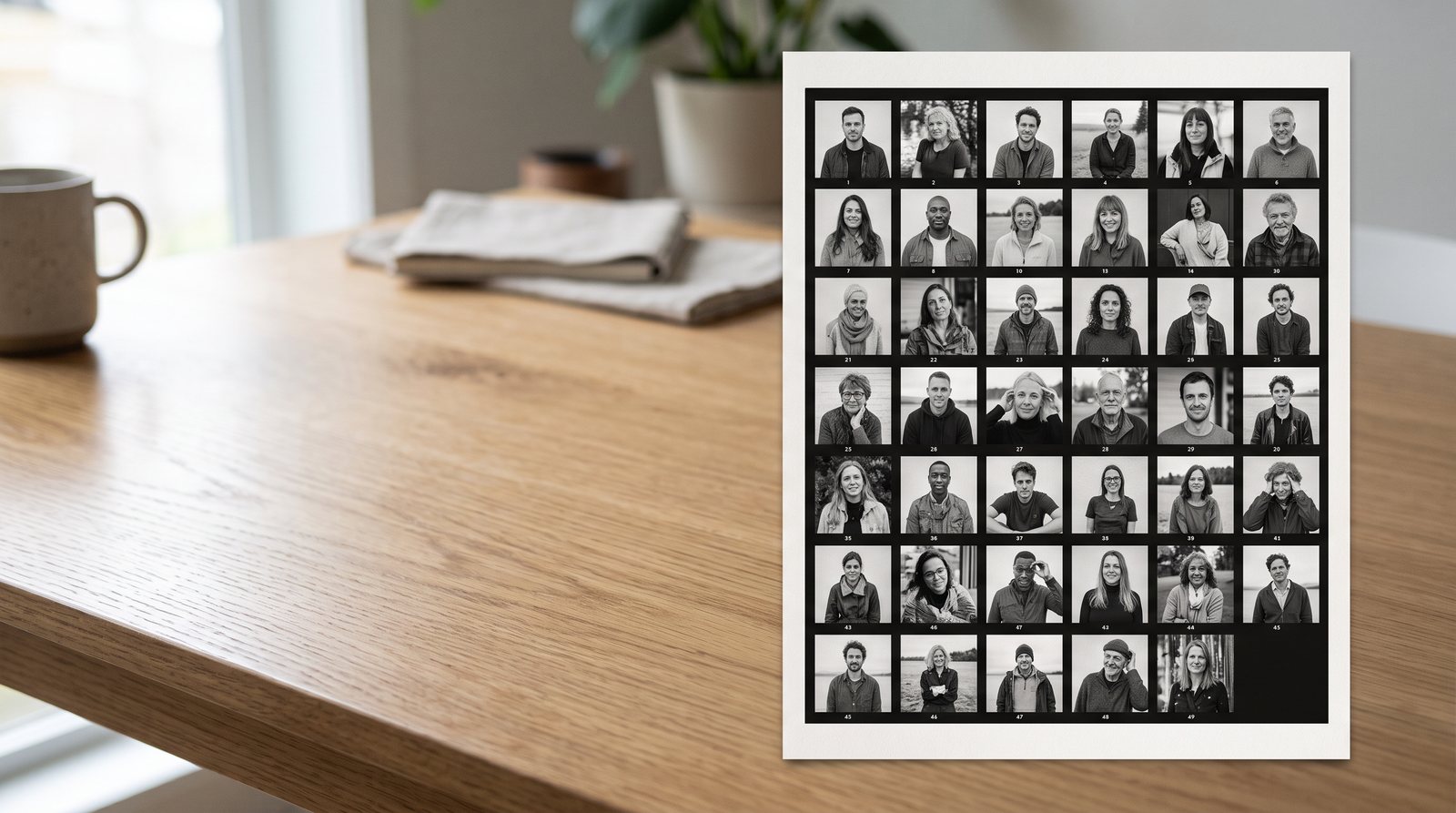
The photography contact sheet was once a strictly utilitarian artifact, a grid of thumbnail-sized exposures printed directly from a roll of film onto a single sheet of paper. It served as a map, allowing the photographer to see every frame captured without the expense of printing each one individually. In the decades following the digital transition, this physical record was largely replaced by the instantaneous preview and the ruthless efficiency of the "delete" key. However, a quiet resurgence is underway, driven by a recognition that the digital grid lacks the narrative depth of the physical sheet. For a new generation of practitioners, the contact sheet is returning as a vital tool for editing, offering a view of the whole attempt that remains essential for understanding how a single successful image is actually constructed.
Unlike the isolated digital file, a contact sheet preserves the entire sequence of a photographer’s movements and hesitations. It records the "near misses"—the frames where the focus was off, the subject blinked, or the light shifted. These are not failures; they are the data points leading to a final resolution. When a photographer looks at a contact sheet, they are reading the history of their own attention. The sheet shows how they circled a subject, experimented with angles, and waited for elements to align. This visibility of the "whole attempt" provides a context lost when images are viewed one by one on a screen, where the ease of deletion encourages the erasure of the very process that makes the final image possible.
The return to the contact sheet also marks a return to the physical act of curation. In the darkroom era, the contact sheet was the primary site of decision-making, often covered in red or blue grease pencil markings. Circles identified candidates for enlargement, while bold crosses signaled frames to be ignored. These were the physical artifacts of a photographer’s judgment. Today, even when recreated digitally, the contact sheet encourages a similar level of deliberate scrutiny. It forces the editor to slow down and consider the relationship between frames, noticing patterns that might not be apparent in a fragmented workflow. By treating the entire roll as a single document, the photographer can see the rhythm of their work, identifying not just what they saw, but how they saw it.
Historically, the contact sheets of master photographers have served as a form of visual education, demystifying the concept of the "decisive moment." Viewing the sheets of figures like Henri Cartier-Bresson reveals that iconic images were rarely the result of a single, perfect shot. They were often preceded by several exposures that were almost, but not quite, right. Seeing these sequences allows a student to understand that great work is built through trial and error. The contact sheet reveals the labor behind the lens, showing that even the most celebrated photographers had to work through a scene, adjusting their position until the elements converged. This transparency is a powerful antidote to the myth of the effortless masterpiece, reminding us that the ability to edit is as important as the ability to shoot.
Modern digital workflows are beginning to incorporate the logic of the contact sheet through specialized software that resists the standard thumbnail grid. Rather than simply displaying images for quick selection, these tools allow photographers to arrange their work in a way that mimics the linear progression of film. This shift changes the psychological state of the editor. When images are presented as a continuous sequence, the urge to cull immediately is replaced by a desire to compare and contrast. The photographer can see how a change in exposure or a shift in composition affects the mood of the entire series. This holistic view is particularly useful for long-form projects, where the strength of the work depends on the cumulative effect of multiple images rather than the impact of a single standout frame.
Beyond its role in editing, the contact sheet has been recognized as an art object in its own right. Collectors value these sheets for their raw honesty and the intimate glimpse they provide into a photographer’s mind. A contact sheet is a document that is both finished and unfinished; it contains the final work but also the discarded attempts, all held together by the physical structure of the film strip. In an age of highly polished digital imagery, the unvarnished nature of the contact sheet feels authentic. It represents a moment in time that cannot be easily replicated, standing as a testament to the physical reality of the photographic process. This appreciation for the sheet as an object reinforces its value as a tool for self-reflection and artistic growth.
The decision to work with contact sheets encourages a more patient and observant style of shooting. The photographer becomes less likely to "spray and pray," a common digital technique where hundreds of frames are captured in the hope that one will be usable. Instead, they begin to think in terms of the roll or the session, considering how each shot contributes to the overall narrative. This mindfulness extends into the editing room, where the contact sheet serves as a reminder of the original intent behind each exposure. It grounds the editing process in the physical experience of being present with the camera, ensuring that the final selection remains true to the photographer’s vision.
Ultimately, the return of the contact sheet is an argument for the importance of the whole attempt over the convenience of the final result. It is a reminder that photography is a practice of seeing, and that seeing is a process that takes time and requires the freedom to make mistakes. By preserving the sequence of a photographer’s work, the contact sheet provides a necessary perspective on creative decision-making. It shows that the "decisive moment" is not a solitary event, but the culmination of a series of observations and adjustments. As tools continue to evolve, the contact sheet remains a vital anchor, ensuring that the act of editing remains a thoughtful and deliberate part of the craft.