Figure skating
The score is built one edge, one rotation, and one decision at a time.
In the modern era of figure skating, the margin between a podium finish and a mid-pack placement is measured in the millimetric precision of a steel edge and the split-second decisions made mid-air, turning the ice into a canvas of high-stakes calculation.
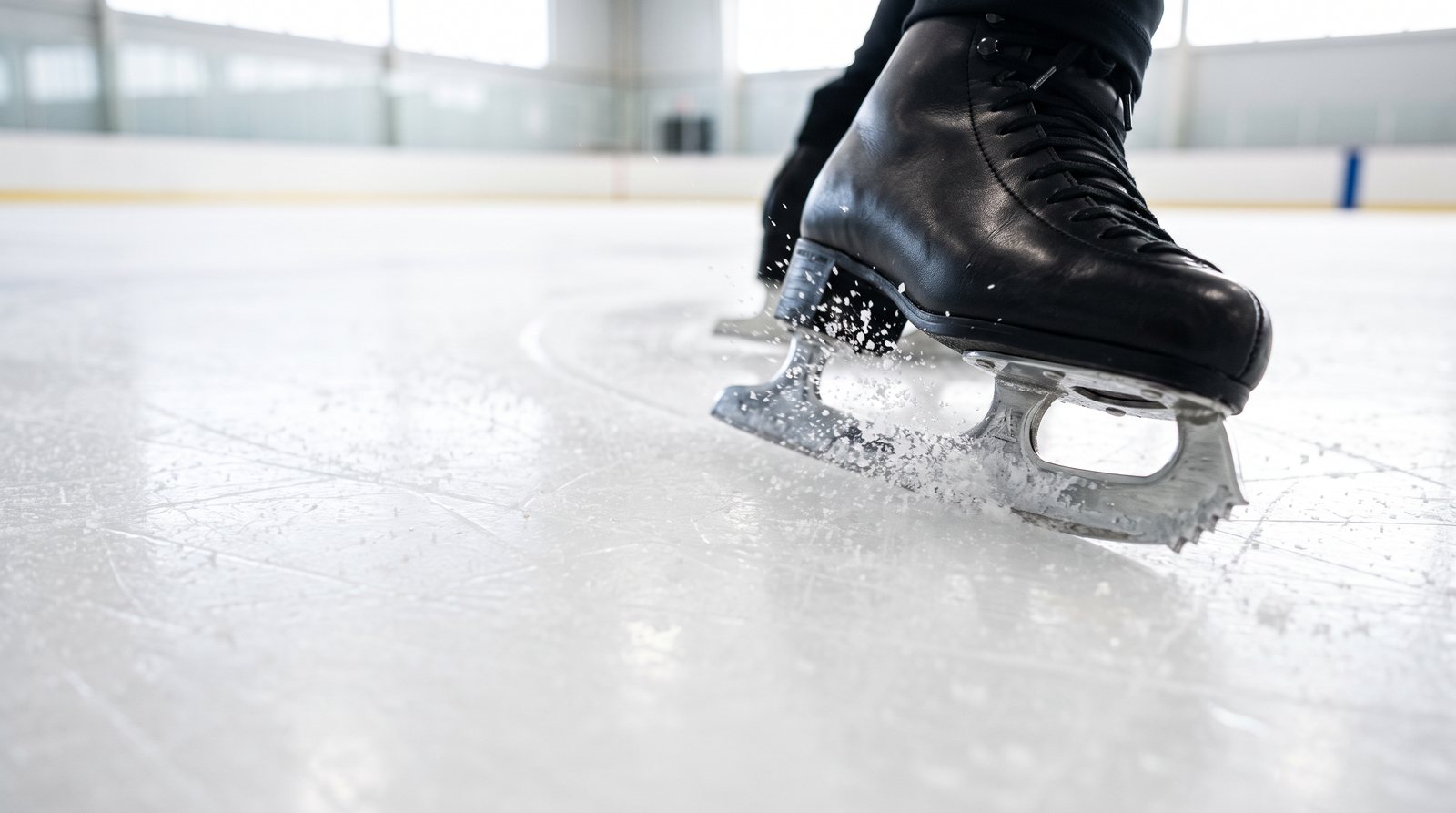
The ice rink at dawn is a pristine sheet, a silent expanse of frozen water holding potential for both precision and failure. To a casual observer, it is a cold stage, but to a skater, it is a dense medium recording every micro-adjustment of a steel blade. The physics of the sport begin at the microscopic level where the blade meets the ice. A skater does not simply glide; they navigate a landscape of edges—inner and outer, forward and backward. These four edges are the fundamental vocabulary, the silent foundation for every triple axel and quadruple lutz. Mastering the ice means understanding that momentum is about the controlled friction allowing a body to lean at impossible angles without losing its grip. Every stroke is a deliberate negotiation with gravity, a preparation for the vertical challenges to come.
Edge work is the quiet labor preceding the spectacular. It is the repetitive practice of turns—mohawks, choctaws, and rockers—refining a skater’s relationship with the ice. In "Edge Work" reports, this is the "invisible score." While the audience waits for jumps, judges watch the feet, looking for the "deep edge," the sharp line indicating a skater is utilizing blades as precision instruments. A slight wobble or a "flutz"—a lutz jump from the wrong edge—can decide the difference between a gold medal and fourth place. It is a sport of millimeters, where the physical reality of the blade’s position dictates the mathematical outcome. The sound of a clean edge cutting through the ice is a crisp hiss, a signal of technical mastery resonating through the arena.
If the edge is the foundation, rotation is the architecture of the air. The transition from ice to sky is a violent, calculated explosion of energy. A skater must convert horizontal velocity into vertical lift while initiating a rotation reaching three hundred revolutions per minute. This is the "one rotation at a time" philosophy. A quadruple jump is a sequence of four distinct revolutions, each requiring a tight, aerodynamic column. The physics are unforgiving: any deviation in the center of gravity or premature opening of the arms will cause centrifugal force to tear the jump apart. The skater must hold their form, trusting muscle memory to spin in a world pulling them outward. The landing requires checking the spin and finding a perfect outside edge to glide away.
Modern figure skating is governed by the International Judging System (IJS), an objective, data-driven framework. Under the IJS, the score is built element by element. Every spin, sequence, and jump has a base value, modified by the Grade of Execution. This has turned the sport into a high-stakes calculation. Skaters and coaches must decide whether to risk a high-value element performed poorly or opt for a simpler one executed perfectly. It is a constant trade-off between ambition and reliability. The "Ice report" often highlights how this mathematical reality has pushed skaters toward technical extremes, sometimes sacrificing the lyrical flow once defining the discipline. The score sheet is a dense map where a level-four spin is as crucial as a triple jump.
Beyond physics and math lies the "one decision at a time" reality of the competitive program. A four-minute free skate is a marathon of mental focus. As lactic acid builds and lungs burn, the skater makes hundreds of split-second choices. Should they add a triple-toe loop if the first jump felt off-balance? Should they push for a deeper edge in the step sequence while nearing exhaustion? These decisions are made in the blur of motion, under stadium lights and watchful eyes. The mental fortitude to stay present, preventing a single mistake from cascading into a ruined program, is as much a part of the score as the jumps. It is a test of character disguised as a dance, where adapting to a flawed moment defines the champion.
The beauty of figure skating masks the brutality of its physical demands. The impact of landing a jump is several times a skater’s body weight, a shock traveling through the ankle, knee, and hip. Over a career, these thousands of landings leave stress fractures and chronic pain. Yet, the skater must present effortless grace, hiding strain behind a practiced smile. This dichotomy is central to the sport’s appeal—the contrast between a fragile, sequined exterior and the iron-willed athlete within. Training is not just about new tricks; it is about conditioning the body to withstand repetitive trauma, ensuring the "one edge" remains stable even when the body screams for rest. The recovery process is rigorous, involving physiotherapy and the patient rebuilding of strength to return to the ice day after day.
Despite technicality, the "Program Components" score remains vital. This is where the skater’s ability to interpret music, move with purpose, and connect with the audience is measured. It is the attempt to quantify the unquantifiable—soul, expression, and artistry. A great skater uses edges not just for speed, but to create a mood, and rotations not just for points, but to punctuate a musical phrase. When the technical and artistic are in alignment, decisions disappear, and the audience forgets the scoring system. In those moments, the sport transcends rules, becoming a pure expression of human capability etched in frost. The transition from a high-velocity jump into a delicate choreographic sequence requires control few other sports demand, blending the power of a sprinter with the elegance of a dancer.
In the end, the final score is a cumulative record of a thousand tiny victories and defeats. It is a testament to the construction of a career, built one early morning practice, one fall, and one successful recovery at a time. The work of Alina West and others in "Edge Work" reminds us that while quadruple jumps get headlines, the sport’s true heart lies in the quiet precision of the blade. As the skater leaves the ice, the marks left behind begin to fade, smoothed over by the resurfacing machine. But the score remains—a permanent mark of a moment where skill, courage, and calculation converged on a thin sheet of ice. The legacy is not the medal, but the new standard set for what is possible when challenging the limits of gravity and grace.