Figure skating
Evgenia Medvedeva’s competitive years still read like a lesson in program construction.
Evgenia Medvedeva’s competitive career serves as a masterclass in the evolution of modern figure skating, where technical precision and narrative depth converged to redefine how a four-minute program could be constructed for maximum impact.
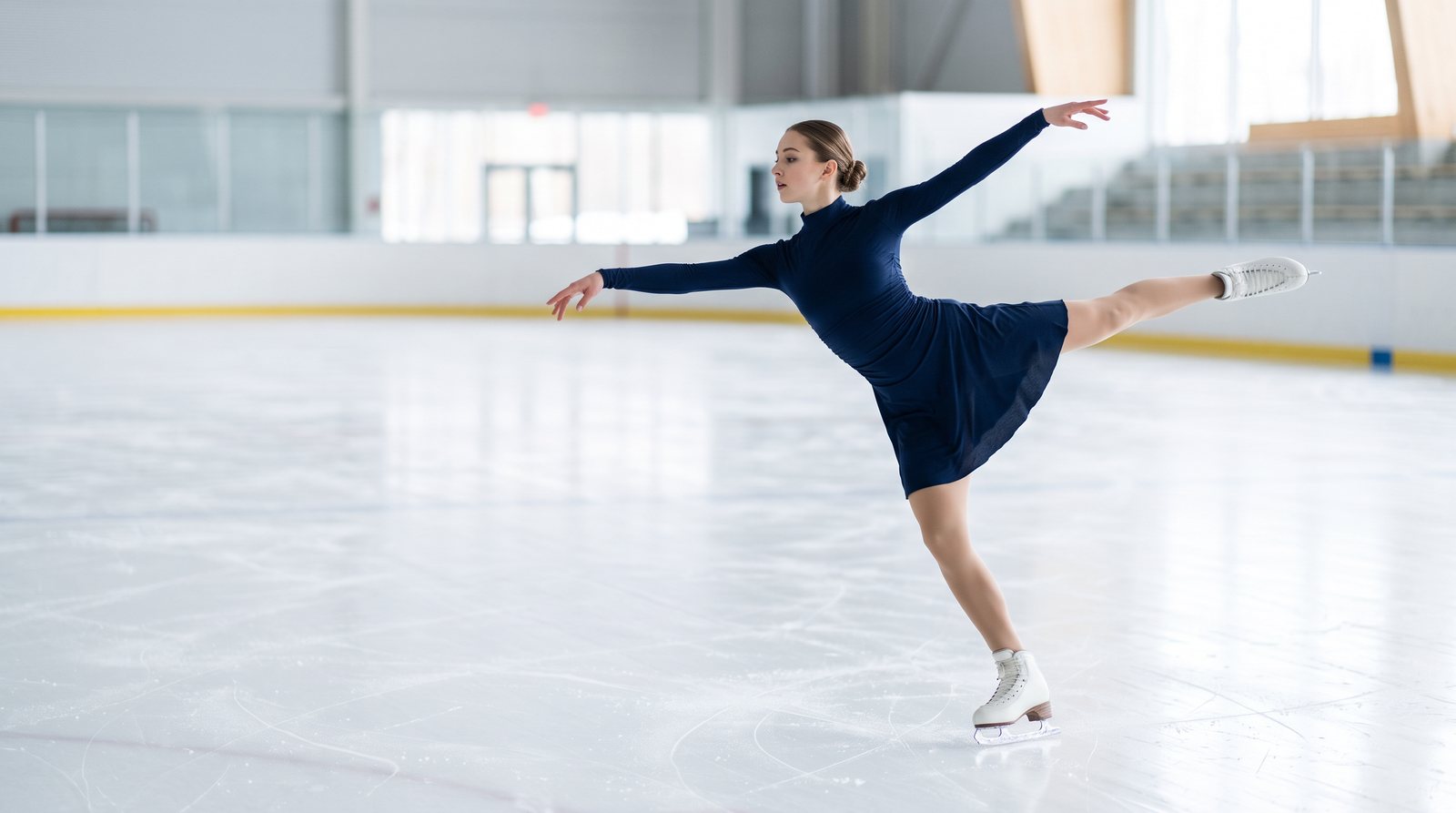
The competitive peak of Evgenia Medvedeva between 2015 and 2018 represents a pivotal chapter in figure skating, where program architecture became as significant as the elements themselves. During these years, Medvedeva constructed complex narratives that challenged the boundaries between technical athleticism and theatrical performance. Her dominance was a result of a meticulous approach to program construction that maximized every possible point within the judging system. This era saw a shift toward high-density performance where every transition was designed to serve both the score and the story. Her work remains a sophisticated example of planning that continues to influence the next generation of competitors.
At the heart of Medvedeva’s strategy was a revolutionary approach to technical distribution. Working under Eteri Tutberidze, she popularized backloading—placing jumping passes in the second half of the program to earn a bonus. This required a layout that maintained interest during the first two minutes without major jumps. To compensate, her programs were filled with intricate footwork, ensuring no moment was "empty." The inclusion of "Tano" and "Rippon" variations became a signature tool to increase execution scores. This technical blueprint turned the program into a high-stakes endurance test, where the most difficult elements were executed under fatigue, defining her world-championship-winning seasons.
Medvedeva’s programs used evocative soundscapes, including spoken word and contemporary scores. Her 2016-2017 program, "Extremely Loud and Incredibly Close," included the sound of a ringing telephone and sirens, referencing 9/11. This choice was a bold departure from abstract beauty, requiring a construction that could handle heavy subject matter. The choreography was timed precisely to these auditory cues, creating a sense of "live" storytelling where movements felt like a reaction to the music. This level of narrative integration raised the bar for Program Components, forcing judges to view the competitive routine as a legitimate piece of performance art.
The 2017-2018 Olympic season saw "Anna Karenina," a definitive example of Medvedeva’s constructive genius. Set to Dario Marianelli’s soundtrack, the program was a condensed version of Tolstoy’s epic. The construction was masterful: the opening established aristocratic grace, while the middle section utilized rapid transitions to mirror Anna’s desperation. The climax, featuring a flurry of jumps, coincided with the sound of a steam train, representing the story’s conclusion. In this instance, the technical requirements—spins, steps, and jumps—were so seamlessly woven into the character study that the seams of the construction became invisible. It remains a benchmark for translating literature into the language of ice.
A significant aspect of Medvedeva’s construction was her use of transitions connecting major elements. Prior to her arrival, many skaters used long preparation times to gather speed. Medvedeva utilized a "no-prep" approach, entering jumps directly from difficult steps or turns. This increased her technical score and gave her programs a sense of continuous, fluid motion. These transitions were the connective tissue holding the narrative together, ensuring the performance never stopped, even when preparing for difficult combinations. This density of movement became a requirement for any skater wishing to challenge for a podium, effectively ending the era of the "skate-jump-skate" routine.
Following the 2018 Olympics, Medvedeva’s move to train with Brian Orser signaled a new phase in her construction approach. Seeking to move away from the high-pressure style of her youth, she explored a more mature, Western-influenced style. Programs like "Memoirs of a Geisha" prioritized deep edges, upper-body fluidity, and a nuanced interpretation of the music. While she maintained technical difficulty, the focus shifted toward the quality of movement rather than the quantity of elements. This period was a lesson in adaptation, showing how a veteran skater could re-engineer her style to suit a changing body, proving that program construction is an evolving process.
The efficiency of Medvedeva’s program construction eventually led to significant changes in international rules. The "Zagitova Rule" was introduced after 2018 to limit the ten-percent bonus to only the last three jumping passes. This was a direct response to the "unbalanced" nature of programs that backloaded all jumps into the final minutes. Medvedeva’s career thus became a catalyst for a broader conversation about the "well-balanced program," a term used to describe a routine that distributes difficulty more evenly. Her success forced the sport to define the limits of technical optimization, ensuring that construction remained a balance between strategy and aesthetic harmony.
Ultimately, Evgenia Medvedeva’s competitive years remain a masterclass in the art of the possible within a judged sport. Her programs are studied for their structural integrity, showing how a skater can use every second on the ice to build a case for victory. Beyond medals, her legacy is found in the way modern skaters now approach their own routines as architects. The "Medvedeva era" proved that a program is not just a collection of skills, but a deliberate construction that can transcend the score to become a lasting part of the sport’s cultural memory.
In the final analysis, the construction of a figure skating program is a balance between rigid requirements and the human spirit. Evgenia Medvedeva’s career was the intersection of these forces. She took the judging system and used it to write stories that were as structurally sound as they were emotionally resonant. As the sport evolves, the lessons from her competitive years—about the value of transitions, the power of narrative, and the importance of layout—will remain essential for anyone seeking to understand the depth of the sport. Her programs were enduring lessons in how to build something beautiful under intense pressure.