Paddington dining
Tequila Mockingbird — Latin American sharing plates at Five Ways.
Tequila Mockingbird brings a sophisticated Latin American pulse to the historic heart of Paddington’s Five Ways, where shared plates and craft agave spirits transform a traditional terrace into a vibrant intersection of culture and culinary precision.
At the irregular heart of Paddington, where five streets converge in a graceful architectural knot known as Five Ways, the rhythm of the city seems to momentarily pause. This intersection is a testament to Sydney’s Victorian-era planning, a place where the domesticity of terraced housing meets the commercial vitality of a village square. It is here that Tequila Mockingbird has established itself as a sensory anchor for the neighborhood. The venue occupies a space that feels both deeply rooted in local history and entirely distinct from it, offering a bridge between the sandstone-and-ironwork aesthetic of the Eastern Suburbs and the fiery traditions of Latin America. To stand at the threshold of Five Ways is to witness a quiet choreography of locals, all drawn to the unique gravity of this particular corner.
The structure of Tequila Mockingbird is a masterclass in the adaptive reuse of Paddington’s historic terrace architecture. The building retains the vertical elegance of its original form, yet the interior has been reimagined to accommodate the expansive energy of a modern kitchen. There is a deliberate tension between the heritage bones of the site—the exposed brick and timber floors—and the contemporary flourishes that signal its current purpose. The lighting is low and amber, designed to soften the edges of the room and draw the eye toward the activity of the service. It is a space that respects the silence of the past while providing a stage for the lively sounds of a dining room in full flight. The transition from the street into the restaurant is a transition into a different kind of time.
At the core of the experience is the philosophy of the sharing plate, a culinary format that functions as a social technology for the modern diner. In the Latin American tradition, the act of eating is rarely a solitary affair; it is a communal event, a series of shared discoveries that encourage conversation. The menu is structured to facilitate this interaction, moving away from the rigid progression of courses toward a more fluid, exploratory style of dining. This approach requires a certain level of trust between the kitchen and the guest, as well as between the guests themselves. It invites a collective engagement with the flavors on the table, turning a meal into a shared narrative. Each dish is a component of a larger whole, reflecting the diverse nature of the regions that inspire the food.
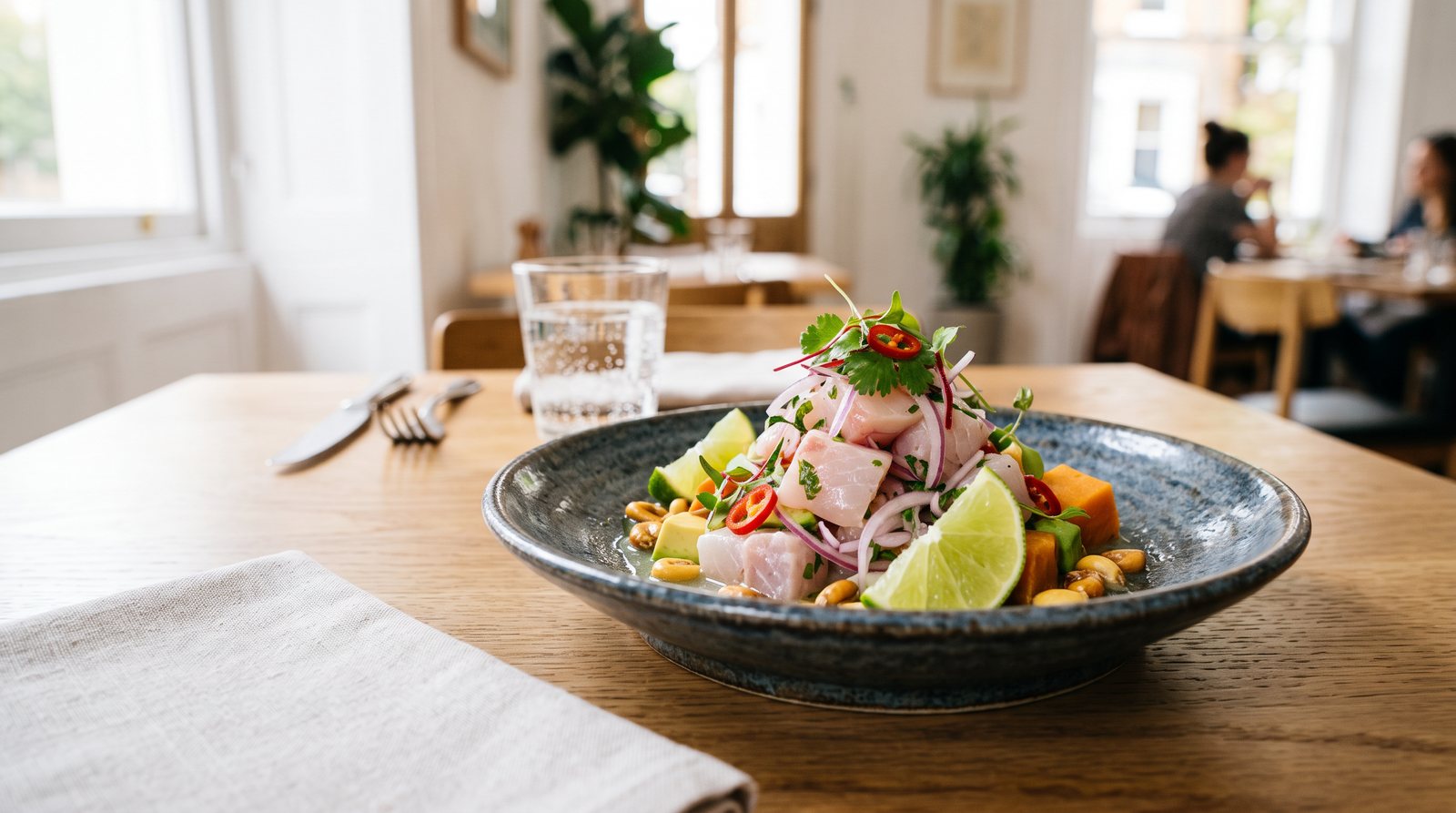
The kitchen is a place of elemental transformation, where the raw materials of the Americas are met with the precision of contemporary technique. The scent of the wood-fired grill is the first thing that greets a visitor, a smoky, evocative aroma that speaks of ancient cooking methods and the fundamental power of fire. Here, ingredients like maize, various chilies, and fresh seafood are treated with a reverence that highlights their natural characteristics. There is no attempt to over-complicate or obscure the origins of the food; instead, the focus is on clarity and balance. The heat of a habanero is tempered by the acidity of lime; the richness of wagyu is cut by the brightness of a chimichurri. This is a cuisine of contrasts, one that mirrors the vast landscapes of the continent, from the Andes to the coast.
If the kitchen provides the substance, the bar provides the spirit—specifically, the artisanal agave spirits that give the venue its name. The selection of Tequila and Mezcal is not a mere list of drinks, but a curated library of liquid history. Each bottle represents a specific terroir, a particular producer, and a traditional method of production that has remained largely unchanged for generations. To engage with the bar is to discover the complexity of the agave plant. The pours are measured and deliberate, served in glassware that encourages the appreciation of the aroma and the color. The ritual of the drink is treated with the same seriousness as the preparation of the food, creating a cohesive experience where the glass and the plate are in constant, harmonious dialogue.
As the evening progresses, the relationship between the restaurant and the neighborhood undergoes a subtle shift. The large windows that look out onto Five Ways become frames for the changing light, capturing the transition from the golden hour of the afternoon to the deep blue of the Sydney night. The restaurant begins to glow from within, becoming a lantern for the intersection, a point of light that signals the beginning of the evening’s social life. The sound of the room rises—a mixture of clinking glass, the low hum of conversation, and the occasional burst of laughter—creating a soundtrack that is uniquely local yet possesses a universal warmth. This is the moment when the "Mockingbird" aspect of the name feels most apt—a creature known for its ability to adapt to its environment.
The attention to detail extends to the smallest elements of the service, from the texture of the napkins to the way the staff navigate the narrow spaces of the terrace. There is a quiet efficiency at work, a professional poise that ensures the complex machinery of the restaurant runs smoothly without ever feeling mechanical. The staff act as guides through the Latin American landscape, offering insights into the provenance of a particular mezcal or the inspiration behind a seasonal dish. Their knowledge is shared with a genuine enthusiasm that elevates the experience from a simple transaction to a meaningful encounter. This human element is what binds the disparate parts of the restaurant together—the food, the drink, the architecture—into a singular, coherent whole that feels both professional and personal.
Ultimately, Tequila Mockingbird is a reflection of the evolving identity of Paddington—a neighborhood that balances its heritage with a desire for the new. By bringing the vibrant, shared culture of Latin America to this historic Sydney corner, the venue has created a space where the familiar and the exotic can coexist. It is a reminder that the most successful public spaces are those that offer a sense of belonging while providing a window into other worlds. Whether one is visiting for a quick drink at the bar or a long meal, the impression is the same: a feeling of being exactly where one should be, at the intersection of five streets and two cultures. The meal ends, the plates are cleared, but the memory remains, a wistful ink on the map of the city.