Woollahra dining
The Wine Library — Wine bar at 18 Oxford Street.
At 18 Oxford Street, The Wine Library serves as a vital piece of Woollahra’s civic infrastructure, offering a global cellar within a slender, intimate shopfront that rewards the visitor with a profound connection to both the glass and the neighborhood.
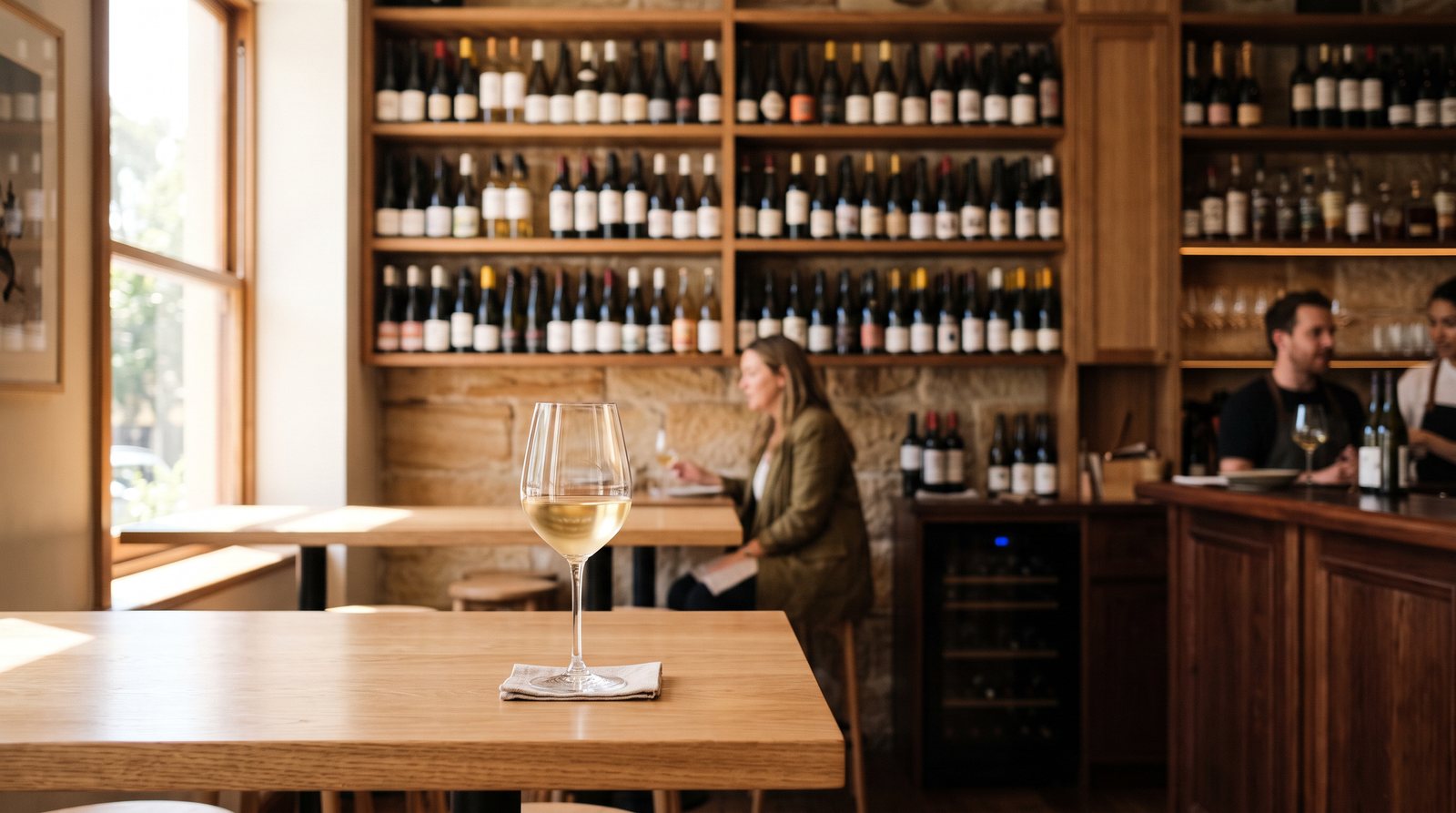
Woollahra’s Oxford Street is a corridor of refined restraint, where the architectural cadence of Victorian terraces and heritage shopfronts dictates a slower pace of urban life. This stretch of Sydney’s east maintains a character defined by the "useful room"—spaces that serve as extensions of the domestic sphere. The Wine Library, situated at number 18, embodies this civic intimacy. It occupies a slender footprint that belies the depth of its interior life, standing as a testament to the enduring relevance of the specialized wine bar. In an era of expansive hospitality concepts, there is a particular value in the "skinny shop" model, where the physical limitations of the architecture force a concentration of purpose. Here, the focus is not on the spectacle of the crowd, but on the precision of the pour and the quiet choreography of neighborhood assembly.
The interior of The Wine Library is a study in spatial transition, moving from the public-facing transparency of the front bar to the sheltered seclusion of the rear. Upon entry, the high-top seating and large windows create a connection to the street, allowing the natural light of Woollahra to illuminate the polished surfaces. However, as one moves deeper into the building, the atmosphere undergoes a deliberate compression. The architecture narrows, leading visitors past the functional heart of the bar into a series of "nookish" spaces and a petite courtyard. The courtyard, in particular, serves as a vital lung for the establishment, providing a pocket of open-air tranquility that softens the urban edges of Oxford Street.
At the core of the establishment is a cellar that functions more like a research archive than a commercial inventory. With a list that spans over 900 bottles and offers more than 65 selections by the glass, the program at The Wine Library represents a massive curatorial undertaking. It is a collection that honors the 4,000-year history of winemaking while remaining acutely aware of contemporary shifts in viticulture. The selection does not merely prioritize prestige; it seeks out the "eclectic and up-and-coming," providing a platform for producers who operate at the fringes of the global market. This depth allows for a "deep dive" into specific regions and varietals. The result is a room where the bottle is treated as a primary document, and the act of drinking becomes an exercise in attentive looking and tasting.
The relationship between the cellar and the kitchen is one of mutual reinforcement. The food program, characterized by South American influences and a tapas-style logic, is designed to match the complexity of the wine without overwhelming it. Each plate is a "thoughtful" construction—fresh, elegant, and focused on the clarity of flavor. Whether it is a small bite of artisan pasta or a vibrant arrangement of citrus and local produce, the culinary offerings provide the necessary weight to ground the drinking experience. This integration is essential to the "grown-up" atmosphere of the venue; it is a place where dining is not a separate event from drinking, but a continuous dialogue. The shared nature of the plates encourages a social rhythm that is both relaxed and sophisticated.
The character of a wine bar is ultimately determined by the people who inhabit it, and The Wine Library has cultivated a specific kind of hospitality that values knowledge over artifice. The staff are "wine-loving bartenders" who possess a genuine curiosity about their craft, a quality that translates into a more generous experience for the visitor. There is no demand for specialist knowledge from the guest; instead, the room invites curiosity. This accessibility is what allows the venue to function as a "durable third place"—a location outside of home and work where community bonds are reinforced through shared ritual. Whether it is a regular local stopping in for a familiar glass or a traveler seeking a rare vintage, the service remains consistent in its focus on the object and the environment.
Since its establishment in 2010 and its subsequent renovation in 2018, The Wine Library has managed to evolve without losing its essential identity. The takeover by Tim Perlstone brought a renewed focus to the "skinny shop" on Oxford Street, refining the interior while maintaining the "sultry" and "cosy" atmosphere that had defined its first decade. The Wine Library’s longevity is a result of its commitment to the fundamentals: great wine, thoughtful food, and a beautiful room. By resisting the urge to expand into a larger, more impersonal space, it has preserved the intimacy that makes it a "neighborhood newsroom" of sorts—a place where the city’s pulse can be felt in the clink of glass and the low hum of conversation.
The global reach of the wine list at number 18 Oxford Street serves to connect the local neighborhood to a much larger story of geography and time. When a visitor tastes a rare vintage from an iconic producer or an experimental bottle from a new region, they are participating in a global exchange of ideas and labor. Yet, this international perspective is always anchored by the local setting. The "weathered wooden tables" and the "sun-dappled" light of the courtyard are distinctly of Woollahra. This tension between the far-reaching and the immediate is what gives the venue its unique resonance. It is a place where one can travel through a glass while remaining firmly rooted in the familiar streets of the east.
Ultimately, The Wine Library remains a "beautiful room" where the complexity of the wine is matched by the simplicity of the hospitality. It is a place that rewards the visitor who is willing to give it enough time to reveal its character. In the context of the Wistful Ink expansion, this card represents more than just a destination; it is a study in how a small footprint can hold a vast amount of care and expertise. It is a reminder that the most significant encounters often happen in the smallest rooms, where the light is right, the wine is worth sharing, and the conversation is allowed to arrive slowly.