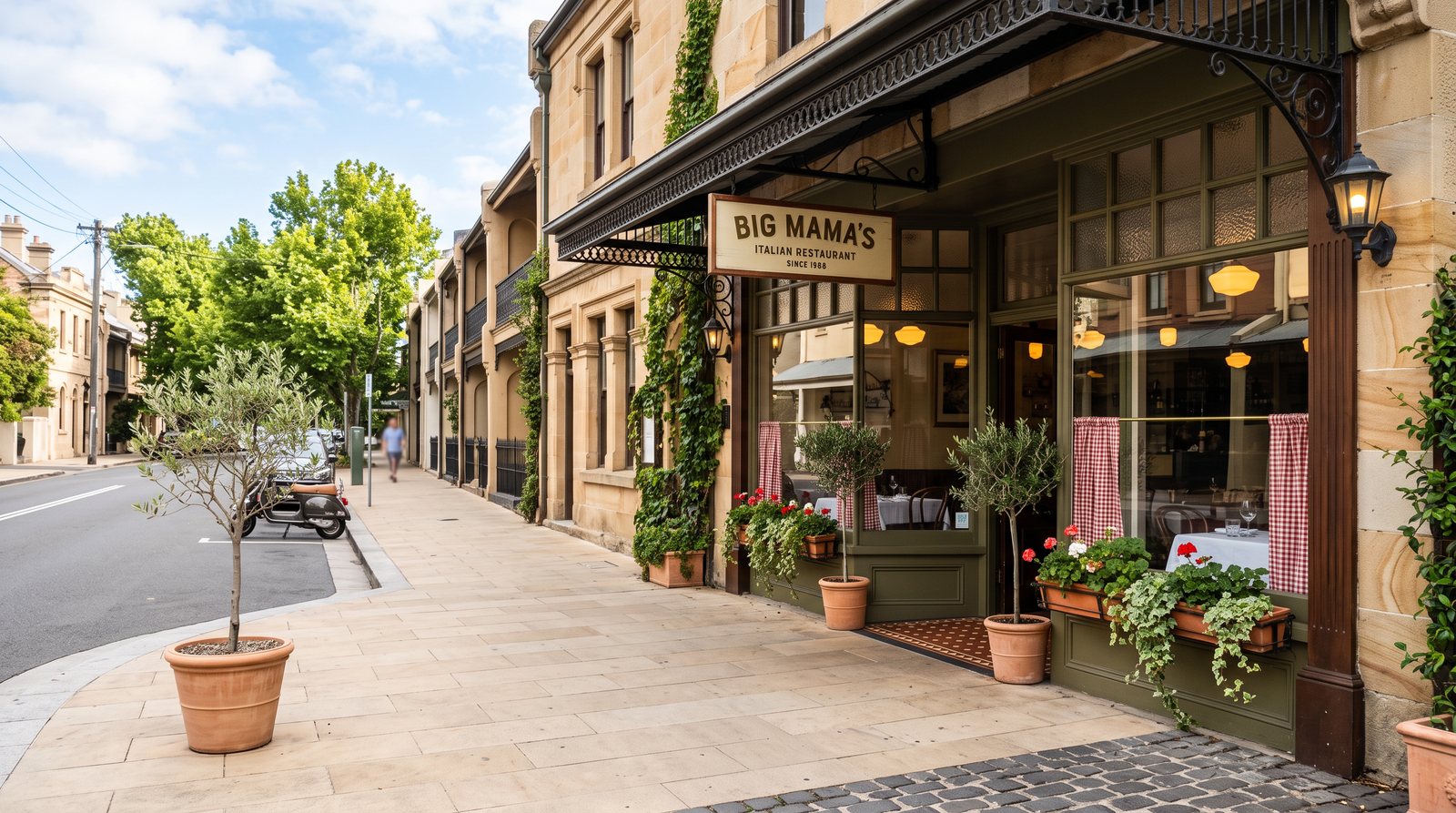
Woollahra dining
Big Mama’s — Traditional Italian restaurant on Moncur Street.
Gundagai stands as a resilient intersection of Australian history and Riverina beauty. Beyond its legendary monuments, the town reveals a deep narrative of colonial architecture, historic river crossings, and the enduring heritage of the Wiradjuri people.
Gundagai serves as a physical and metaphorical gateway where the rolling foothills of the Snowy Mountains meet the expansive plains of the Riverina. Situated along the Murrumbidgee River, the town is defined by a convergence of heritage architecture, pioneer mythology, and a deep connection to the land. The Riverina region is characterized by a specific quality of light—a soft, golden clarity that illuminates the vast horizons and gives the weathered sandstone and timber of the town a timeless quality. To arrive in Gundagai is to step into a narrative that has been unfolding for centuries, one where the geography of the river and the history of the people who have lived beside it are inextricably linked.
The architectural character of Gundagai is most vividly expressed along Sheridan Street, where the heritage-listed main street serves as a living record of colonial prosperity. The buildings here, ranging from Victorian grandiosity to Federation-era elegance, reflect a period when Gundagai was a vital hub for trade and transport. The Old Gundagai Gaol, with its imposing stone walls and heavy iron gates, stands as a somber reminder of the early colonial justice system, contrasting with the boutique shops and cafes that now occupy the surrounding blocks. Walking through the town, one notices the careful preservation of these structures, where original craftsmanship—intricate ironwork, hand-cut stone, and broad verandas—remains intact, ensuring the town feels like a place where history is still present.
Striking visual features of the Gundagai landscape are the historic bridges spanning the Murrumbidgee River floodplains. The Prince Alfred Bridge, once the longest timber viaduct in New South Wales, and the adjacent Railway Bridge are masterpieces of nineteenth-century engineering. These weathered timber structures, with their rhythmic patterns of trestles and beams, stretch across the wide, grassy flats frequently reclaimed by the river. Today, they stand as silent witnesses to the era of steam and stagecoaches, their silvered wood catching the light at sunset and creating a geometric silhouette against the sky. For the visitor, these bridges offer a tangible connection to the scale of the landscape, illustrating the immense effort required to link the interior with the growing coastal cities.
Beyond its physical structures, Gundagai is synonymous with pioneer legends that have shaped the Australian identity. The most famous is the Dog on the Tuckerbox, a monument located five miles north of the town that pays tribute to the bullockies who navigated the treacherous routes of the interior. While the legend is often distilled into a simple rhyme, its cultural significance runs deeper, representing the resilience and loyalty of early European settlers. The monument is not just a roadside attraction but a site of pilgrimage for those seeking to understand the folklore of the bush. It serves as a reminder of a time when distance was measured in days rather than hours, and when the bond between a worker and their animal was essential for survival.
The narrative of Gundagai is incomplete without acknowledging the ancient heritage of the Wiradjuri people, the traditional custodians of this land. Long before colonial surveyors arrived, the Murrumbidgee River served as a vital life source and sacred site for the Wiradjuri, who understood the seasonal rhythms of the floodplains. Today, the town is increasingly recognizing this deep history, integrating Wiradjuri stories and cultural practices into the broader community identity. This connection to the land is a living presence, visible in the way the community engages with the river and the surrounding environment. By honoring both the Indigenous and colonial histories of the region, Gundagai offers a more nuanced account of the Australian experience, valuing the complexity of its shared heritage.
The surrounding Riverina countryside provides a sensory backdrop as rich as the town’s history. The region is renowned for its agricultural productivity, with fertile soils supporting everything from wheat fields to boutique vineyards. Local wineries, specializing in cool-climate varieties like shiraz and chardonnay, have earned a reputation for excellence, offering visitors a chance to taste the character of the land. The landscape is a patchwork of colors—the deep greens of river red gums, the silver-grey of saltbush, and the vibrant ochre of the earth. During the harvest season, the air is filled with the scent of turned soil and ripening fruit, a reminder that Gundagai remains a working landscape where the cycles of nature still dictate the pace of daily life.
Modern Gundagai balances this weight of history with a sophisticated approach to hospitality. The town has become a destination for those seeking a "considered visit," where the goal is to allow the character of the place to reveal itself slowly. This is reflected in the rise of boutique accommodation, often housed in restored heritage buildings, and a dining scene that prioritizes local Riverina produce. Whether enjoying a glass of local wine overlooking the Murrumbidgee or exploring the quiet corners of the Old Gaol, the experience is one of intentionality. The community’s pride in their town is evident in the meticulous care taken with public spaces and the warm, understated welcome extended to those who take the time to stay and explore.
In the soft light of a Riverina evening, the distinction between past and present in Gundagai begins to blur. The sound of the wind through river red gums, the distant lowing of cattle, and the sight of historic bridges stretching across the flats all contribute to a sense of profound continuity. It is a place that rewards the patient observer, offering insights into the resilience of the spirit and the enduring beauty of the natural world. Gundagai is not merely a collection of buildings and monuments; it is a repository of stories, a landscape where every stone and timber beam has something to say about where we have been. To visit is to participate in this ongoing conversation, contributing one’s own presence to a town that holds its ground.
Ultimately, the enduring appeal of Gundagai lies in its ability to remain authentic in an increasingly homogenized world. It does not attempt to hide its scars or polish away the rough edges of its history; instead, it presents itself with a quiet, dignified honesty. The town serves as a reminder that heritage is not something to be locked away in a museum, but something to be lived with and understood as a part of the present. As the sun sets and shadows of the Prince Alfred Bridge lengthen, the town settles into a familiar rhythm, one that has sustained it through floods, droughts, and the changing tides of time. For Riverina travelers, Gundagai remains a steadfast point of reference.