Botanical folds
A garden of folded paper is learning the vocabulary of real leaves.
Mira Koh’s 'Soft Geometry' series explores the intersection of precision folding and botanical observation, transforming the rigid plane of paper into a nuanced study of organic growth, venation, and the structural vocabulary of real leaves.
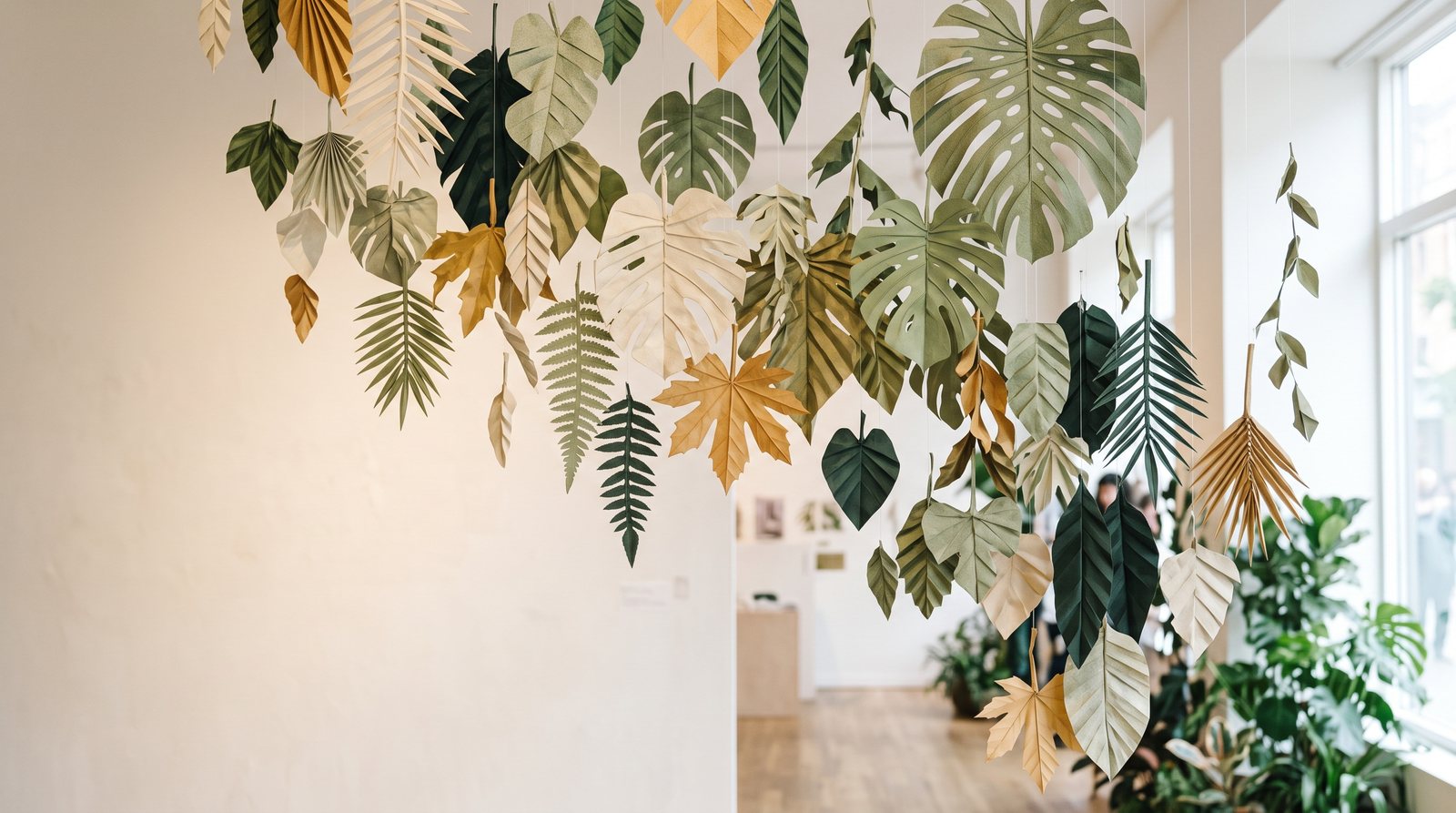
The transformation of a single sheet of paper into a botanical specimen is an exercise in both restraint and imagination. In Mira Koh’s "Soft Geometry" series, the traditional art of origami is elevated to a rigorous study of organic form. By focusing on the "vocabulary" of leaves, Koh moves beyond the simple representation of flora to a deeper investigation of how structure informs appearance. The flat, geometric surface of the paper is subjected to a series of deliberate creases that construct the mechanical logic of a living organism. This approach treats the paper not as a passive canvas, but as a structural material capable of holding the same tensions and rhythms found in the natural world. The result is a garden that feels both engineered and evolved, a testament to the power of a single, well-placed fold.
The "vocabulary" mentioned in the title refers to the morphological features that define a leaf's identity. In botanical science, this includes the arrangement of veins, the serration of edges, and the way a stem supports the weight of the blade. Koh’s work translates these biological facts into a geometric language. A central crease becomes a midrib, while radiating folds mimic the secondary veins that distribute nutrients in a real leaf. This translation requires a profound understanding of how real leaves grow and function. By learning this vocabulary, the artist creates paper forms that possess an uncanny vitality. They do not just look like leaves; they behave like them, catching the light in ways that emphasize their three-dimensional presence and suggesting a history of growth that is purely illusory yet entirely convincing.
Materiality plays a crucial role in this process. The choice of paper—its weight, grain, and surface texture—determines the limits of what can be achieved through folding. Koh often selects papers that possess a certain "memory," allowing them to hold sharp edges while maintaining a soft, organic feel. This interplay between the rigidity of the fold and the suppleness of the surface is what gives the work its name: Soft Geometry. The paper acts as a surrogate for the cellulose and lignin that provide structure to real plants. However, unlike the living tissue of a leaf, paper is a static medium. The challenge lies in imbuing this static material with a sense of motion. Through the careful application of pressure and the strategic use of shadow, Koh creates a sense of depth that belies the simple origins of the work.
Before a single fold is made, a significant amount of time is spent in observation. This is the "academic" phase of the work, where the artist studies the natural world with the eye of a scientist. Every plant has its own unique way of organizing its parts, a pattern known as phyllotaxy. By observing these patterns in the wild, Koh brings a sense of authenticity to her paper garden. She looks at how a leaf unfurls from a bud, how it turns toward the sun, and how it eventually begins to curl as it dries. These observations are then distilled into a series of folding instructions. This process is not about creating a direct replica, but about capturing the essence of the plant’s structural logic. It is a form of research that values the physical act of making.
The studio environment where these folds take place is one of quiet, disciplined choreography. The tools are simple—a bone folder, a ruler, and the artist’s own hands—but the execution requires extreme precision. Each fold must be exact, as even a minor deviation can disrupt the symmetry and balance of the final form. This level of detail is necessary because the beauty of botanical origami lies in its subtlety. A leaf is not a single flat plane, but a complex surface of ridges and valleys. By layering these folds, Koh is able to build up a sense of volume and texture. The process is slow and meditative, reflecting the patient pace of natural growth. In the studio, time seems to slow down, allowing the artist to focus entirely on the relationship between the hand and the paper.
This work also challenges the traditional boundaries between art and science. While the primary goal is aesthetic, the methods used are deeply rooted in mathematical and biological principles. The geometry of the fold is a precise science, governed by rules that dictate how a flat surface can be transformed into a three-dimensional object. At the same time, the subject matter is purely organic. By bringing these two worlds together, Koh creates a new kind of botanical study—one that is both analytical and expressive. The "Soft Geometry" of the leaves serves as a reminder that the natural world is itself a masterpiece of engineering. The same principles that allow a leaf to withstand the wind or capture the rain are reflected in the way the paper is folded and arranged.
When these individual pieces are gathered together, they form a "garden" that is both familiar and strange. Arranged as a botanical study, the folded leaves and flowers invite the viewer to look closer. The lack of color—often the work is executed in neutral tones—forces the eye to focus on the form and the way it interacts with light. In this monochromatic environment, the shadows become as important as the paper itself. They define the edges, highlight the veins, and create a sense of depth that makes the garden feel expansive. The arrangement is not random; it follows the same curatorial logic as a museum display or a scientific herbarium. Each piece is given space to be seen as an individual specimen, yet they all contribute to the overall rhythm of the garden.
The permanence of this paper garden offers a unique perspective on the concept of time. Unlike a living garden that is subject to the seasons, these folded forms capture a moment of botanical perfection that remains unchanged. This stillness invites a different kind of engagement, one that is not rushed by the prospect of decay. Visitors are encouraged to spend time with each piece, noticing the minute details that might be overlooked in a more fleeting encounter. The "Soft Geometry" series thus becomes a meditation on the value of preservation and the way art can hold a specific experience of the natural world. It is a reminder that even as the world outside continues to change, there are spaces where beauty can be held and studied with a patient, unwavering gaze.