Learn
Celestial Rhythms and the Midnight Blizzard: How the Great Barrier Reef Dances to the Music of the Moon
Beneath the surface of the Coral Sea, a celestial signal triggers the most spectacular reproductive event on our planet. This annual midnight blizzard of life ensures the future of the Great Barrier Reef through a perfectly timed lunar orchestration.
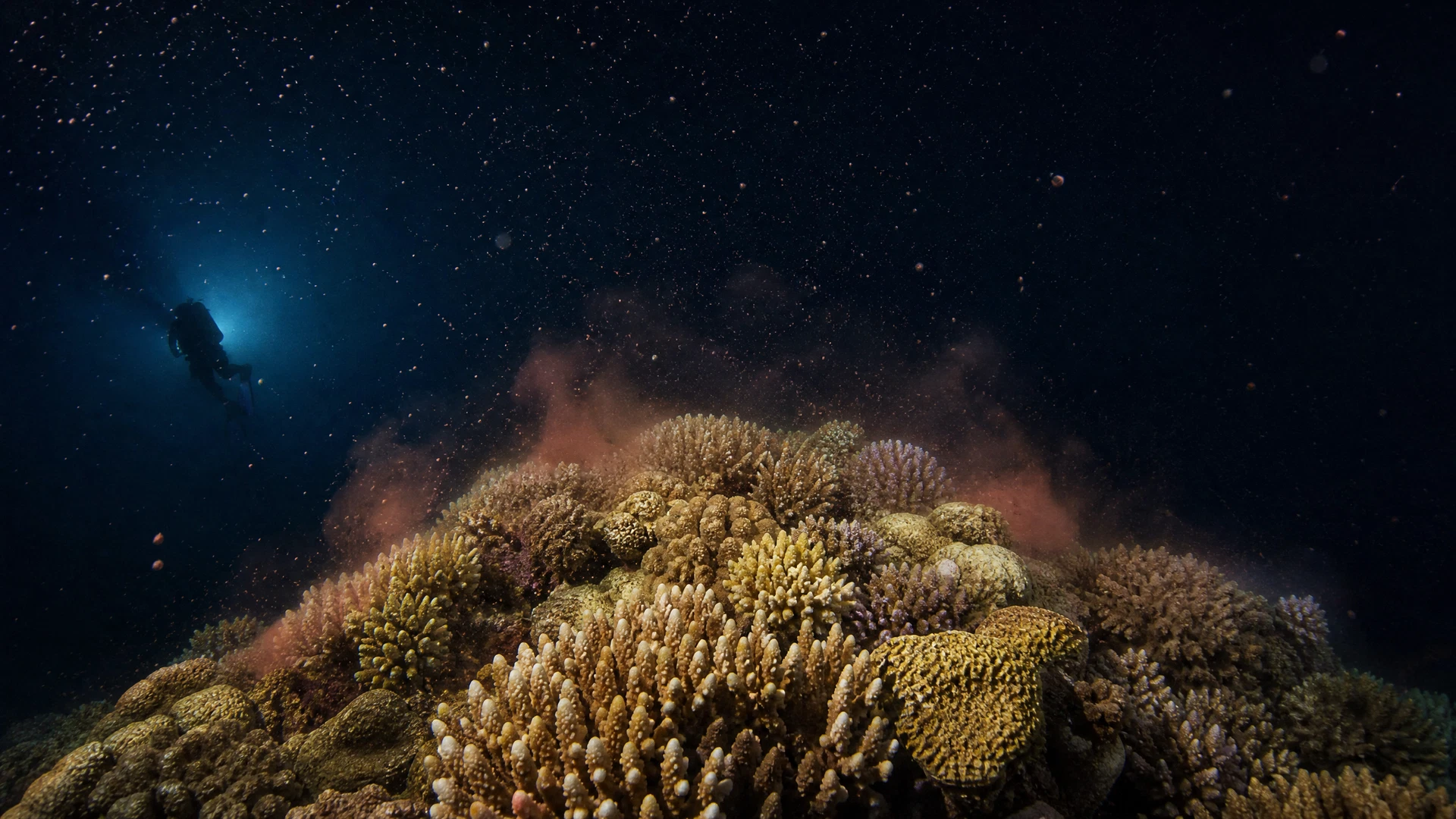
The Great Barrier Reef, a sprawling mosaic of life stretching over two thousand kilometers, is often viewed as a static monument to biological endurance. Yet, once a year, this underwater cathedral undergoes a transformation that is as violent as it is beautiful. As the southern spring gives way to the heat of early summer, a quiet tension builds within the limestone corridors of the reef. Scientists, divers, and naturalists watch the lunar calendar with bated breath, knowing that a single celestial event will soon ignite a biological firestorm. The air above the Coral Sea is thick with the scent of salt and the promise of rain, but beneath the waves, the corals are preparing for a performance that has been refined over millions of years. This is not a random occurrence; it is a meticulously timed symphony, a moment where the terrestrial and the cosmic collide in a display of reproductive audacity. The silence of the night is about to be shattered by the arrival of the full moon, the ultimate conductor of the ocean’s most profound mystery.
For decades, the mechanism behind this synchronization remained one of marine biology’s most elusive puzzles. How could hundreds of disparate coral species, separated by vast distances, coordinate their release to the exact hour? The answer lies in a remarkable evolutionary adaptation: the ability to "see" the moon without eyes. Corals possess primitive light-sensitive proteins known as cryptochromes, which are ancient biological sensors capable of detecting the subtle shift in blue light intensity that occurs during a full moon. These proteins act as a bridge between the celestial and the cellular, translating the moon’s glow into a biological command. However, the moon is not the only player in this complex orchestration. The corals also integrate a suite of environmental cues, including the gradual rise in sea surface temperatures and the specific length of the day, to ensure that the spawning occurs at the optimal moment. This multi-layered sensing system allows the reef to wait for the perfect alignment of conditions, ensuring that the fragile gametes are not lost to the currents or the tides.
When the conditions finally align—usually a few nights after the full moon in October or November—the reef erupts. In a phenomenon often described as an "inverted blizzard," millions of tiny, buoyant bundles of eggs and sperm are released simultaneously into the water column. These bundles, often pink, orange, or white, drift upward from the coral polyps like slow-motion sparks from a subterranean fire. The visual spectacle is overwhelming; the water becomes thick with life, a swirling kaleidoscope of genetic potential that obscures the very structures from which it emerged. This mass release is a calculated strategy known as predator swamping. By releasing such a staggering volume of offspring at once, the corals ensure that even the most voracious predators—from small fish to massive whale sharks—are quickly satiated, leaving the vast majority of the gametes free to complete their journey to the surface. It is a triumph of quantity over individual survival, a collective gamble that pays dividends in the form of a new generation.
As the gamete bundles reach the surface, they break apart, creating vast, colorful slicks that can be seen from space. Here, in the churning interface between air and sea, the real work of regeneration begins. The eggs and sperm from different colonies mingle, facilitating a level of genetic exchange that is vital for the reef’s long-term resilience. This process of cross-fertilization is not just about numbers; it is about diversity. By mixing their genetic material on such a massive scale, the corals create a population that is better equipped to handle the shifting challenges of a changing ocean. The fertilized larvae, known as planulae, will drift with the currents for days or even weeks before settling back onto the reef to begin the slow process of building a new colony. It is a precarious journey, fraught with danger from temperature fluctuations and pollution, yet it is the primary engine of the reef’s survival, a testament to the enduring power of biological connection.
Despite our growing understanding of this event, significant scientific uncertainties remain. We are still uncovering the exact thresholds of light intensity that trigger the cryptochromes, and how these thresholds might vary between species. More pressingly, the impact of a warming climate poses a dire threat to this delicate timing. As ocean temperatures rise, there are concerns that the environmental cues corals rely on may become decoupled. We have already observed instances of "split spawning," where a portion of the reef releases its gametes a month earlier or later than the rest, potentially reducing the chances of successful fertilization. Furthermore, the increasing frequency of coral bleaching events threatens the health of the parent colonies, potentially diminishing the quality and quantity of the gametes they produce. Scientists are racing to understand how these stressors will affect the future of the mass spawning, as the loss of this synchronized event would be a catastrophic blow to the reef’s ability to recover from damage.
The mass coral spawning of the Great Barrier Reef is more than just a biological event; it is a reminder of our planet’s profound interconnectedness. It shows us that even the most ancient and seemingly simple organisms are tuned to the rhythms of the cosmos, responding to the pull of the moon with a vitality that defies the darkness of the deep sea. As we stand at a crossroads in the history of our oceans, the spawning serves as both a beacon of hope and a call to action. It is a display of nature’s resilience, but also of its vulnerability. Protecting this midnight dance requires us to address the broader challenges facing our marine ecosystems, ensuring that the celestial conductor continues to find an audience in the limestone halls of the reef. In the end, the survival of the Great Barrier Reef is not just a scientific goal; it is a moral imperative, a commitment to preserving the extraordinary beauty of a world that still dances to the music of the moon.