Learn
The Botanical Art of Suspended Animation: How the Resurrection Plant Defies the Desert’s Lethal Grip Through Molecular Glass
In the most arid corners of the globe, a remarkable flora has mastered the secret to immortality by turning its own cells into crystal. This is the story of the resurrection plant, a creature that waits years for a single drop of rain to breathe again.
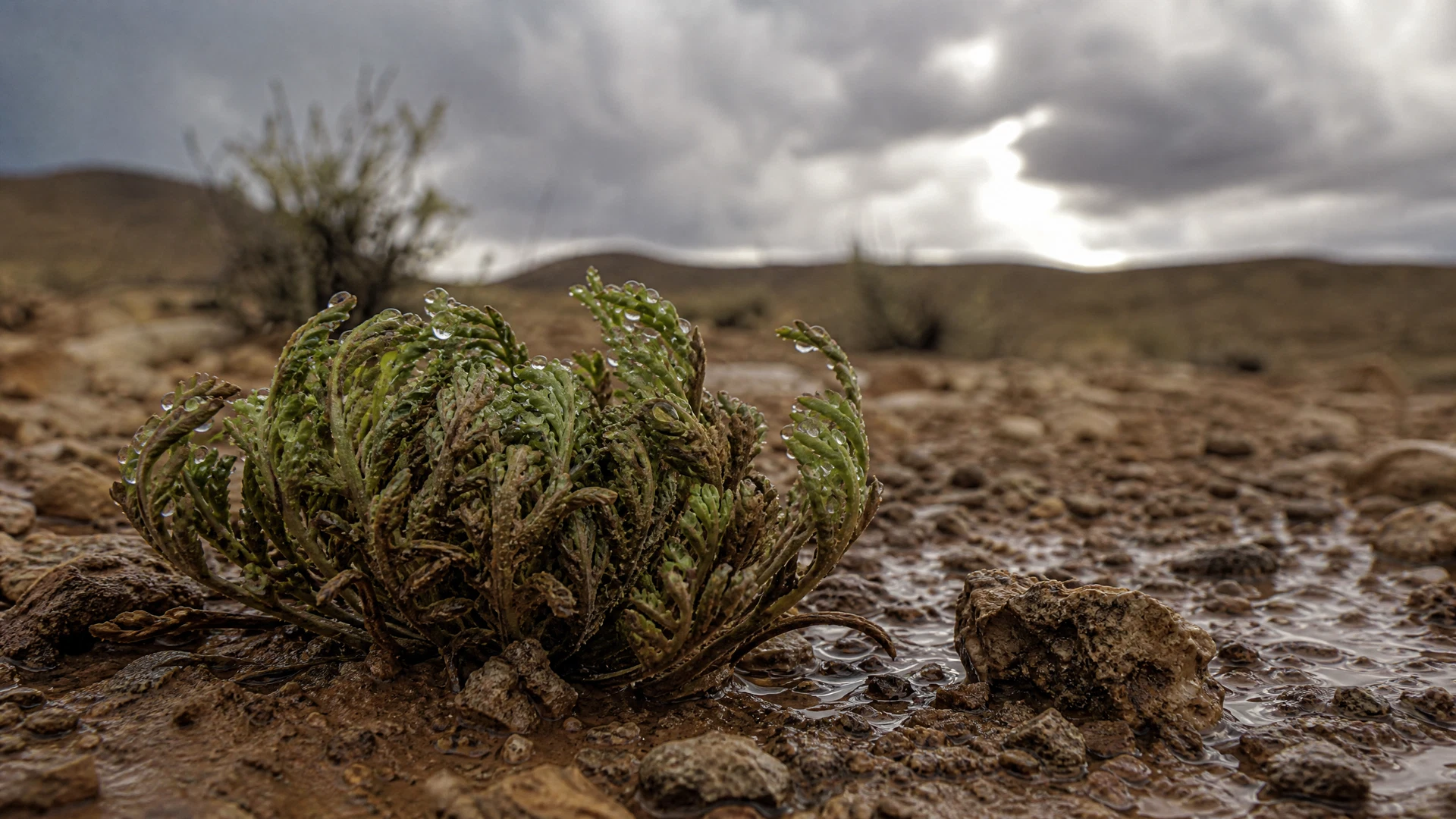
The Chihuahuan Desert is a landscape defined by its brutal absences. Here, the sun is a relentless presence, and water is a fleeting memory that the parched earth frequently forgets for years. Amidst the shimmering heat and cracked, alkaline flats, a traveler might encounter what appears to be a discarded scrap of tumbleweed—a brittle, bronze-brown sphere no larger than a fist, seemingly devoid of any vital spark. This is Selaginella lepidophylla, a species that has earned the evocative moniker of the "resurrection plant" not through a supernatural feat, but through a biological strategy that pushes the boundaries of what we define as living. While the vast majority of Earth's flora would wither and perish upon losing even a modest portion of their internal moisture, this resilient species endures a state of extreme desiccation, relinquishing as much as ninety-five percent of its cellular water content. It is a sentinel of extreme patience, a botanical testament to the idea that survival often requires a graceful, calculated retreat into the shadows of existence, waiting for the heavens to finally relent.
At the heart of this survival strategy is a phenomenon known as anhydrobiosis, or "life without water." When the environment turns hostile and the last traces of moisture evaporate, the resurrection plant initiates a complex molecular protocol known as its "desiccome." As the plant dries, it does not simply wither; instead, it reconfigures its internal chemistry to prevent the catastrophic collapse of its cellular structures. It synthesizes a suite of specialized molecules, including Late Embryogenesis Abundant (LEA) proteins and protective sugars like trehalose and sucrose. These compounds perform a miracle of microscopic engineering by forming a "biological glass." This vitreous state stabilizes the delicate membranes and proteins within every cell, locking them in a transparent, crystalline embrace that prevents them from fusing or breaking. In this state, metabolic activity ceases entirely. The plant is not dead, but it is no longer actively living; it has become a biological artifact, a living statue of itself waiting for the world to change.
The physical transformation of the resurrection plant is as strategically brilliant as its molecular defense. As water departs, the plant’s fronds begin a slow, deliberate inward curl, eventually forming a tight, protective ball. This morphological shift serves a critical dual purpose. First, it drastically reduces the surface area exposed to drying winds, conserving what microscopic traces of moisture might remain deep within its core. More importantly, this curling acts as a shield against the sun. In the absence of water, the plant’s photosynthetic machinery—the chlorophyll and enzymes that usually turn light into food—becomes a dangerous liability. If exposed to intense ultraviolet radiation while dormant, these structures would produce toxic reactive oxygen species, essentially causing the plant to self-destruct from the inside out through oxidative stress. By tucking its vulnerable green heart away behind a wall of tough, desiccated outer scales, the plant survives the very light it usually depends on for its life.
The true spectacle occurs when the long-awaited rain finally touches the desert floor. Through a process called imbibition, the plant’s parched tissues draw in moisture with an almost mechanical force, swelling as water returns to the cells. The biological glass that protected the internal machinery for months or years dissolves almost instantly, and the shriveled fronds begin to unfurl like the opening of a complex organic origami sculpture. Within just a few hours, the dull bronze gives way to a vibrant, luminous emerald green. The metabolic engines roar back to life with astonishing speed. Photosynthesis resumes, and the plant begins to grow and reproduce with a frantic urgency, making the most of the fleeting dampness before the desert sun reclaims the land. This rapid recovery is a marvel of evolutionary efficiency, allowing the plant to exploit windows of opportunity that are far too brief for almost any other form of complex terrestrial life to utilize.
Despite our growing understanding of these mechanics, much remains shrouded in scientific uncertainty. Researchers are still untangling the precise signaling pathways that tell the plant exactly when to enter its glass-like state and how it manages to repair the inevitable DNA damage that occurs during its long slumber. There is a lingering debate over the exact composition of the "desiccome" across different species, such as the woody Myrothamnus flabellifolius of Southern Africa, and how these variations might offer clues to engineering drought-resistant crops for a warming planet. The transition from a liquid-based metabolism to a solid-state existence is a frontier of biology that challenges our fundamental assumptions about the necessity of liquid water for the maintenance of life’s blueprints. We are only beginning to grasp how these plants discern when the water is sufficient to warrant the massive energy expenditure of unfurling.
In an era of shifting global climates, the resurrection plant offers more than just a botanical curiosity; it provides a profound lesson in the art of resilience. It teaches us that survival is not always about enduring the storm with brute strength, but sometimes about knowing when to fold inward and wait. The plant’s ability to hold the memory of rain within a parched heart is a powerful metaphor for the persistence of life in the face of overwhelming odds. As we look to the future of our own species and the planet we inhabit, the quiet, shriveled sphere on the desert floor reminds us that even in the deepest dormancy, the potential for a vibrant awakening remains intact. It is a reminder that life, when pushed to its limits, finds a way to turn even the most hostile void into a waiting room for the next great bloom.