Learn
The Ghostly Lanterns of the Understory: How Bioluminescent Fungi Illuminate the Hidden Alchemy of Forest Decay and Renewal
In the damp shadows of temperate woodlands, a soft emerald radiance known as foxfire transforms rotting timber into a living beacon. This spectral glow is not merely a botanical curiosity but a sophisticated survival strategy that bridges the worlds of chemistry and ecology.
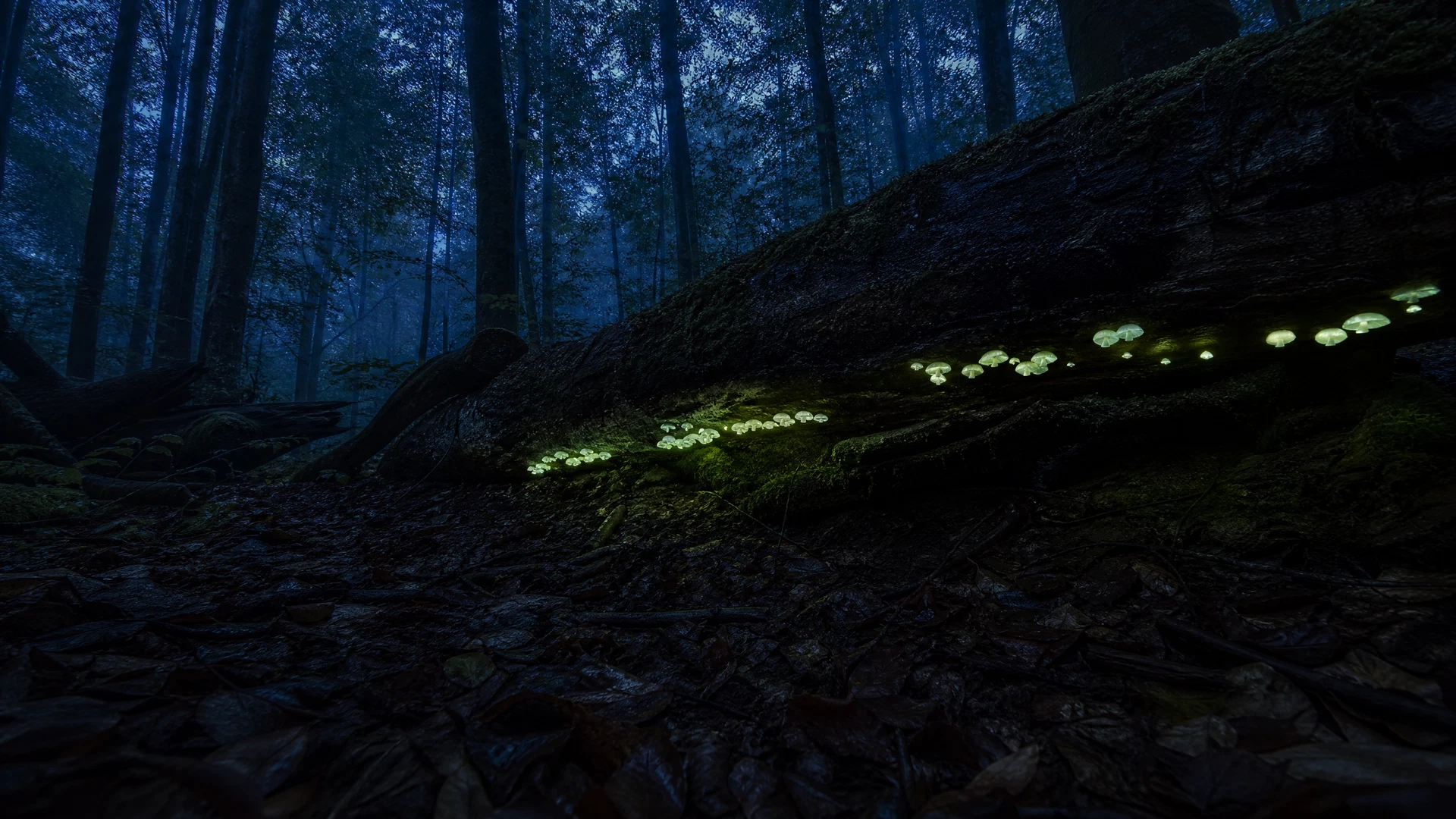
As the sun dips below the horizon and the vibrant greens of the forest canopy fade into indigo, a secretive world begins to stir within the leaf litter and fallen logs of the temperate understory. This is the realm of bioluminescent fungi, a rare group of organisms that possess the remarkable ability to generate their own light. Known colloquially as "foxfire" when it emanates from decaying wood, this phenomenon has captivated the human imagination for millennia, appearing in folklore as the mischievous "will-o'-the-wisp" or the spectral guidance of forest spirits. Even the ancient philosopher Aristotle, writing over two thousand years ago, noted the existence of this "cold fire" that burns without heat, yet it is only within the last few decades that modern mycology has begun to unravel the complex biochemical machinery and evolutionary purposes behind this ghostly illumination. In the silent, damp recesses of the forest, the glow of these fungi serves as a poignant reminder that death is rarely an end in the natural world, but rather a transition—a luminous repurposing of organic matter that fuels the next generation of life.
The science behind this nocturnal radiance is a masterclass in organic chemistry, centered on a process known as the luciferin-luciferase reaction. Unlike the staccato, rhythmic flashing of fireflies, bioluminescent fungi emit a steady, unwavering greenish-blue light that can persist for hours or even days. This continuous glow is the result of the oxidation of a specific molecule called 3-hydroxyhispidin, which acts as the fungal luciferin. When this molecule interacts with the enzyme luciferase in the presence of oxygen, it undergoes a transformation that releases energy in the form of photons. This metabolic byproduct is incredibly efficient, producing almost no heat, which is why the glow feels cold to the touch. While the basic components of this reaction are shared across various bioluminescent organisms, the specific pathways in fungi are uniquely adapted to their environment. In species such as the Bitter Oyster (Panellus stipticus) and the Honey Mushroom (Armillaria mellea), this light is not a random occurrence but a tightly regulated biological function reflecting the fungal network's success in breaking down complex lignins and celluloses.
One of the most fascinating discoveries in recent mycological research is the revelation that many bioluminescent fungi operate on a sophisticated internal circadian clock. This biological timer ensures that the intensity of the light peaks during the darkest hours of the night, precisely when the contrast against the forest floor is at its greatest. For the Bitter Oyster, a species common in the forests of North America and Eurasia, this timing is crucial for its ecological interactions. By synchronizing its light production with the cycle of day and night, the fungus conserves energy during the daylight hours when its glow would be washed out by the sun, and ramps up its luminosity as the shadows deepen. This rhythmic behavior suggests that the glow is not a mere accident of metabolism but a targeted signal intended for a specific audience. The precision of this circadian regulation highlights the evolutionary investment the fungi have made in their bioluminescence, treating light as a precious resource to be deployed only when it can provide the maximum benefit to the organism's reproductive success.
The primary purpose of this biological beacon is believed to be the recruitment of unwitting partners in the fungus's reproductive cycle. In the dense, often still air of the forest floor, wind-borne spore dispersal can be unreliable, especially for species growing low to the ground or within the crevices of decaying logs. To overcome this, the fungi utilize their light to attract a variety of nocturnal invertebrates, including beetles, flies, and ants. These insects are drawn to the emerald glow, perhaps mistaking it for a mate, a food source, or a suitable site for laying eggs. As they crawl over the glowing gills or the luminous wood, they inadvertently pick up thousands of microscopic spores on their legs and bodies. When these insects eventually move on to other parts of the forest, they transport these spores to new, potentially fertile substrates, effectively acting as a biological courier service. This symbiotic relationship, though perhaps unintentional on the part of the insects, is vital for the long-term dispersal and genetic diversity of the fungal population.
Despite these insights, a degree of scientific uncertainty remains regarding the full spectrum of benefits that bioluminescence provides to these fungi. While the "attraction hypothesis" for spore dispersal is widely supported, some researchers suggest that the light may also serve as a warning signal to potential predators. Much like the bright colors of toxic frogs or insects, the glow could indicate the presence of unpalatable or poisonous compounds within the fungal tissue, deterring fungivores from consuming the delicate mycelium or fruiting bodies. Another intriguing theory posits that the light production may be a mechanism for mitigating oxidative stress. The process of wood decomposition involves the production of harmful reactive oxygen species, and the bioluminescent reaction might serve as a way to neutralize these free radicals, protecting the fungus from internal damage. The exact balance between these various functions likely varies between species and environmental conditions, leaving much for future generations of mycologists to explore in the deepening twilight of the woods.
Ultimately, the presence of foxfire is a vital indicator of a healthy, functioning forest ecosystem. The fungi responsible for this glow are primary decomposers, the silent architects of the soil who break down the massive carbon stores locked within fallen trees and return them to the earth. Their luminosity is a visible manifestation of the energy being recycled through the forest floor, a sign that the intricate web of life is actively processing the past to build the future. To witness the glow of bioluminescent fungi is to see the forest's metabolic heart beating in the dark, an elegant and spectral display of nature's resilience. The spectral lanterns of the understory do more than just light up the night; they illuminate the enduring connection between all living things, proving that in the natural world, even the end of one life can become a radiant invitation for the next to thrive.