Wellbeing
A calmer workday may begin with how a room sounds, not how it looks.
A calmer workday begins with the auditory environment, not just the visual. By understanding acoustic ecology and the 'Quiet Work' philosophy, we can design workspaces that respect our cognitive limits and support a deeper sense of focus and wellbeing.
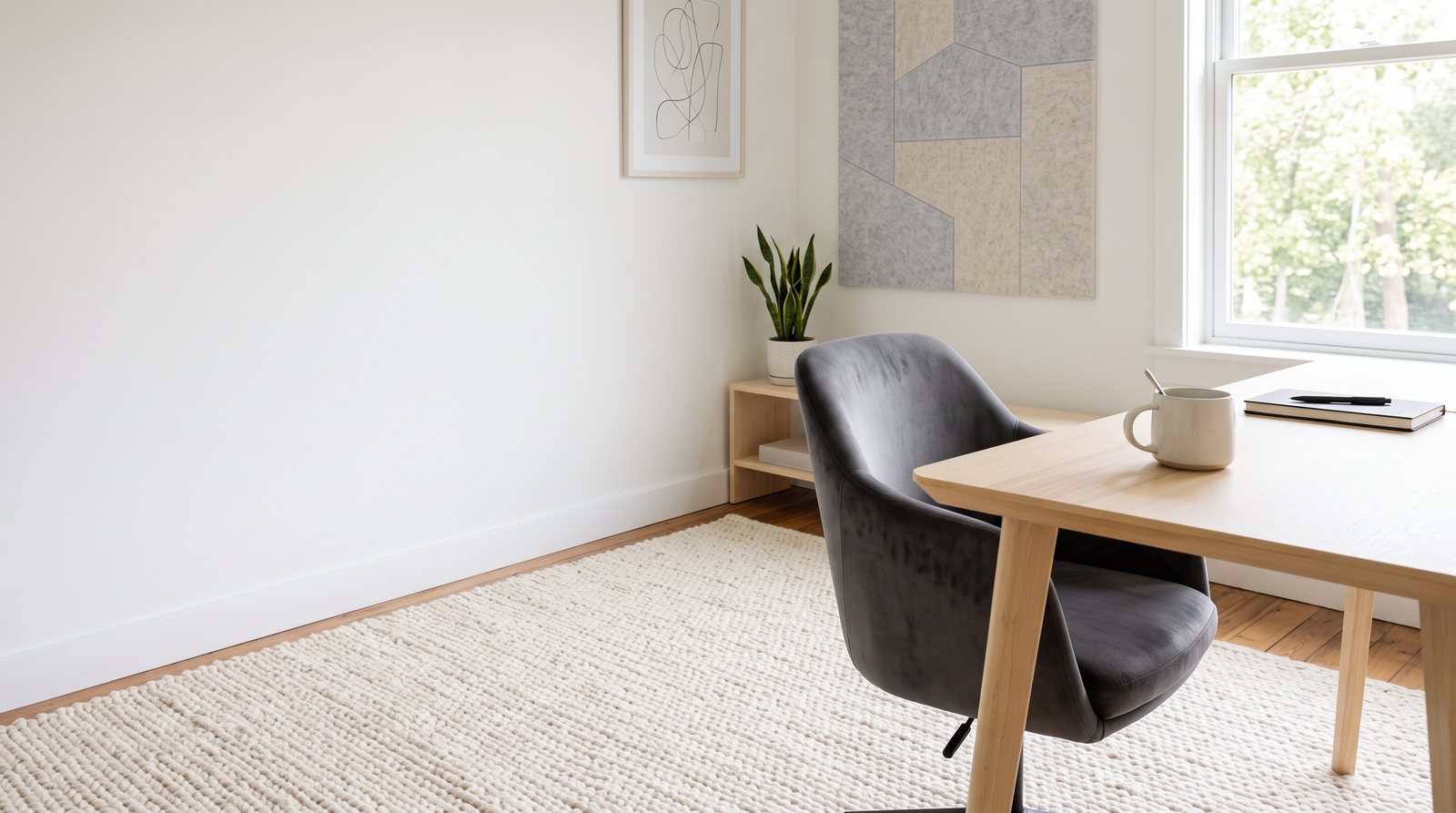
In the modern landscape of office design and workplace productivity, the visual aesthetic has long reigned supreme. We focus on the ergonomics of chairs, the height of desks, and the placement of greenery, yet we often overlook the most pervasive element of our environment: the soundscape. A calmer workday may begin with how a room sounds, not how it looks, as the auditory environment has a profound and immediate impact on our cognitive load, stress levels, and overall wellbeing. While a beautifully designed office can inspire at first glance, it is the persistent hum of activity—the clatter of keyboards, the murmur of distant conversations, and the mechanical whir of climate control—that ultimately dictates our ability to sustain focus and maintain a sense of internal equilibrium throughout the day.
The science of psychoacoustics reveals that our brains are constantly processing ambient sound, even when we are not consciously aware of it. In an open-plan office, this cognitive tax is particularly high, as the human ear is evolutionary tuned to pick up the nuances of speech. When we hear a conversation nearby, our brains instinctively attempt to decode the information, pulling resources away from the task at hand. This "irrelevant sound effect" can lead to a significant drop in productivity and an increase in mental fatigue. By shifting our focus from the visual to the auditory, we can begin to design workspaces that respect the biological limits of our attention, creating environments that support deep work rather than constantly interrupting it with a barrage of sonic distractions.
The "Quiet Work" philosophy, which serves as the foundation for this inquiry, suggests that silence is not merely the absence of noise, but a deliberate and functional material in the construction of a productive day. In this view, a room is not truly finished until its acoustic properties have been considered with the same precision as its lighting or its floor plan. This involves a move away from the "dead" silence of an anechoic chamber, which can be unsettling, towards a "living" quiet that feels supportive and expansive. A well-designed soundscape provides a gentle backdrop that masks disruptive noises without becoming a distraction itself, allowing the mind to settle into a state of flow that is often impossible in more chaotic environments.
Designing for the ear requires a sophisticated understanding of acoustic ecology—the relationship between living beings and their auditory environment. This means recognizing that different tasks require different sonic conditions. A collaborative brainstorming session might benefit from a moderate level of ambient "coffee shop" noise, which has been shown to enhance creative thinking, whereas complex analytical work requires a much higher degree of acoustic isolation. By providing a variety of "sonic zones" within a single office, designers can cater to the diverse needs of a modern workforce, allowing individuals to migrate to the environment that best suits their current cognitive requirements, rather than forcing everyone into a one-size-fits-all auditory experience.
One of the most effective ways to manage the office soundscape is through the integration of biophilic sound—the use of natural auditory elements to improve wellbeing. Just as plants and natural light can reduce stress, the sound of flowing water, rustling leaves, or distant birdsong can have a restorative effect on the nervous system. These sounds are often more effective at masking disruptive human noise than artificial white noise, as they are perceived by the brain as non-threatening and predictable. By incorporating subtle, high-quality recordings of nature into the office environment, or even better, integrating real water features, we can create a sense of tranquility that grounds the workday in a more natural rhythm.
Beyond the physical design of the space, the cultivation of a "ritual of silence" can be a powerful tool for individual and collective wellbeing. This involves setting aside specific times of the day for quiet work, or establishing "no-talk" zones where silence is the default expectation. Such rituals help to normalize the need for focus and reduce the social pressure to be constantly available and communicative. When a team collectively agrees to value silence, it creates a shared sense of respect for one another's time and mental space. This cultural shift is often more effective than any physical intervention, as it addresses the underlying behaviors that contribute to a noisy and stressful work environment.
Technology also plays a crucial role in the future of the auditory workplace, from advanced noise-cancelling headphones to smart acoustic panels that can adjust their absorption properties based on the level of activity in the room. However, technology should be seen as a supplement to, rather than a replacement for, good design. The goal is to create a room that sounds right from the beginning, using materials like cork, felt, and recycled fabrics to dampen echoes and prevent sound from traveling across large distances. These materials can be integrated into the visual design of the office, serving both a functional and an aesthetic purpose, and proving that a room that sounds good can also look beautiful.
Ultimately, the shift towards a more auditory-conscious workplace is a shift towards a more human-centric way of working. It is an acknowledgment that we are sensory beings who are deeply affected by the invisible forces of our environment. As we move away from the frantic pace of the traditional office and towards a more considered and sustainable model of productivity, the quality of our soundscapes will become an increasingly important metric of success. A calmer workday is not just a luxury; it is a necessity for long-term health and creativity. By learning to listen to the rooms we inhabit, we can begin to build a world that is not only easier to look at, but much more rewarding to live and work in.