Night culture
Late-night diners are becoming the city’s most durable third place.
Amidst the fragmentation of modern urban life, the late-night diner remains a vital social anchor, providing a neutral and accessible sanctuary where community persists long after the rest of the city has retreated into the quiet of the night.
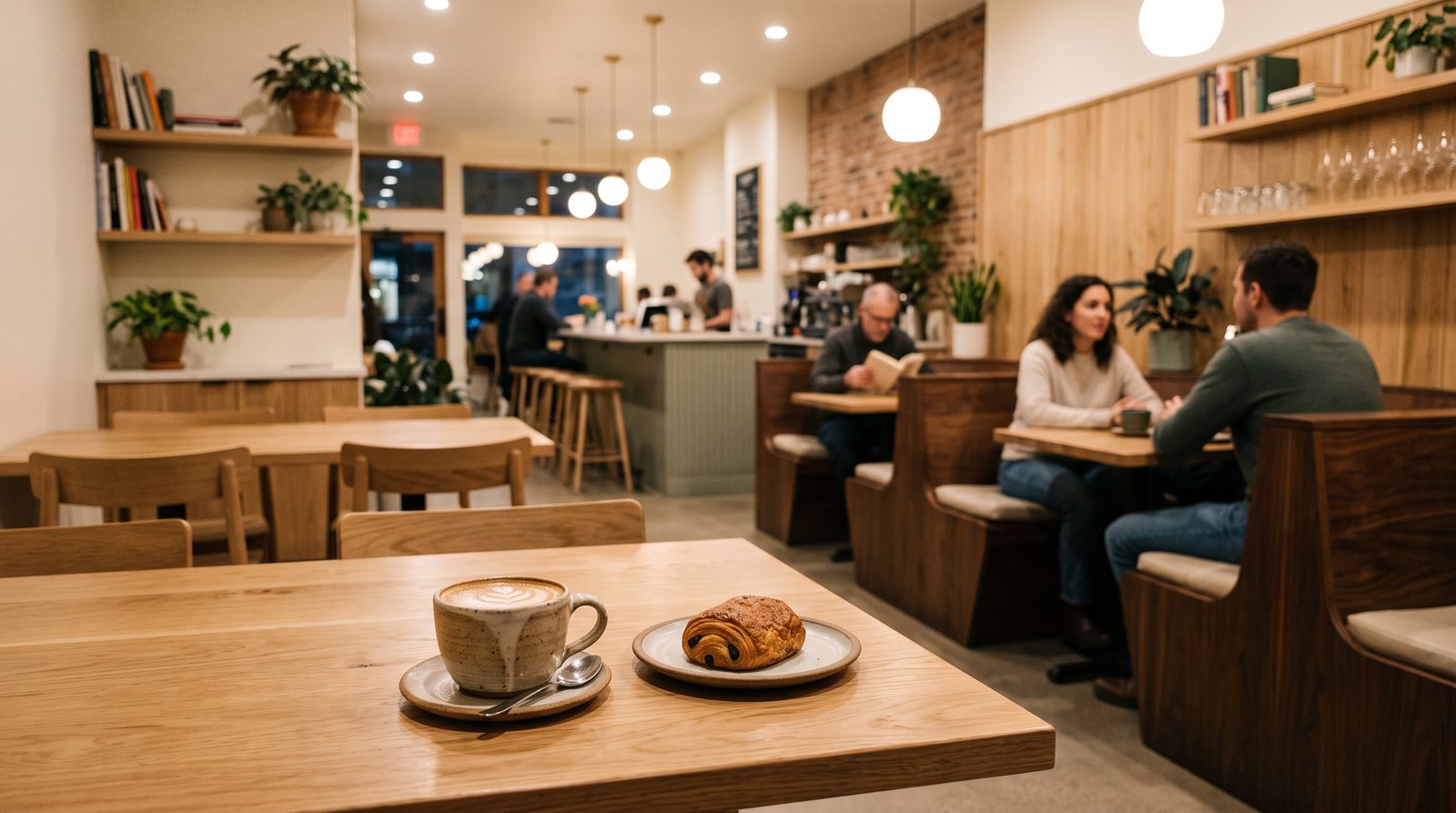
The concept of the **third place** defines a social environment distinct from the isolation of home and the productivity of the workplace, serving as a vital buffer in the urban experience. While many contemporary spaces are designed for specific transactions or exclusive memberships, the **late-night diner** operates on a fundamentally different logic of endurance. It provides a shared living room for the city, remaining open and illuminated when other doors have long since closed, fostering a unique sense of belonging through its sheer availability. As the primary functions of commerce retreat, the diner becomes a beacon of continuity. It is not merely a place to eat, but a destination for those who require a neutral ground to inhabit, a space where the city’s pulse remains steady even as the familiar rhythms of the day fade away.
Diners are often described as **social equalizers** because they level the status of their guests through a shared, unpretentious environment. In the soft glow of neon signs and the rhythmic hum of refrigeration units, the distinctions between corporate professionals, exhausted shift workers, and nocturnal students begin to dissolve. Everyone occupies the same weathered vinyl booths and drinks the same bottomless coffee, creating a rare pocket of **social equity** where the price of entry is merely the cost of a modest meal. This lack of hierarchy is built into the very fabric of the establishment, from the laminated menus to the utilitarian counter stools. It is a space where the social contract is simplified, allowing individuals from vastly different walks of life to coexist without the pressure of performance that usually dominates the daytime city.
The durability of these establishments lies in their quiet resistance to fleeting architectural and cultural trends. Unlike modern bars or upscale cafes that frequently rebrand to attract specific demographics, diners maintain a **consistent aesthetic** and functional purpose that spans decades. This predictability is deeply comforting to those who navigate the unpredictable hours of the night, offering a reliable landmark in a city that is constantly changing its priorities. The chrome accents, checkered floors, and the familiar scent of grilled onions and strong coffee provide a **sensory anchor** that transcends the specific moment. By refusing to adapt to the latest aesthetic whims, the diner preserves a sense of history and stability, reminding its patrons that some things remain constant even in an era of rapid urban transformation and increasing digital transience.
While night culture is frequently associated with loud music and high energy, the diner offers a quieter, more reflective alternative for the **nocturnal soul**. It is a space designed for those who find clarity in the stillness of the early morning hours, when the distractions of the world are at their lowest ebb. Here, conversation flows more freely and with greater depth, unburdened by the pressure of a ticking clock or the noise of a crowded venue. The diner facilitates a specific kind of **intimacy**, allowing for deep social connections that are often missing from the rushed interactions of the day. In the small hours, the diner becomes a laboratory of thought and a sanctuary for dialogue, where the absence of external noise allows the internal voices of the city to be heard.
The physical layout of a traditional diner is a masterclass in encouraging **spontaneous human interaction** while respecting individual boundaries. Long, continuous counters and open seating plans make it easy for strangers to strike up a conversation or simply coexist in a state of comfortable, shared silence. This design facilitates the informal connections that are essential for a healthy community, providing just enough social friction to prevent the profound loneliness that often accompanies urban living at night. The counter, in particular, serves as a **democratic stage** where the barrier between the server and the served is minimized, and where the act of eating becomes a communal performance. By removing the partitions found in more formal establishments, the diner creates a landscape of visibility and accessibility that reinforces the collective nature of the urban experience.
As digital spaces increasingly claim our attention, the **tangible, physical nature** of the diner becomes even more significant as a grounding force. The tactile experience of holding a heavy ceramic mug, the weight of a metal fork, and the ambient sound of a working kitchen provide a necessary reality in a world of screens. It is a place where **physical presence** is an absolute requirement, reminding patrons that they are part of a larger, breathing city that continues to function even in the dark. The sensory details—the steam rising from a plate of eggs, the cold touch of a laminate tabletop—act as anchors to the present moment. In the diner, the abstract complexities of modern life are momentarily replaced by the simple, undeniable facts of food, warmth, and the presence of others.
For many residents, the late-night diner serves as a vital **safety net**, extending its role far beyond the simple provision of nourishment. It offers warmth and light to those who have nowhere else to go, acting as a temporary sanctuary for the weary and the lonely. This role as a **refuge** reinforces its status as a piece of durable urban infrastructure, as essential to the city’s health as its transit lines or power grids. The diner is a place where the vulnerable can find a moment of respite and where the night-shift worker can find a sense of home before returning to their labor. By keeping its lights on through the darkest hours, the diner performs a quiet act of civic service, ensuring that the city remains a hospitable environment for all its inhabitants.
Ultimately, the diner’s survival depends on its ability to remain a **welcoming and accessible space** for everyone, resisting the urge to become exclusive or overly specialized. By maintaining its commitment to a broad and diverse audience, these venues preserve a vital piece of the city’s soul that is often lost in more polished developments. They remind us that the most important spaces in a community are not always the most glamorous or the most profitable, but rather the ones that stay open and keep the lights on when the rest of the world has gone dark. The late-night diner is a testament to the **enduring power** of simple, shared spaces to sustain the human spirit. As long as there is a neon sign glowing, the city’s durable third place will continue to exist.