Public art
The mural is becoming a meeting point rather than a backdrop.
The mural has evolved from a decorative backdrop into a vital civic meeting point. In regional hubs like Lismore, vibrant street art transforms functional laneways into social infrastructure, anchoring community identity and fostering shared ownership.
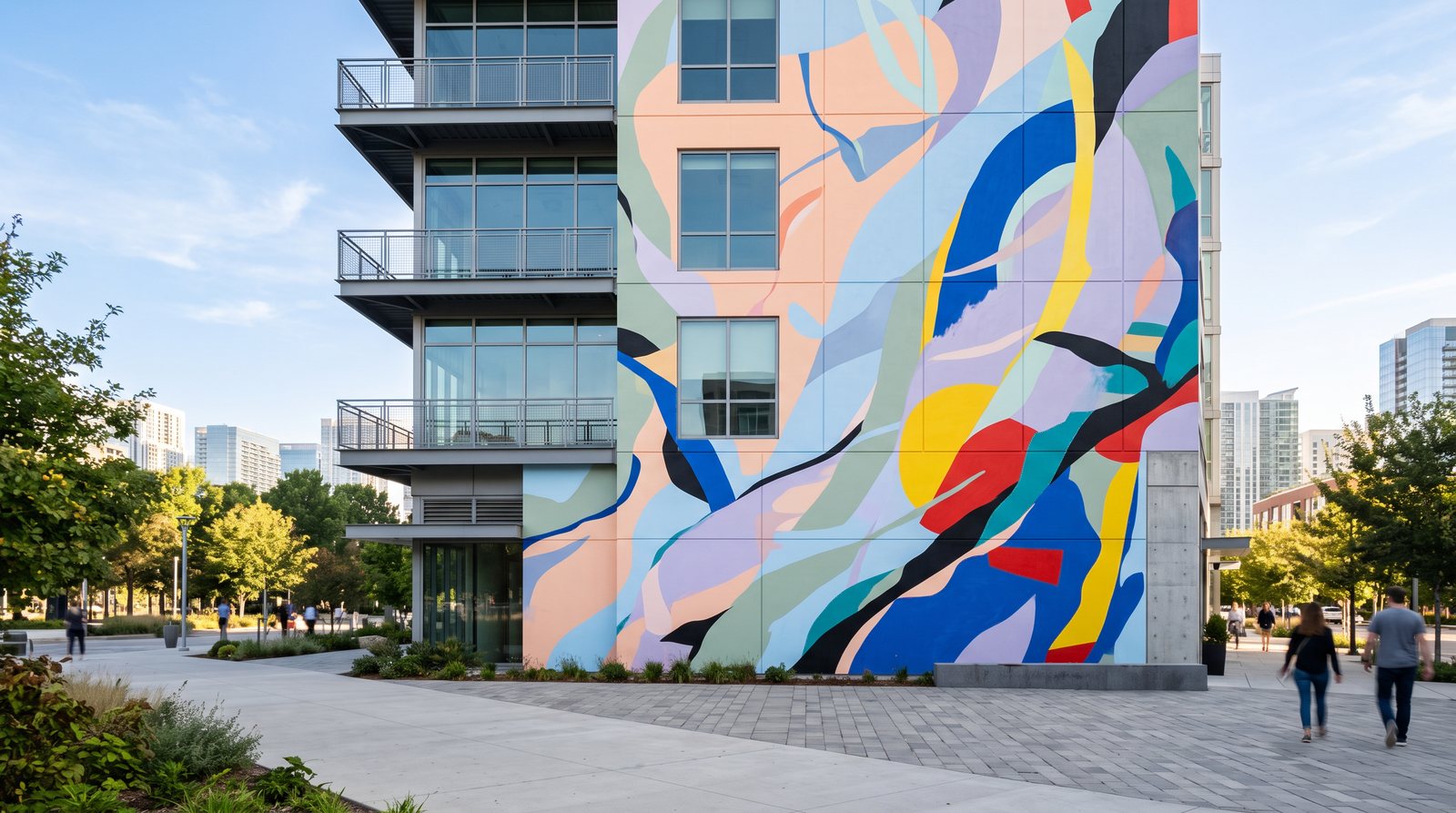
The shift in how public art is perceived has moved from a decorative backdrop to the realization of the mural as a primary civic meeting point. In regional hubs, a large-scale painting is no longer merely a way to cover a blank surface; it has become a functional piece of social infrastructure. The physical presence of a mural changes the gravity of a street, drawing the eye toward a location that previously held no weight in the daily transit of the neighborhood. By transforming a vertical plane into a narrative focus, the artist provides a reason for the pedestrian to pause, effectively turning a transit corridor into a destination.
The materiality of these works is central to their function as landmarks, as the texture of paint against the city's surfaces creates a tactile quality that digital screens cannot replicate. Whether it is the grain of weathered brick or the smooth render of a modern storefront, the pigments tell a story of the building’s history. In the Northern Rivers region, the interplay between vibrant colors and the soft morning light creates an atmospheric condition that highlights the physical depth of the work. The sun hits the peaks of the paint’s texture, casting tiny shadows that change throughout the day, ensuring the mural is never exactly the same image twice.
Lismore serves as a primary example of this creative heart, where the Back Alley Gallery has turned functional service lanes into a sophisticated network of mural-lined thoroughfares. These laneways, once reserved for deliveries, now host a diverse collection of works that reflect the eclectic spirit of the community. By inviting artists to treat these secondary spaces with the same care as a formal gallery, the project has redistributed the cultural weight of the town. Visitors do not just pass through these alleys; they linger to admire the interplay between vibrant street art and historic masonry. The murals here act as a bridge between the town’s country warmth and its progressive arts scene.
Further into the hinterland, the town of Nimbin offers a different but equally potent version of the mural as a civic anchor, where rainbow-hued storefronts define the character of the main street. Here, the art is not confined to hidden corners but is instead the face of the commercial district, creating a streetscape inseparable from the town’s history of counter-culture. As visitors walk past the vibrant storefronts, they participate in a visual tradition that treats the entire village as a canvas. The surrounding landscape, with its mist-covered volcanic peaks, provides a dramatic natural frame for this human-made vibrance. This juxtaposition creates a unique sense of place.
The social function of these murals extends beyond their visual impact, as they frequently become default landmarks for local navigation and social coordination. Phrases like "meet me by the blue mural" demonstrate how public art enters the vernacular of the city, providing a shared vocabulary for residents. When a mural is successful, it radiates a sense of place that makes the surrounding meters feel safer and more intentional. The presence of art suggests that a space is being valued, which in turn encourages others to treat the area with respect. This psychological shift is a powerful tool for urban renewal, one that relies on the generosity of the artist and the receptivity of the public.
The process of creating these works is often a public event, allowing the neighborhood to witness the labor and decision-making that goes into a large-scale composition. Unlike the hidden work of a private studio, the street artist must negotiate the weather, noise, and curiosity of passersby. This transparency demystifies the act of making art, showing that it is a matter of physical effort, patience, and technical skill. For the duration of the painting process, the sidewalk becomes a temporary workshop, and the artist becomes a temporary neighbor to everyone who walks past. This interaction creates a layer of social memory that stays with the work long after the scaffolding is removed.
Durability and ephemerality coexist in public art in a way that challenges our usual understanding of permanence. While a mural is designed to last, it is also subject to the inevitable wear of the elements—the fading effects of the sun and the erosion caused by rain. This aging process is not a failure of the work but a testament to its integration into the physical world. A mural that has weathered for a decade carries a different kind of authority than one finished yesterday; it has become a witness to the city’s changes. In the humid, subtropical climate of the Northern Rivers, this weathering can be particularly pronounced, as moisture and light work together to soften the edges of the paint.
The psychological impact of living in a mural-dense environment is a sense of being part of a curated, intentional landscape rather than a random collection of buildings. For residents, the murals provide a visual rhythm to the day, a series of familiar encounters that ground them in their specific geography. This sense of ownership is crucial for the long-term health of a neighborhood, fostering a feeling of responsibility and pride. When a community sees its own stories or flora reflected on the walls of its streets, the distance between the individual and the city is reduced. The mural becomes a medium through which the city speaks to its inhabitants, offering a message of inclusion and creative possibility.
In conclusion, the evolution of the mural from a simple backdrop to a complex civic meeting point represents a maturing of our urban design philosophy. We are beginning to understand that the most useful parts of a city are often those that leave room for the human imagination and the collective spirit. By treating the walls of our towns and cities as serious sites for public art, we are investing in a form of infrastructure that pays dividends in social cohesion and cultural identity. The murals of places like Lismore and Nimbin are not just decorations; they are the visible markers of a community that values its own voice and its own history.