Repair
A new repair café is showing how expertise travels between neighbors.
Beyond the simple act of fixing a broken toaster, the modern repair café serves as a vital laboratory for community resilience, where the transfer of technical expertise between neighbors fosters a new culture of stewardship and shared local knowledge.
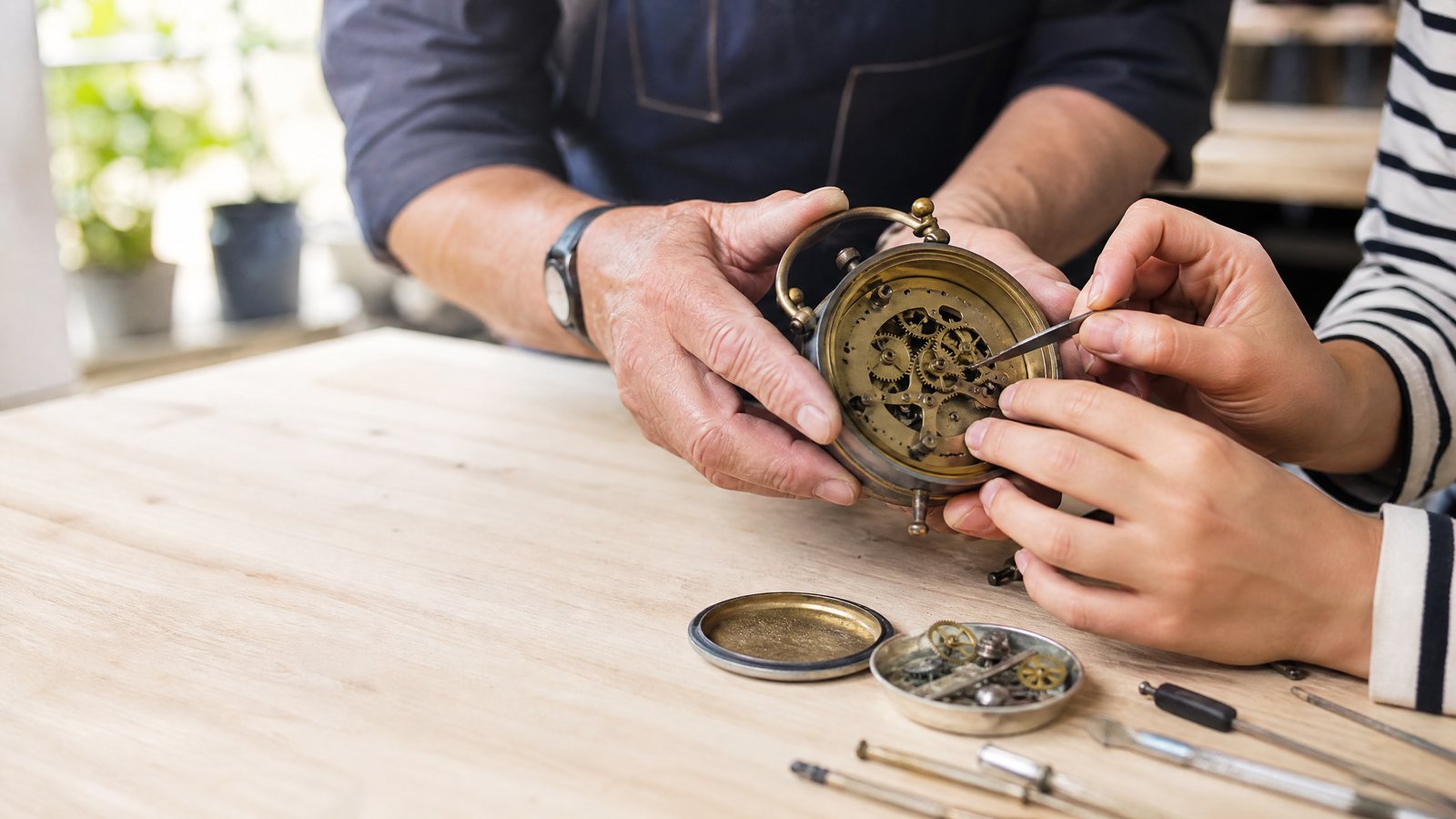
The emergence of the repair café represents a significant departure from the culture of disposable consumerism, offering a grounded alternative rooted in stewardship and mutual aid. These spaces, often hosted in community halls or storefronts, are not merely service centers; they are active laboratories of social and technical exchange. By inviting residents to bring in broken belongings—from vintage sewing machines to digital scales—the repair café reintroduces the concept of a "long life" for objects otherwise destined for landfills. This shift is driven by a collective realization that maintaining our material world is a form of agency eroded by the replacement economy. In these rooms, repair becomes a quiet resistance, asserting that value is defined by patient labor rather than novelty.
Walking into a repair café, one is struck by a sensory environment that is both nostalgic and intensely practical. The air is often thick with the metallic scent of soldering iron smoke, the aroma of sanded wood, and the ozone tang of electrical components. Workbenches are cluttered with an eclectic array of tools: precision screwdrivers, multimeters, and jars of salvaged screws. There is a specific focused energy here, a rhythmic choreography of hands moving over surfaces and eyes squinting through magnifying lamps. Unlike the sterile, opaque environment of modern electronics stores, the repair café is transparent and messy, revealing the hidden guts of our daily lives—the gears, wires, and circuits that we usually take for granted until they cease to function.
At the heart of the repair café is the collaborative exchange of expertise, transforming the relationship between "expert" and "client" into one of neighborly partnership. Volunteer fixers, often retired engineers or hobbyists, do not simply take the object away. Instead, they work alongside the owner, explaining the diagnostic process as they go. They might point out a blown capacitor or a frayed cord, turning frustration into a shared educational opportunity. This transfer of knowledge happens through observation, conversation, and the physical act of holding a component in place. In this way, technical skill is demystified and returned to the community, fostering a sense of collective competence that extends far beyond the duration of the event itself.
Broken objects often carry a psychological weight exceeding their functional utility, and the repair café provides a space where this emotional dimension is respected. A ceramic lamp from a grandparent or a child’s favorite toy are not just items to be fixed; they are vessels for memory and personal history. When these objects break, there is a sense of loss that a replacement cannot mitigate. The act of repair becomes a form of care—not just for the object, but for the person who owns it. By providing tools and guidance to restore these items, the repair café validates the owner’s attachment and offers a practical way to preserve the continuity of their daily life. We are curators of our own material surroundings.
The "café" portion of the name is as essential as the "repair" part, as these gatherings function as social hubs that rebuild the fabric of local neighborhoods. Between the workbenches, there are tables for tea and cake, where people wait for their turn or linger to watch the process. In these moments, conversation flows easily between strangers. A young person might learn about local history from an older resident, or a newcomer might find a sense of belonging through a shared interest in woodworking. The shared purpose of fixing things together breaks down the social barriers that often keep neighbors isolated. The repair café creates a "third place" where the primary currency is curiosity, generosity, and the desire to be useful to one another.
From an environmental perspective, the repair café is a powerful manifestation of the "Second Life" philosophy, demonstrating how local action addresses the global problem of waste. Every toaster returned to service or pair of trousers patched represents a tangible reduction in the demand for new resources and a diversion of waste from the disposal stream. However, the impact goes deeper than metrics. By making repair visible and accessible, these cafés challenge the design-for-obsolescence model that dominates modern manufacturing. They highlight the absurdity of products glued shut or held together with proprietary screws, empowering citizens to demand more repairable goods. The "Second Life" is about the revival of a repair mindset that values durability and the inherent worth of materials.
The educational aspect of the repair café is perhaps its most lasting legacy, equipping individuals with the confidence to tackle their own maintenance tasks. For many participants, seeing their own belongings opened up and explained is a revelatory moment. The mystery of the "black box" is replaced by a basic understanding of how things work, reducing the fear of breaking something further. This newfound confidence often leads to greater self-reliance at home, as people realize that many common household problems can be solved with patience and the right tool. The repair café acts as a gateway to a broader culture of making and fixing, encouraging people to move from being passive users of technology to being active participants in its upkeep.
In the broader context of community resilience, the repair café serves as a model for how neighborhoods can prepare for a future characterized by resource scarcity or economic instability. By fostering local networks of expertise and promoting the reuse of existing materials, these spaces create a buffer against the vulnerabilities of global supply chains. A community that knows how to fix its own tools and clothing is inherently more capable of adapting to change than one entirely dependent on external services. The repair café is a practical exercise in building social capital, as the trust formed over a shared workbench can be mobilized in times of need. It is a reminder that our most valuable assets are often right next door—in the skills of our neighbors.
Ultimately, the success of a new repair café is measured not just by the number of successful repairs, but by the subtle shift in the atmosphere of the neighborhood it serves. It leaves behind a trail of restored objects, but also a more connected and confident community. The repaired toaster on the kitchen counter becomes a symbol of a Saturday afternoon well spent and a lesson learned. It is a small but significant step toward a world where we treat our belongings, our environment, and our neighbors with the care they deserve. As these cafés continue to sprout in community centers, they offer a hopeful vision of a future where expertise travels freely and the simple act of fixing something broken can help to mend the world around us.