Hospitality
The best hotel lobby is becoming a useful room for the city around it.
The modern hotel lobby is shedding its role as a gated threshold for travelers to become a useful room for the city, creating a new kind of civic hospitality that serves the local neighborhood as much as the overnight guest.
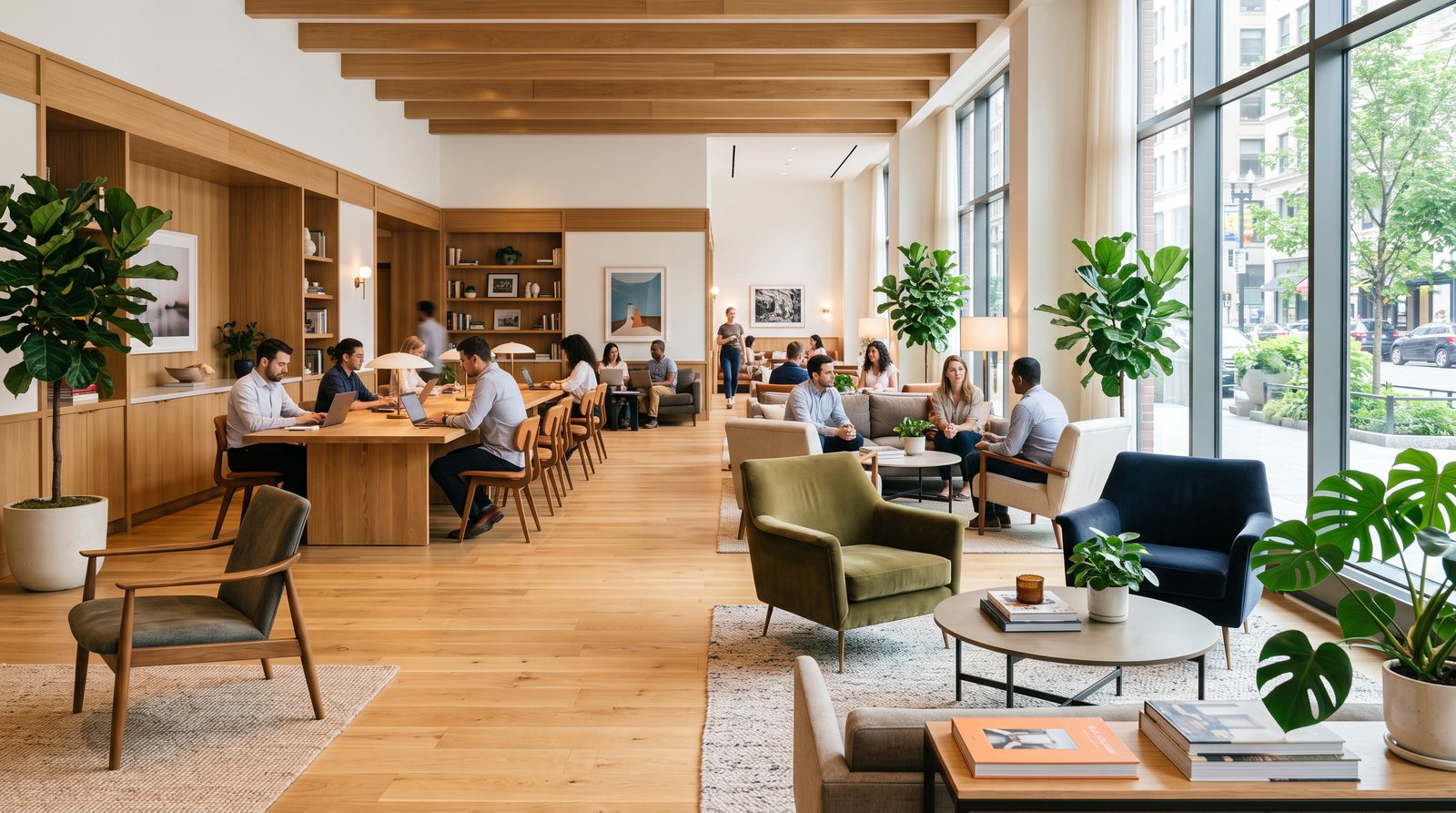
The hotel lobby has long been defined by its transience, a liminal space designed to facilitate the movement of guests from the public street to the private sanctuary of a room. Traditionally, these areas were characterized by a sterile grandeur that signaled to the passerby they were merely an observer, not a participant. However, a significant shift is occurring in urban hospitality design. The modern hotel lobby is increasingly shedding its role as a gated threshold and is instead becoming a "useful room" for the city that surrounds it. This evolution reflects a broader change in how we perceive public space, moving away from rigid institutional boundaries toward a more porous, inclusive model of urban engagement where the hotel serves as a civic anchor rather than a secluded island.
This transformation begins with the physical architecture of the entrance. Where once there were heavy revolving doors and uniformed porters acting as gatekeepers, there are now wide, transparent apertures that invite the street inside. The "Check In" philosophy, as championed by writers like Milo Reed, suggests that the most successful lobbies are those that erase the psychological barrier between the guest and the local resident. Integrating floor-to-ceiling glass and multiple points of entry, hotels are signaling a new kind of hospitality. This design choice acknowledges that the vibrancy of a hotel is directly linked to the vibrancy of its neighborhood. When a lobby feels like a natural extension of the sidewalk, it ceases to be a waiting room and starts to function as a public square, providing a reliable environment where the city’s social life can unfold without a room key.
The rise of the "useful room" is perhaps most visible in the way lobbies have been repurposed as informal co-working spaces. In an era where the boundaries between work and leisure have blurred, the hotel lobby offers a unique atmospheric middle ground—more professional than a noisy café, yet more social than a home office. Long communal tables equipped with integrated power outlets, high-speed connectivity, and ergonomic lighting have replaced the decorative but impractical furniture of the past. This utility draws in a diverse cohort of local freelancers, students, and traveling professionals, creating a layered density of activity that benefits the hotel as much as the users. By providing a functional infrastructure for productivity, hotels are positioning themselves as essential hubs in the modern knowledge economy, turning underutilized square footage into a valuable resource for the urban workforce.
Beyond its functional utility, the modern lobby is also becoming a site for cultural production and community exchange. No longer content with generic corporate art, many hotels are treating their ground floors as curated galleries, performance spaces, or lecture halls. This shift toward "orbital-field" hospitality—where the hotel’s influence extends into the local creative ecosystem—allows the lobby to host book launches, art installations, and panel discussions that are open to the public. These events transform the space from a passive backdrop into an active participant in the city’s intellectual life. When a hotel lobby hosts a neighborhood newsroom or a local makers' workshop, it builds a deep, durable connection with its surroundings. This cultural permeability ensures that the hotel is not just a place where people sleep, but a place where the city thinks, talks, and creates.
The most profound aspect of this evolution is the application of professional hospitality to public life. In a "useful room," the service culture that defines a high-end hotel is extended to anyone who walks through the door, regardless of whether they are a paying guest. This creates a rare kind of civic hospitality where the environment is maintained with a level of care and attention seldom found in traditional public infrastructure. The presence of attentive staff and clean facilities make the lobby a preferred "third place" for the community. This model suggests that hospitality is not just a commercial product, but a social practice that can enhance the quality of urban living by providing spaces that are both generous and well-managed.
The decision to open up a hotel lobby is not merely a philanthropic gesture; it is a strategic response to the changing economics of urban space. Hotels are realizing that a lobby filled with local residents creates an atmosphere of authenticity that travelers increasingly crave. The presence of locals gives a hotel a "soul," making it feel like a genuine part of the city rather than a generic franchise. Conversely, for the city, the hotel lobby provides a high-quality public amenity that is funded and maintained by the private sector. This symbiosis creates a resilient urban fabric where private interests and public needs align. By sharing their space, hotels reduce their operational isolation and increase their social capital, becoming indispensable components of the local neighborhood rather than vulnerable targets of gentrification critiques.
As this trend continues, the cumulative effect on the urban fabric is significant. When every major hotel lobby in a city district becomes a useful room, the result is a network of accessible, high-quality indoor spaces that complement traditional parks and plazas. This is particularly crucial in dense urban environments where public land is scarce or where extreme weather makes outdoor spaces unusable for parts of the year. The hotel lobby becomes a reliable constant—a place that is always open, always lit, and always welcoming. This reliability is a form of urban infrastructure that supports the social resilience of the city. It provides a space for accidental encounters, for the quiet observation of others, and for the simple pleasure of being in a room that belongs to everyone and no one at the same time.
Looking ahead, the concept of the hotel lobby as a useful room is likely to become the standard rather than the exception. As cities become more crowded and the need for flexible, multi-purpose spaces grows, the hospitality industry is uniquely positioned to lead the way in creating the next generation of public rooms. Future designs may incorporate even more integrated community features, such as public lending libraries, neighborhood concierge services, or shared kitchen facilities. The success of this model will depend on the continued willingness of hotels to embrace their role as civic actors and the ability of cities to recognize and support these private-public hybrids. Ultimately, the best hotel lobby is one that remembers that hospitality, at its core, is the art of making room for others—both those who are passing through and those who have lived there all along.