Hunter Valley
The Quiet Rhythms of the Floodplain: Finding a Slower Pulse at the Valley’s First Earth Market
Beyond the manicured vine rows and the polished glass of Pokolbin’s tasting rooms lies a different kind of vintage, one measured in the morning dew on a pumpkin’s skin and the calloused hands of those who tend the floodplain soils. In the historic heart of the riverfront, a gathering unfolds that feels less like commerce and more like a homecoming. Here, the air carries the scent of stone fruits and the weight of tradition, where every jar of honey and every pasture-raised egg tells a story of a hundred-kilometer radius. It is a place where time pauses, allowing the modern traveler to reconnect with the simple, profound elegance of a harvest saved and a community sustained by the very earth beneath their feet.
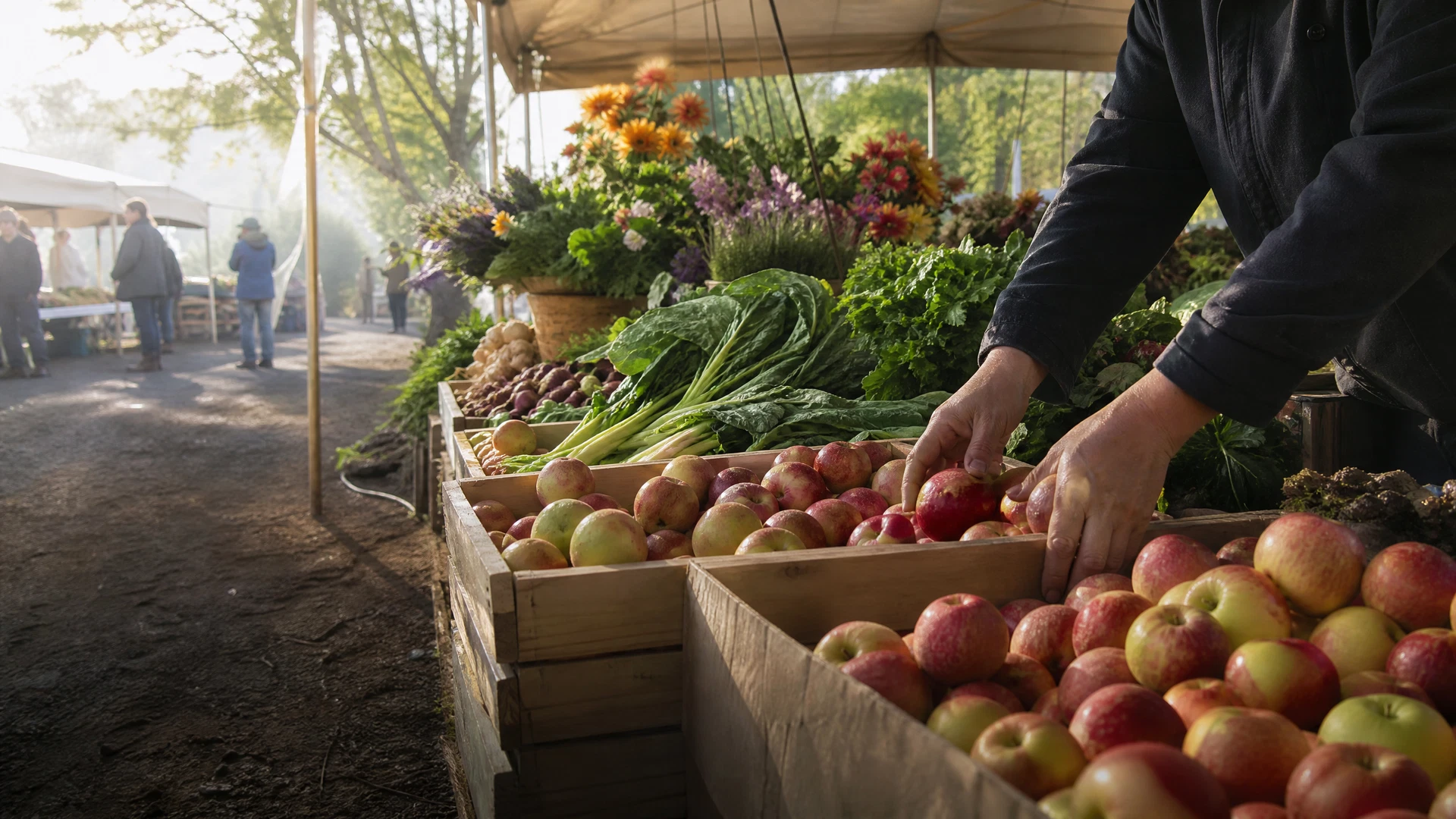
The morning air in the riverfront precinct carries a peculiar clarity, a crispness that seems to sharpen the edges of the historic brickwork against the pale, waking sky. As the first light spills across the shared zone, the usual silence is replaced by the rhythmic clatter of wooden crates and the low, melodic murmur of greetings exchanged between neighbors. There is a sense of ceremony in the way the stalls are assembled, a slow unfolding of color and texture that defies the hurried pace of the modern world. You arrive while the shadows are still long, watching as the pavement is transformed into a vibrant tapestry of the region’s bounty. It is not just a market; it is a quiet reclamation of space, where the fertile history of the floodplain meets the gentle intentions of those who believe in the sanctity of the soil.
Walking through this space feels like stepping into a living archive of the valley’s resilience. The architecture speaks of a colonial past, with sturdy facades that have weathered both floods and the slow passage of centuries, yet today they stand as silent sentinels to a new kind of heritage. The river, just a stone’s throw away, remains the lifeblood of this land, its presence felt in the humidity of the air and the richness of the silt that has nurtured these harvests for generations. There is a wistful elegance in the juxtaposition of old brick and modern glass, a reminder that while the methods of trade may evolve, the fundamental human need for connection to the source remains unchanged. You find yourself slowing your pace, matching the deliberate movements of the vendors who arrange their offerings with the care of curators.
At the heart of this gathering is a philosophy that feels both revolutionary and ancient: the commitment to a clean, fair, and slow way of living. Every item on display, from the smallest vial of oil to the heaviest gourd, has traveled no more than a hundred kilometers to reach this spot, carrying with it the distinct terroir of a specific microclimate. This proximity creates an invisible web of care, a promise that the food you hold was grown with respect for the regenerative cycles of the earth. It is a far cry from the anonymous aisles of a supermarket; here, the carbon footprint is light, but the emotional weight is profound. You realize that by choosing a peach or a loaf of sourdough, you are participating in a quiet act of resistance against the ephemeral, anchoring yourself in the tangible realities of the local landscape.
One cannot speak of this market without acknowledging the humble pumpkin, the deep-orange anchor of its origin story. There is a local legend, whispered among the stalls, of a harvest once threatened by the whims of the market, saved only by the collective will of a community that refused to let such beauty go to waste. Today, these heirloom varieties sit in weathered crates, their skins matte and dusted with the very earth that birthed them, serving as a symbolic staple of the market’s enduring spirit. Touching the cool, ribbed surface of a Blue Queensland or a Jarrahdale, you feel a connection to the hands that pulled them from the vine. They are not merely vegetables; they are artifacts of a shared victory, a reminder that when we value the work of the farmer, we preserve the soul of the valley.
As you wander deeper into the rows, the scents begin to shift, moving from the earthy musk of the gourds to the bright, floral notes of honey and the sun-warmed fragrance of stone fruits. The honey, collected from hives that dance across the urban and rural fringes, holds the essence of a thousand blossoms, its golden clarity a testament to the health of the local ecosystem. Nearby, the peaches and plums of a neighboring orchard sit in delicate clusters, their velvet skins promising a sweetness that only comes from ripening fully under the Australian sun. There is a wistful quality to these flavors, a realization that they are fleeting, tied to the specific tilt of the earth and the turning of the seasons. To taste them is to capture a moment of the valley’s summer, a brief intersection of light, water, and time.
The true value of this experience, however, lies in the conversations that happen across the wooden tabletops. These are not transactions so much as they are exchanges of knowledge and passion. You meet the farmer whose skin is etched with the lines of decades spent in the fields, who speaks of regenerative practices not as a trend, but as a necessity for the survival of their grandchildren’s heritage. They explain the importance of pasture-raised eggs, the way the chickens move across the grass to heal the soil, and suddenly the simple act of buying a carton feels like a contribution to a larger narrative. There is a profound dignity in this work, a quiet pride that doesn't need to shout to be heard. You listen, and the distance between the city and the soil begins to dissolve.
By mid-morning, the market has reached its peak, a gentle bustle of woven totes and clinking coins. The air is filled with the sounds of a community in conversation—the laughter of children, the barking of a distant dog, and the constant, rhythmic soundtrack of the river nearby. You see people from all walks of life, united by a shared appreciation for the authentic, their baskets filling with sourdough that still holds the warmth of the oven and cheeses that speak of the lush pastures of the lower valley. The colors are dizzying: the deep purples of kale, the vibrant greens of herbs, and the kaleidoscopic hues of heirloom tomatoes. It is a sensory feast that reminds you of the abundance that exists when we work in harmony with the land rather than in competition against it.
As you finally turn to leave, your bags heavy with the day’s finds, you carry more than just produce; you carry a sense of quiet fulfillment that lingers long after you’ve left the riverfront behind. The market will pack away, the crates will be loaded back into trucks, and the shared zone will return to its usual weekday rhythm, but the connection remains. There is a comfort in knowing that in a few weeks, the cycle will begin again, a testament to the enduring nature of the land and the people who tend it. You look back one last time at the historic brickwork, now fully bathed in the golden light of the climbing sun, and feel a deep gratitude for this slower pulse, this wistful reminder that the most meaningful journeys are often those that lead us back to the earth.