Hunter Valley
The Infinite Silence of the Hunter: Finding the Ancient Pulse of Stars Above the Darkened Vineyards
As the golden light of the Hunter Valley’s famous vineyards fades into the violet dusk of the Broken Back Range, a different kind of vintage begins to reveal itself. Far from the polished cellar doors and the rhythmic hum of Pokolbin, the landscape surrenders to a profound, ancient darkness that has watched over these ridges for eons. Here, in the quiet reaches of Broke-Fordwich and the rugged altitudes of Yengo National Park, the sky does not merely hold stars; it becomes a luminous ocean of history. To stand beneath this celestial canopy is to participate in a silent, wistful dialogue with the cosmos, where the crisp night air carries the scent of wild honey and the weight of infinite time.
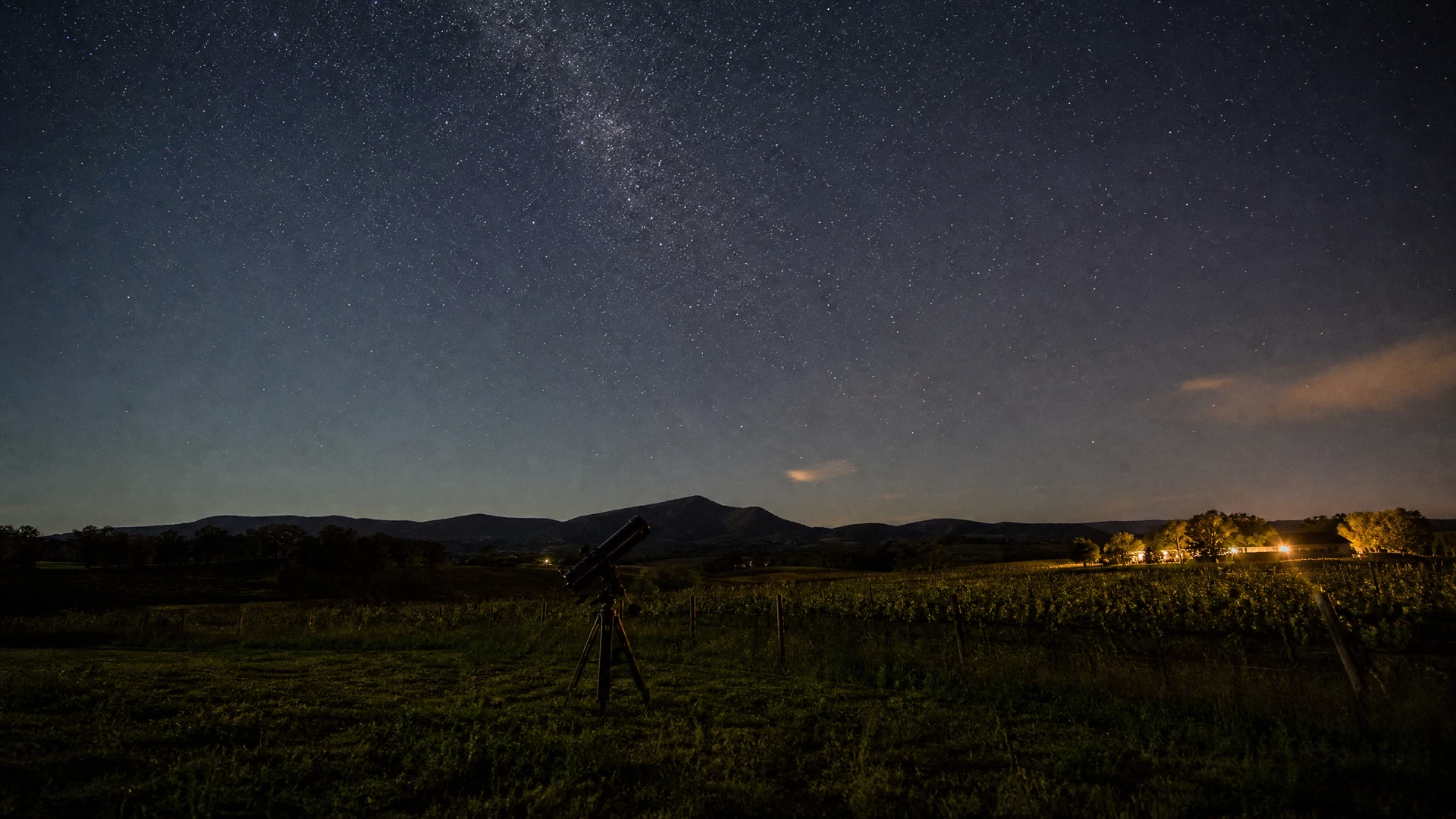
The transition begins as the valley floor, usually a theatre of green and gold, begins to dissolve into the shadows of the surrounding ranges. The sun dips behind the sandstone cliffs, leaving a bruise of indigo across the horizon that lingers long after the warmth has departed. There is a specific, sharp cooling of the air that signals the departure of the day’s earthly concerns, a reminder that this land, though tamed by vines, remains tethered to a wilder clock. You feel the shift in your marrow as the familiar geometry of the vineyards loses its edges, replaced by the towering silhouettes of gum trees that reach upward, anticipating the first pinpricks of light. It is a moment of suspension, a collective breath held by the earth before the grand reveal of the southern firmament.
To witness this transformation in its most potent form, one must leave the comfortable glow of the valley’s heart and venture toward the fringes. The drive toward the Broke-Fordwich region feels like a descent into a deeper, more intentional stillness. The roads narrow, and the occasional porch light of a farmhouse becomes a lonely beacon against the encroaching dark. For those seeking the ultimate vantage, the ascent toward Finchley Lookout in Yengo National Park offers a necessary isolation. The vehicle climbs through a landscape of rugged sandstone and dense scrub, the unsealed path demanding a slow, respectful pace. Here, the air grows thinner and colder, stripped of the humidity that often veils the lowlands, preparing the senses for a clarity that feels almost surgical.
Arriving at the heights during a new moon is an exercise in sensory deprivation that yields to a startling abundance. At first, the darkness is absolute, a velvet weight that forces you to rely on the crunch of gravel and the distant, rhythmic call of a mopoke. But as your eyes adjust, the sky ceases to be a ceiling and becomes a cathedral. The Hunter Valley is unique in its ability to offer such "dark sky" conditions so close to civilization, yet it feels worlds away from the modern era. There is a wistful quality to this absence of light; it is a return to the way the world looked before we learned to illuminate the night, a glimpse into the raw, unedited beauty of the Australian wilderness.
High above the silhouetted peaks, the Southern Cross hangs like a familiar signature, a steady guide through the swirling dust of the Milky Way. The Magellanic Clouds, those ghostly satellite galaxies, appear as soft, ethereal smudges against the deep ink of the void. To see them with such sharpness is to realize the scale of our own transience. The stars here do not twinkle with the frantic energy of city lights; they burn with a cold, steady fire that has traveled across centuries to reach this ridge. There is a profound peace in this insignificance, a feeling that the stresses of the valley floor—the vintages, the harvests, the schedules—are merely ripples on a very deep and very old pond.
In the sub-region of Broke, this celestial wandering finds a grounded, artisanal companion. At a regional meadery, the experience of the stars is paired with the ancient warmth of fermented honey. Standing beside an eight-inch Dobsonian telescope, the transition from the naked eye to the magnified lens is a revelation. The moon, when it finally rises or in its thinner phases, reveals a landscape of craters and seas as rugged as the Yengo ridges themselves. The mead, sweet and complex, serves as a sensory bridge, its floral notes echoing the wildflowers that dot the valley by day, while the telescope brings the rings of Saturn or the moons of Jupiter into startling, intimate focus.
Astronomers speak of "seeing"—a technical term for the atmospheric stability that allows for clear observation. The Hunter’s high elevation lookouts and low humidity create a perfect window into the infinite. The air here is often still, undisturbed by the heat haze of the plains, allowing the light of distant nebulae to arrive without distortion. It is a rare gift to find such technical perfection wrapped in such poetic surroundings. Even for the amateur, the difference is palpable; the stars feel closer, the blackness of space feels deeper, and the fine details of the galactic core become visible to the unaided eye, a shimmering ribbon of gold and violet draped across the sky.
While the stars are a permanent fixture, the Hunter Valley’s night sky is a seasonal masterpiece. During the winter months of June through August, the galactic center of the Milky Way reaches its most prominent position directly overhead. The cold, crisp nights of the Australian winter provide the best transparency, the freezing air acting as a lens of incredible power. It is during these months that the wistfulness of the experience is most acute. Bundled in layers of wool, you watch the core of our galaxy arch from horizon to horizon, a reminder of the vast, silent systems that govern our existence while we sleep in the shadows of the vines.
Eventually, the cold necessitates a return to the valley floor, but the descent feels different than the climb. The stars stay with you, etched into the back of your eyelids. Driving back toward the soft lights of Pokolbin, the vineyards seem changed, no longer just producers of wine, but guardians of the darkness that allows the heavens to shine. There is a quiet gratitude in the return to warmth, a sense of having been a guest in a place where time is measured in light-years rather than minutes. The Hunter Valley at night is a place of profound perspective, where the ancient pulse of the universe beats steadily above the quiet, sleeping vines.