Hunter Valley
The Emerald Silence of Watagans: A Wistful Journey to the Moss-Covered Walls of an Ancient Timber Sanctuary
Beyond the manicured rows of Pokolbin’s famous vines lies a different kind of vintage, one bottled in the cool, damp shadows of the Watagans hinterland. Here, at the Boarding House Dam, the air loses its parched summer edge, replaced by the scent of crushed grey myrtle and wet stone. It is a place where the clamor of the nineteenth-century logging camps has been swallowed by a hundred-meter tapestry of emerald moss, and where a simple picnic by the creek becomes a quiet meditation on the slow, beautiful reclamation of the wild.
To leave the valley floor is to perform a quiet act of desertion. Behind you, the Hunter’s celebrated vineyards stretch in their geometric perfection, baking under a sun that smells of dry grass and ripening Semillon. But as the road begins its winding ascent into the Watagans, the landscape undergoes a sudden, dramatic shedding of its golden skin. The air, once thin and hot, thickens with the humidity of hidden gullies, and the light shifts from a blinding white to a filtered, aqueous green. It is a transition that feels less like a drive and more like a descent into a forgotten memory, where the parched edges of the Australian bush are softened by the encroaching reach of the rainforest.
Boarding House Dam sits in a hollow that feels as though it has been carved out of time itself. In the mid-nineteenth century, this was a place of industry and sweat, a bustling logging camp where the rhythmic bite of the axe and the scream of the saw defined the daily rhythm. Men lived here in rough-hewn huts, harvesting the giants of the forest to build the growing colony. Today, the ghosts of that labor are silent, replaced by a stillness so profound it seems to hum. The dam, once a vital reservoir for the camp, is now a mirror for the towering blue gums, its surface broken only by the occasional ripple of a falling leaf or the darting shadow of a forest bird.
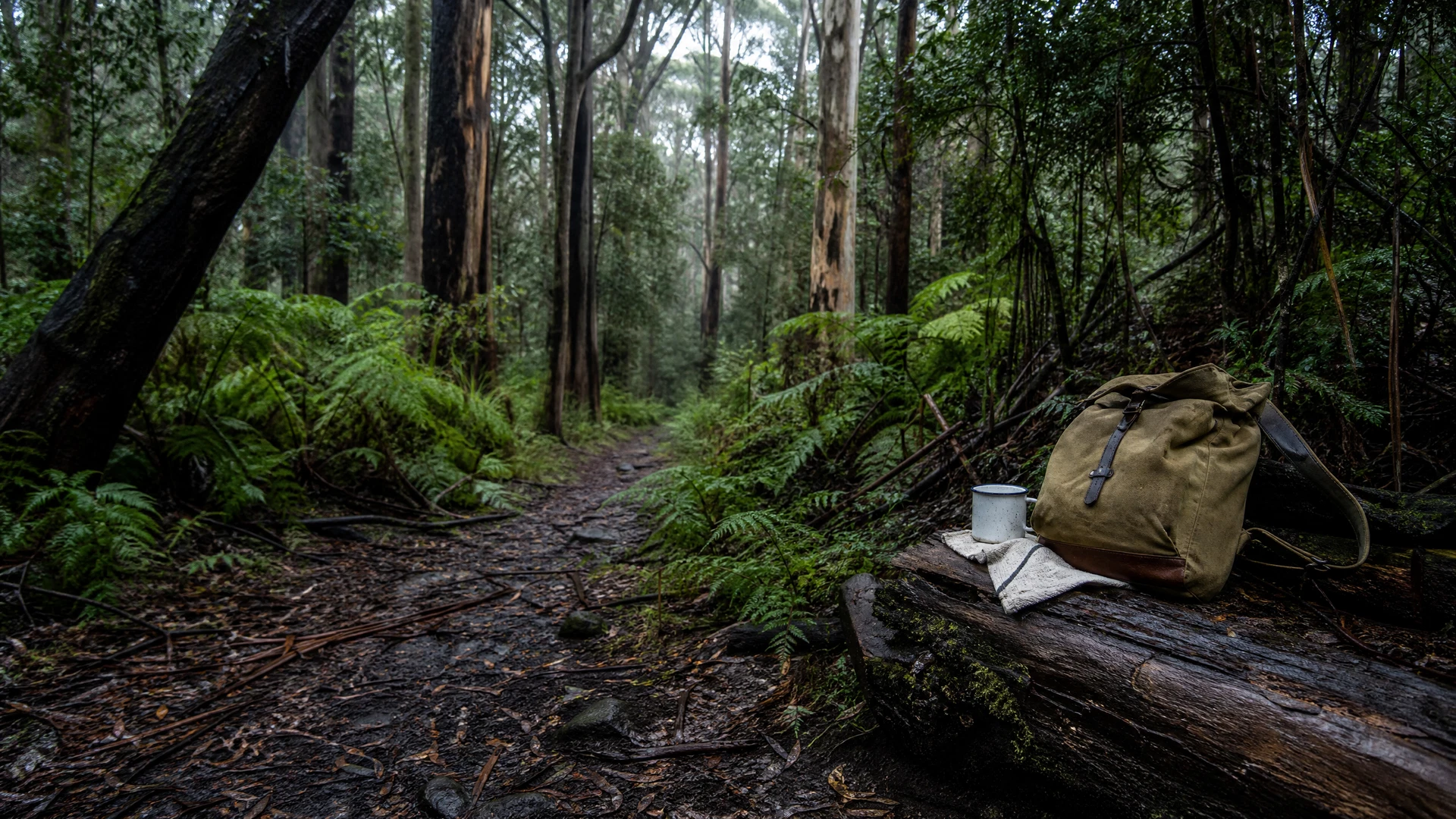
The Circuit walking track begins at the edge of the picnic clearing, a modest path that immediately plunges you into the heart of the canopy. Here, the turpentine and grey myrtle trees stand like ancient sentinels, their trunks silvered by age and draped in the delicate lace of epiphytes. Walking this loop is not a feat of endurance, but a lesson in observation. The ground is a springy carpet of decaying leaves and damp earth, releasing a sharp, peppery fragrance with every footfall. You are forced to slow down, to navigate the exposed roots and mossy stones that mark this Grade 4 trail, finding a rhythm that matches the slow, deliberate growth of the surrounding timber.
Nothing prepares you for the Moss Wall. It emerges from the shadows like a living monument, a hundred-meter stretch of vertical rock that has been completely surrendered to the bryophytes. This is not the thin, dry moss of the valley floor, but a thick, emerald velvet that feels cool and saturated to the touch. It is a vertical garden of immense complexity, where water seeps through the stone to nourish a thousand shades of green. In the wistful light of the afternoon, the wall seems to glow with its own internal luminescence, a testament to the persistence of life in the dampest, darkest corners of the hinterland.
The creek that runs beside the path is the lifeblood of this microclimate. Its voice is a constant, low-frequency murmur, a sound that anchors the forest in the present moment. Even in the height of a Hunter summer, when the temperatures in Pokolbin climb toward the unbearable, this gully remains a sanctuary of coolness. The temperature drops significantly under the dense foliage, creating a pocket of air that feels as though it has been refrigerated by the earth itself. It is a place to stop and breathe, to let the humidity settle on your skin and wash away the dust of the lower country, finding solace in the forest's humid embrace.
Picnicking here is a ritual of simplicity. At the sheltered tables near the dam, there is no need for the elaborate presentations of the valley’s cellar doors. Instead, you find yourself reaching for the basics: a crusty loaf of sourdough, a wedge of sharp local cheddar, and perhaps a handful of olives. The food tastes different in this air—colder, cleaner, more essential. As you sit at the weathered timber table, the towering blue gums frame your view, their leaves whispering secrets to the wind. There is a luxury in this isolation, a sense that for an hour or two, the demands of the modern world have been held at bay by the sheer density of the trees.
The lack of mobile reception in the Watagans is perhaps its greatest gift. Without the persistent ping of notifications, your senses begin to recalibrate. You notice the way the light catches the silver bark of a turpentine tree, or the specific, liquid call of a lyrebird echoing through the gully. The physical challenge of the uneven track becomes a form of grounding, a reminder that the earth is not a flat, paved surface but a complex, living entity. Every step requires a choice, every breath is a conscious intake of the forest’s oxygen-rich atmosphere, leading to a clarity of thought that is rarely found in the crowded tasting rooms below.
Eventually, the descent back toward the valley begins, but you carry the forest with you. The scent of damp earth and crushed myrtle lingers on your clothes, a fragrant reminder of the emerald sanctuary you’ve left behind. As the trees thin and the golden light of the vineyards returns, the Watagans feel like a dream that is already beginning to fade. Yet, the image of the moss wall remains—a silent, green reclamation that continues its work long after you have gone. It is a reminder that while we may build and harvest, the forest always waits, patient and beautiful, to take back what was once its own.