Hunter Valley
The Unspoken Echo of Iron and Earth: A Solitary Walk Through the Hunter’s Sculpted Vineyards
In the quiet corners of the Broke Fordwich sub-region, where the air feels thick with the scent of ripening grapes and the weight of the sandstone cliffs, lies a landscape that breathes in a different rhythm. Here, the traditional geometry of the vineyard is interrupted by the silent, monumental presence of art. This is not merely a gallery, but a living dialogue between the permanence of steel and the seasonal fragility of the vine. To walk these undulating hills is to witness a graceful collision of human ambition and the patient, unyielding endurance of the Australian bush, where every shadow tells a story of creation and every rust-red installation waits for the golden hour to speak its truth.
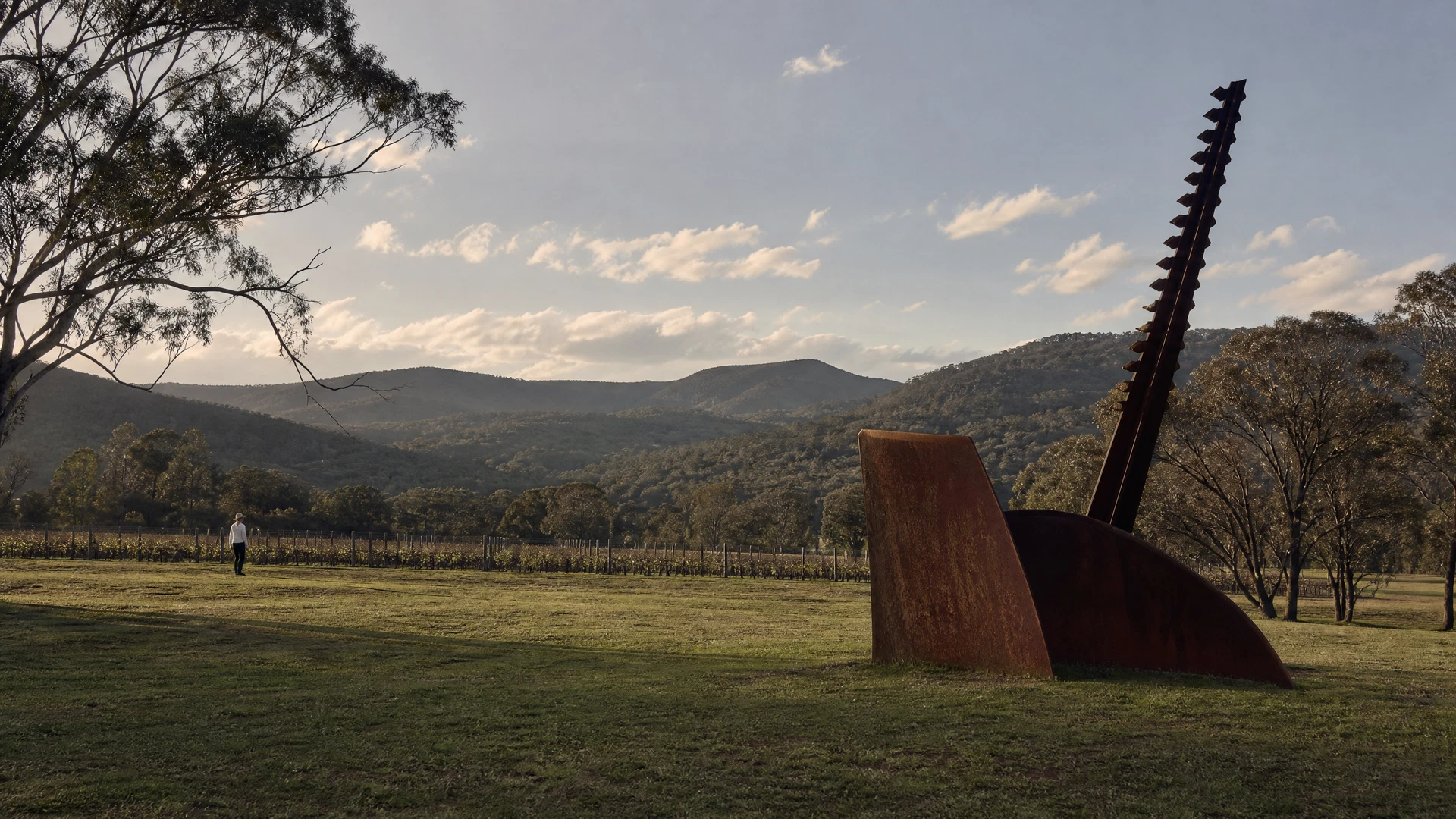
There is a particular stillness that descends upon the Broke Fordwich sub-region as the afternoon stretches its shadows across the valley floor. Here, the Hunter Valley trades the bustling energy of central hubs for a quietude that feels ancient. As one turns onto the gravel paths of this 130-acre estate, the transition is immediate. The air cools, carrying the earthy perfume of damp soil and the sharp scent of vine leaves. The landscape is not just a backdrop for agriculture; it is a sprawling canvas of undulating hills and secret hollows where the geometry of Chardonnay rows is punctuated by monumental forms. It is an invitation to match one’s pace to the steady growth of the vineyard and the silent, enduring presence of the art that calls it home.
Walking through the vines, one realizes this is no traditional gallery. Instead, sculptures are integrated into the very marrow of the working vineyard. You might follow a row of budding grapes when a towering structure of weathered steel, like David Ball’s "Biosis," looms from the greenery. Its industrial curves, stained with the honest rust of the elements, create a striking counterpoint to the organic chaos of the vines. There is something wistful about how these heavy, unmoving objects interact with living plants. While vines are in constant flux—pushing shoots in spring and withdrawing into skeletal dormancy in winter—the sculptures remain. They are the anchors of the landscape, holding the space with a permanence that highlights the fleeting nature of the seasons.
The geography of the estate serves to amplify this sense of scale. To the west, the dramatic sandstone cliffs of the Brokenback Range rise like a jagged fortress wall, shifting from ochre to deep violet as the sun moves. Mount Broke stands as an imposing sentinel, its presence felt in every corner. As you navigate the varied terrain, climbing gentle rises and descending into cool hollows, the relationship between art and land becomes increasingly intimate. A piece like "Fight or Flight" takes on a different meaning against the backdrop of these ancient mountains. The sculptures seem to be in a silent dialogue with the cliffs, their man-made lines echoing the natural ridges of the sandstone, reminding us that even our most ambitious creations are small gestures against the earth.
Seasonality plays a crucial role in this outdoor sanctuary. In the height of summer, the estate is a riot of verdant greens, the vines lush and heavy, partially obscuring the smaller, whimsical ceramic pieces that hide among the leaves. The energy is palpable, a race toward the harvest that fills the air with purpose. But the most wistful time to visit is during the winter months, when the grapes have been picked and the vines pruned back to their essential skeletons. In this stark landscape, the sculptures take center stage. Without the distraction of foliage, the interplay between industrial materials and bare earth is revealed in its raw beauty. The steel seems colder, the shadows longer, and the silence of the valley deeper.
As you move deeper into the estate, guided by a simple map and QR codes that whisper the secrets of the artists, you encounter works ranging from the monumental to the intimate. The steel installations, like the sweeping "Celest," seem to capture the essence of the Hunter sky, their openings framing drifting clouds and distant peaks. There is a tactile pleasure in observing the textures—the way light catches a polished edge or how rain has marked a ceramic surface. These are not pristine objects; they are part of the ecosystem. They weather the same storms as the vines and soak up the same relentless sun. This shared endurance creates a kinship between art and agriculture, a feeling that both are striving to leave a lasting mark.
The sensory experience is further enriched by the estate’s commitment to sustainable land management. Between the rows, vibrant midrow crops provide a tapestry of textures, acting as a living mulch that protects the soil. This practice adds another layer to the narrative—a story of care and stewardship beyond the aesthetic. As you walk, the sound of your footsteps is often the only noise, joined by the distant call of a bird or the rustle of wind through the gum trees. The smell of the earth, particularly after a light shower, is intoxicating, a mix of petrichor and the sweet scent of fallen fruit. It is a grounding experience, pulling you out of abstractions and back into the physical reality of the working land.
There is a profound beauty in the way the afternoon light interacts with the sculptures. As the sun dips toward the horizon, the "golden hour" transforms the estate into a realm of long shadows and ethereal glows. The weathered steel of the installations begins to burn with a dull fire, reflecting the warmth of the fading light. The shadows stretch across the grass, reaching toward the vines like dark, elongated fingers. In these moments, the dialogue between the stone, the vine, and the art reaches its crescendo. The sculptures no longer feel like additions; they feel as though they have grown out of the Broke Fordwich soil, as much a part of the landscape as the ancient sandstone itself.
Leaving the estate as the first stars prick through the deepening blue, one carries a sense of quietude. The walk is not just a journey through a vineyard, but an excursion into the relationship between human expression and the natural world. It is a reminder that art does not need a ceiling to be profound, and that a landscape does not need to be wild to be moving. In the silent dialogue of stone and vine, there is a lesson about patience, weathering, and the importance of standing one’s ground. As you drive away, the silhouette of the Brokenback Range fading into the night, the memory of those rusted sentinels remains, a wistful echo of a place where the earth and the hand of man have found harmony.