Hunter Valley
The Silent Choreography of Pokolbin’s Themed Sanctuaries: A Wistful Journey Through Eight Kilometers of Botanical Memory
In the heart of Australia’s oldest wine country, there exists a sprawling fourteen-hectare sanctuary where time seems to fold into the petals of a thousand roses. Beyond the structured rows of the surrounding vineyards, these Pokolbin themed gardens offer a quiet, unhurried pilgrimage through ten internationally inspired rooms. It is a place of crushed stone paths and weeping willows, where a ten-meter waterfall hums a low song against the sandstone. To walk here in the early morning mist is to step into a living gallery of botanical history, where every moongate and mosaic serves as a threshold to a different world.
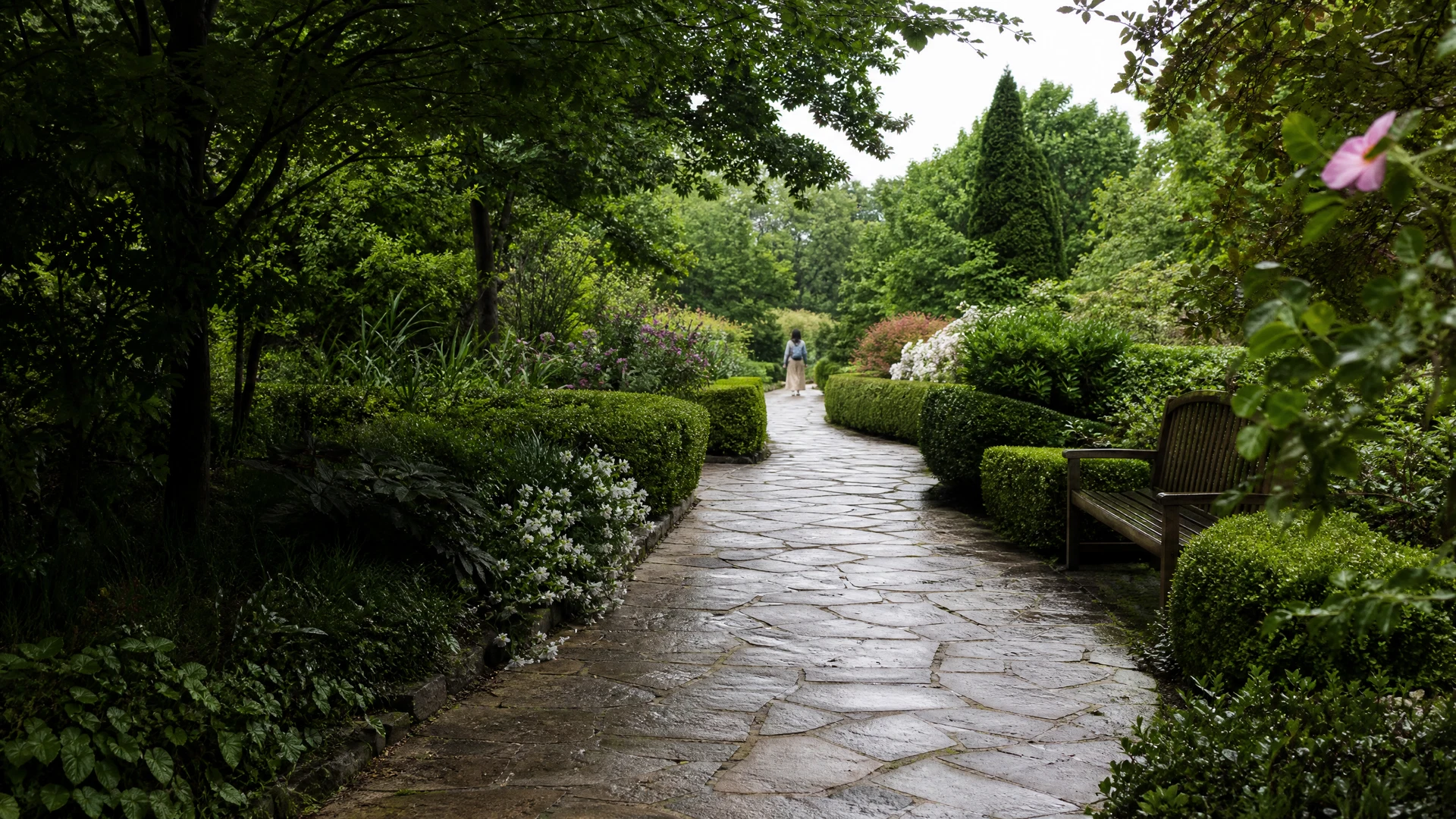
The morning air in Pokolbin carries a cool, dew-heavy stillness that clings to the valley floor before the sun burns it away. In this fragile hour, the gates to the botanical sanctuary open, inviting the traveler to leave the hum of the cellar doors behind. Stepping onto the paths of crushed rhyolite, the sound of one’s own footsteps becomes the primary rhythm—a soft, rhythmic crunch marking the transition from a frantic pace into a more deliberate existence. Here, fourteen hectares of curated earth wait in silence, a tapestry of over six thousand trees and a million ground-covering plants, each a witness to the changing seasons. There is a profound sense of arrival here, a state of mind where the only requirement is to observe the slow unfolding of a leaf.
Eight kilometers of winding paths snake through the landscape, offering a journey that is as much internal as geographical. These trails are not for the hurried; they are invitations to linger where the shadows of ancient trees stretch across the pale stone. The accessibility of the terrain—flat and welcoming to all—belies the complexity of the design within. As one moves deeper, the scale of the undertaking becomes apparent. It is not merely a collection of plants, but a structured labyrinth of memory, where each turn reveals a new perspective on the relationship between human artistry and the wild spirit of the bush. The air here is different, filtered through a dense canopy and scented with the damp, sweet musk of turned soil and rising sap.
To enter the rose garden is to step into a sensory archive. Thousands of blooms, each a delicate vessel of color, stand in disciplined rows that feel entirely free. In the height of spring, the air is thick with the perfume of a million petals, a scent so pervasive it seems to settle in the soul. There is a wistful quality to the roses; they are symbols of a beauty that is both enduring and fleeting. One thinks of the hands that pruned them through winter frosts, waiting for the first bud to break. Walking among them, the visitor is reminded that time in a garden moves differently than in the world of clocks. It moves in the slow cycle of bloom and decay, a quiet reminder that everything beautiful has its moment.
The earth drops away to reveal the sunken garden, a verdant amphitheater where a ten-meter waterfall provides a constant backdrop to the stillness. The sound of falling water is a grounding force, a low frequency that vibrates through the soles of one's feet. Standing at the base of the falls, looking up at the tiers of greenery climbing the stone walls, one feels a sense of being held by the landscape. The verticality offers a dramatic contrast to the rolling vineyard slopes nearby. It is a cool, shaded refuge where the mist catches the light in tiny rainbows. Here, the garden feels most like a sanctuary, a hidden pocket where stone, water, and leaf are in perfect balance, offering a moment of wordless connection to the earth.
The journey continues through rooms that speak of distant lands. The Italian grotto, with its Mediterranean soul, offers a study in geometry and light, where structured elegance reflects a centuries-old tradition of harmony. Nearby, the Indian mosaic garden presents a vibrant tapestry, its intricate patterns a testament to the human desire to order the chaos of nature. These themed spaces act as cultural anchors, allowing the mind to wander across oceans while the body remains rooted in the red earth of Pokolbin. There is a quiet melancholy in these rooms, a sense of longing for other places captured within a garden wall. They are reminders that beauty is a universal language, spoken in the dialect of flowers and the syntax of stone.
In the Chinese garden, a weathered stone moongate stands as a silent threshold. To pass through the circular opening is to symbolically leave one state of being for another. Weeping willows fringe the water’s edge, their silver-green tresses dipping into the stillness like fingers searching for a lost memory. The architecture—the sweeping curves of a red pagoda roof, the precise placement of a bridge—invites a meditative pace. It is a place for reflection, for considering the gaps between what we say and what we feel. The mist that rolls off the Broken Back Range in the early morning finds a natural home here, swirling around stone lanterns and softening the edges of the world until only the most essential elements remain.
Despite its ethereal quality, there is a sturdy practicality to the gardens. The eight kilometers of rhyolite paths are meticulously maintained, providing a stable surface for wheelchairs and prams, ensuring this sanctuary is not a privilege of the few. To truly see the gardens, one must commit several hours, allowing the day to unfold at the pace of a growing vine. Arriving at nine, before the heat or larger groups, allows for rare solitude. In these early hours, the garden belongs to the birds and the solitary walker, a shared secret between the observer and the observed. It is a reminder that the most valuable experiences often require nothing more than our presence and our patience.
As the sun climbs and shadows retreat, the walk leads back to the entrance, yet the traveler who leaves is changed. A lingering scent of damp earth and crushed petals follows you, a sensory souvenir of a morning spent with trees. The gardens remain, a fourteen-hectare monument to the enduring power of nature and the human need for beauty. There is wistfulness in the departure, a realization that while we are merely passing through, the garden continues its silent work of growth. It is a place that demands nothing and offers everything—a quiet labyrinth where the noise of the world is replaced by the rustle of leaves and the distant song of a waterfall, leaving a lasting impression of peace.