Hunter Valley
The Quiet Alchemy of the Curd: A Wistful Sojourn Through the Hunter’s Small-Batch Creameries
In the rolling hinterlands of New South Wales, where the morning mist clings to the ancient vine rows like a soft, white shroud, a different kind of harvest is taking place. Beyond the famous cellar doors of Pokolbin and Lovedale lies a quieter, more tactile tradition: the artisan craft of small-batch cheesemaking. Here, the rhythm of the day is dictated by the cooling of milk and the slow maturation of rinds. This journey into the heart of the Hunter Valley’s boutique dairies offers more than just a tasting; it is a sensory meditation on the terroir of the land, expressed through creamy bries, herb-flecked fetta, and the lingering sweetness of local honey, all served against a backdrop of timeless pastoral beauty.
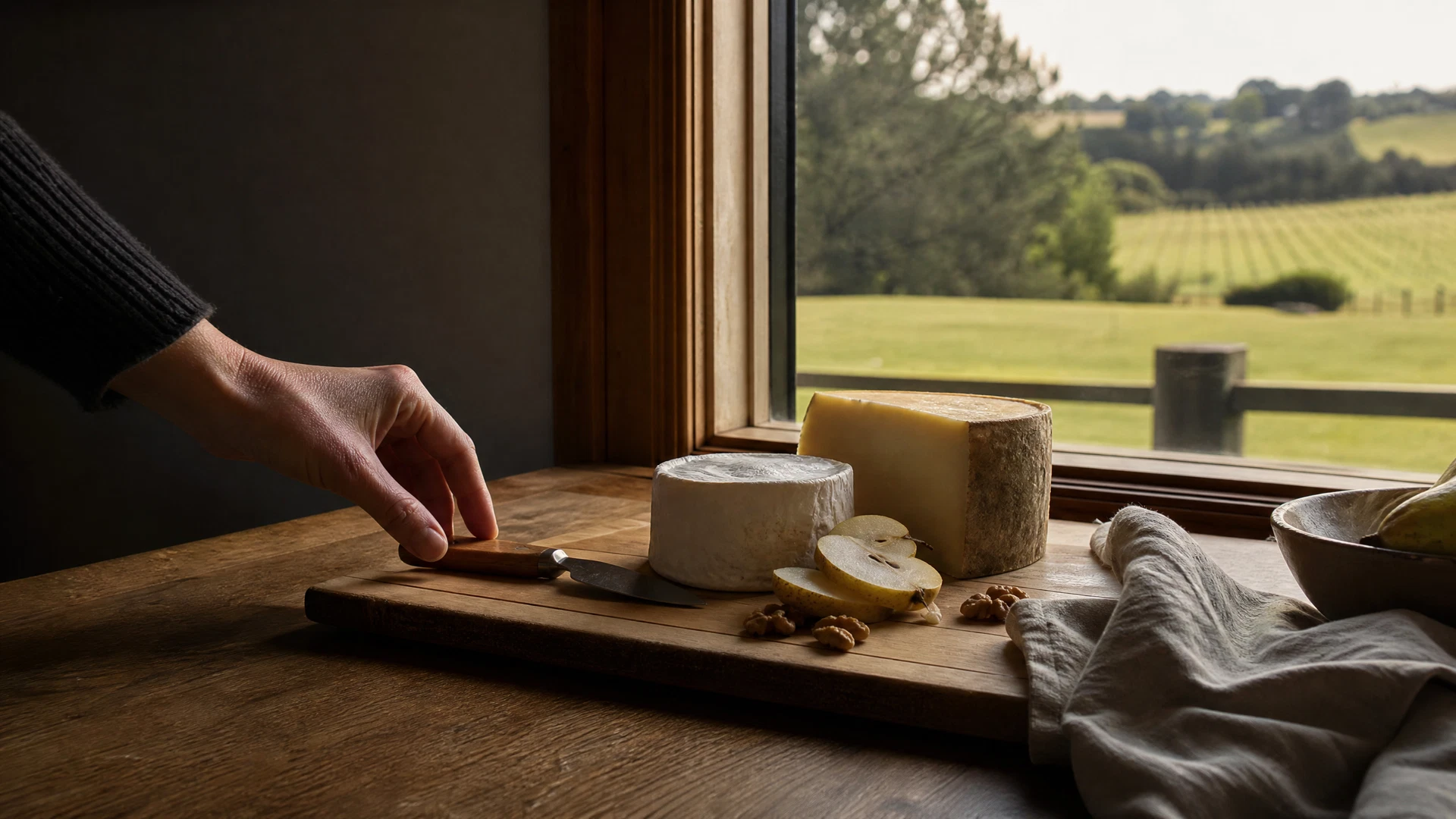
The morning in the Hunter Valley begins not with a sound, but with a color—a pale, buttery gold that spills over the Broken Back Range and settles into the hollows of the vineyards. As you drive along the winding lanes of Pokolbin, the air carries the scent of damp earth and woodsmoke, a reminder that this is a landscape defined by its seasons. There is a particular stillness here before the heat of the day arrives, a moment where the world feels suspended in a state of becoming. It is in this quietude that one finds the boutique creameries, modest structures that house a complex and ancient alchemy. Entering these spaces, you are greeted by a coolness that feels like a sanctuary, a stark contrast to the burgeoning warmth of the Australian sun outside.
The craft of the artisan cheesemaker is one of patience and profound intimacy with the land. In these small-batch operations, the milk is not a mere commodity but a living record of the region’s pastures. Sourced from local herds of cows and goats that graze on the lush, mineral-rich grasses of the valley, the raw product arrives with the morning light. There is a wistful beauty in the way the cheesemakers speak of their work—as a collaboration with nature rather than a conquest of it. Every wheel of Triple Cream Brie and every jar of Pesto Labna is a testament to the specific climate and soil of the Hunter, a flavor profile that cannot be replicated elsewhere, born from the slow, deliberate curdling of time itself.
Stepping into a dedicated tasting gallery, the view through the floor-to-ceiling windows is a geometric masterpiece of vine rows stretching toward the horizon. The table is set with a simplicity that honors the produce: a heavy timber board, a few ceramic bowls, and the cheese itself, resting at room temperature to reveal its full character. The Triple Cream Brie is a revelation, its bloomy rind giving way to a center so decadent it feels like a memory of a richer, slower era. Beside it, the Marinated Fetta, infused with local herbs and cold-pressed oils, offers a bright, saline counterpoint. Each bite is a narrative, a sensory exploration of the textures that define the boutique dairy experience in this historic wine country.
No platter here is complete without the supporting cast of local produce that anchors the cheese to its geographical roots. Small, brine-cured Pokolbin olives provide a dark, savory depth, while housemade fruit chutneys—thick with the essence of simmered summer harvests—add a tangy sweetness. Depending on the month of your visit, the board might feature slices of crisp winter pears, their flesh white and grainy, or heavy clusters of purple grapes still cool from the vine. There is something deeply grounding about eating food that grew only a few miles from where you sit, a realization that the flavors on your tongue are the very same elements you see shimmering in the heat haze across the valley floor.
To truly understand the complexity of these small-batch creations, one must engage in the art of the pairing. In the Hunter, this often means a structured flight where the sharp acidity of a young Semillon cuts through the richness of a goat’s milk cheese, or a robust regional Shiraz finds its match in a matured cheddar. Some galleries offer even more nuanced journeys, introducing handcrafted chocolates that bridge the gap between savory and sweet. It is a slow, deliberate process of discovery, where the conversation hushes and the focus shifts entirely to the interplay of liquid and solid, salt and sugar. In these moments, the bustle of the modern world feels infinitely distant, replaced by the immediate, vivid reality of the palate.
For those who wish to reach beyond the tasting glass, the two-hour cheesemaking workshops offer a tactile connection to the process. There is a meditative quality to watching the rennet work its magic, transforming liquid milk into a fragile, wobbling mass of curd. To sink one’s hands into the warm whey is to participate in a ritual that has remained largely unchanged for centuries. It is a humbling experience, realizing how much labor and intuition goes into a single wedge of cheese. The instructors move with a practiced grace, their hands knowing exactly when to cut, when to stir, and when to let the cheese rest—a reminder that in the artisan world, there are no shortcuts to excellence.
As the afternoon matures, the light in the valley shifts to a deeper, more melancholic ochre. From the vantage point of the tasting room, you can watch the shadows of the eucalyptus trees lengthen across the paddocks where the cattle graze. There is a sense of continuity here that is rare in our fleeting lives; the dairies and the vineyards exist in a symbiotic cycle that predates the digital age. The landscape is a patchwork of greens and browns, a living tapestry that provides the sustenance for everything on your plate. To sit here, with the taste of honey and cream lingering, is to feel a profound sense of belonging to a place that asks nothing of you but your attention.
Leaving the creamery, the air is cooler now, and the first hints of twilight are beginning to purple the sky. The weight of the day’s indulgence is a pleasant one, a physical reminder of the Hunter Valley’s generosity. You carry away not just a bag of artisan finds, but a renewed appreciation for the slow things—the things that take time to grow, to age, and to perfect. There is a wistfulness in the departure, a quiet longing to remain within the orbit of such deliberate craft. As the car climbs the ridge and the lights of the valley begin to twinkle below, the memory of the curd and the vine remains, a small, savory anchor in an ever-changing world.