Hunter Valley
The Slow Flourish of a Hunter Valley Morning: Finding Connection Through the Art of Country Cooking
In the quiet corners of New South Wales’ most storied wine country, a different kind of alchemy takes place far from the cellar doors. Beyond the familiar clink of tasting glasses, the Hunter Valley invites the curious to slow down and engage with the land through the tactile grace of a country kitchen. Whether it is the rhythmic dusting of flour in a sun-drenched villa or the aromatic drift of wood smoke across a sprawling vineyard, these workshops offer more than just culinary instruction. They are a wistful return to the essentials of flavor and fellowship, culminating in long-table lunches where the morning’s effort is shared under the watchful gaze of distant mountain ranges, grounding every guest in the timeless, rural rhythm of the valley.
The morning in the Hunter Valley arrives with a soft, silver-edged light that lingers in the hollows of the Pokolbin hills. It is a time when the air is still cool, carrying the earthy scent of dew-heavy vines and the promise of a day measured by the slow unfolding of deliberate tasks. Driving through the winding lanes of Lovedale, the landscape opens into rhythmic stretches of green, punctuated by stone fountains or the weathered silhouette of a farmhouse. There is a profound stillness here, a quietude that invites you to leave the frantic pace of the city behind and step into a space where the primary concern is the texture of dough or the temperature of a wood-fired hearth. It is a transition that feels like a return to something essential.
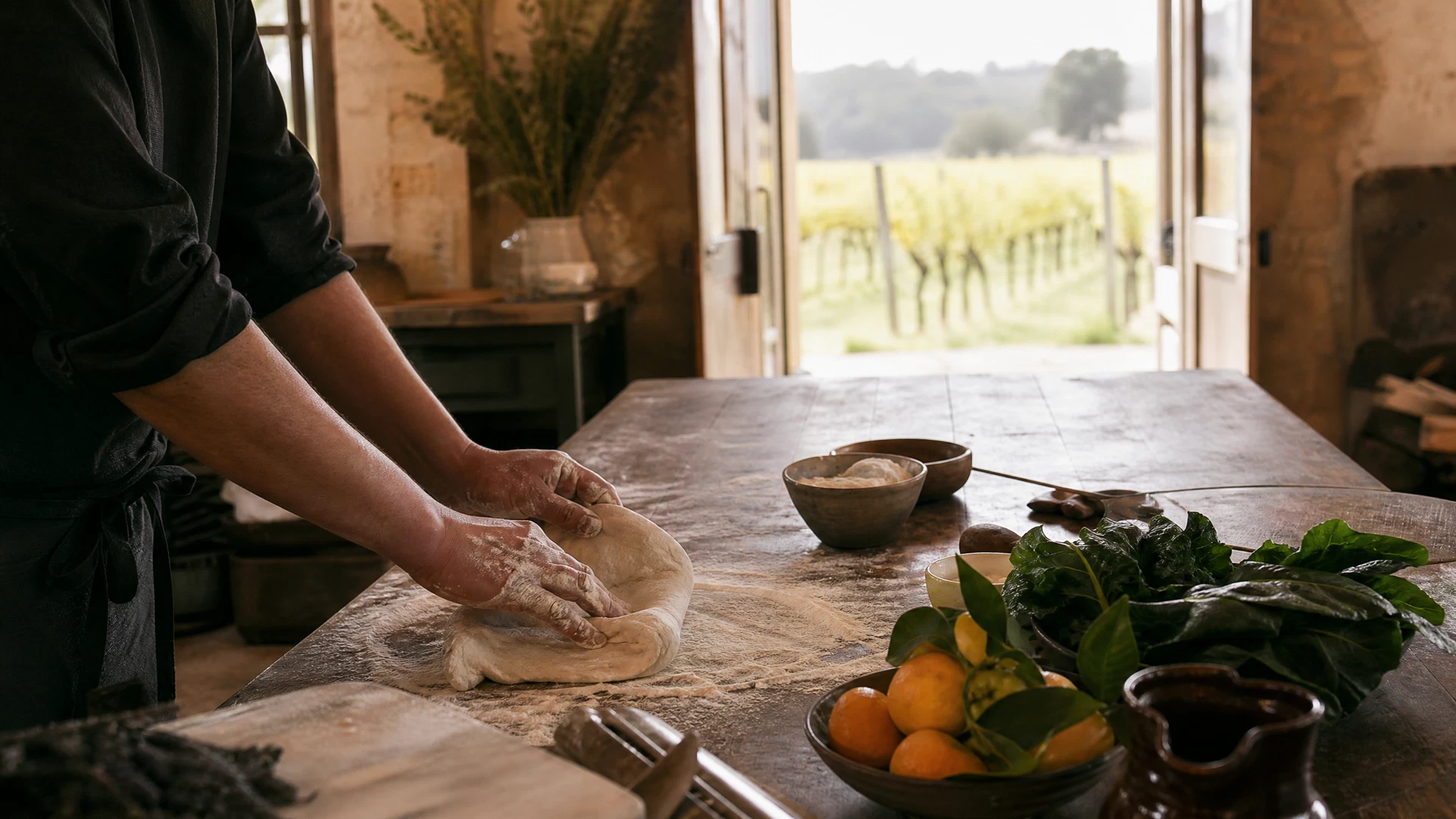
Entering one of these country kitchens, perhaps a villa-style estate overlooking the distant Barrington Ranges, feels like stepping into a living memory. The workbenches are heavy timber, scarred by years of use and polished by the touch of countless hands. There is an immediate, grounding physicality to the environment: the cool touch of marble, the weight of a professional knife, and the fine mist of flour that soon coats your apron. Under the patient guidance of a chef who speaks of ingredients with the reverence of a poet, you are encouraged to re-learn the language of your own hands. You find yourself focusing on the tension of pasta dough, feeling for that moment when it transforms into a smooth, elastic promise of a meal.
The philosophy of these workshops is deeply rooted in the surrounding soil, a fact impossible to ignore as you work. Geometric rows of vines are visible through large, open windows, their leaves trembling slightly in the morning breeze. The produce laid out on the counter—vibrant herbs, sun-ripened vegetables, and locally sourced meats—is a direct extension of this landscape. In a world where food is often sanitized and disconnected from its origin, these sessions serve as a poignant reminder of the cycle of growth and harvest. To cook here is to participate in the valley’s narrative, acknowledging that the richness of the final dish is inseparable from the health of the earth and the skill of the artisan who tended it.
As the workshop progresses, the kitchen becomes a symphony of sensory details. There is the rhythmic thud of a knife against a chopping board, the sudden hiss of aromatics hitting a hot pan, and the intoxicating drift of wood smoke if the day’s lesson involves the art of meat smoking. The air fills with the scent of rosemary, garlic, and perhaps the bright, citrusy notes of a Thai-inspired sauce, creating a complex olfactory map of the region’s culinary diversity. It is a meditative process; the external world falls away, replaced by the immediate requirements of the recipe and the shared concentration of your fellow students, each lost in their own struggle to master a new technique or perfect a subtle flavor profile.
Despite the individual focus required, a natural sense of camaraderie develops over the shared workbenches. Conversation flows easily in the relaxed, rural atmosphere, punctuated by laughter and the occasional mutual frustration over a stubborn sauce or a folded ravioli. You are no longer strangers, but collaborators in a small, temporary community defined by the task at hand. This social element is a core part of the experience, reflecting the hospitable spirit of the Australian wine country. There is something inherently wistful about this kind of collective effort—a throwback to a time when the preparation of food was a central, communal act that bound people together through shared labor and the quiet, joyful anticipation of a coming feast.
The culmination of the morning is the long-table lunch, a tradition that feels both celebratory and deeply peaceful. As the clock nears midday, the frantic energy of the kitchen subsides, replaced by the clatter of plates and the pouring of local wines. Sitting together in a covered courtyard, with the Brokenback Range providing a dramatic backdrop, you finally taste the results of your labor. The flavors are amplified by the context; the pasta is richer because you felt the flour on your skin, and the wine is more resonant because you can see the very vines from which it was born. It is a slow, indulgent affair, where the conversation turns to the nuances of flavor and the simple, uncomplicated joy of a well-made meal.
Each season brings a distinct character to these workshops, ensuring that no two visits are ever quite the same. In the crisp depths of winter, the focus might shift to the warmth of a smoking masterclass, the heavy scent of hickory and oak providing a cozy counterpoint to the frost-dusted vineyards outside. In the spring, the air is light and celebratory, the kitchen filled with the first tender greens of the harvest. This seasonal rhythm adds a layer of depth to the experience, grounding it in the natural cycles of the valley. It encourages a reflective state of mind—a realization that our relationship with food is constantly evolving, shaped by the changing light and the shifting temperature of the land.
As you eventually leave the workshop, driving back through the golden light of the late afternoon, you carry more than just new recipes. There is a lingering sense of satisfaction, a pride in having created something tangible with your own hands. The Hunter Valley has a way of staying with you, its landscape etched into your memory alongside the taste of a perfectly balanced sauce. These cooking workshops are not just about learning to cook; they are about learning to see the world with a bit more patience and appreciation. They offer a rare opportunity to pause, to breathe, and to reconnect with the simple, elegant truths that can only be found in the heart of a country kitchen.