Hunter Valley
A Slow Rotation Through the Amber Haze: Finding Stillness on the Quiet Lanes of the Hunter
The Hunter Valley is a landscape of slow transitions, where the morning mist clings to the Broken Back Range long after the sun has begun its ascent. To navigate this storied wine region on two wheels is to step away from the hurried pace of the modern world and into a rhythmic, tactile dialogue with the earth. Whether gliding along the established Hermitage Road cycleway or exploring the tranquil secrets of Palmers Lane, the experience is one of profound intimacy and effortless grace. With the quiet assist of an electric bicycle and the convenience of regional wine delivery services, the traveler is left free to simply observe. It is a journey defined not by the destination, but by the amber light and the quiet satisfaction of a hill well-conquered.
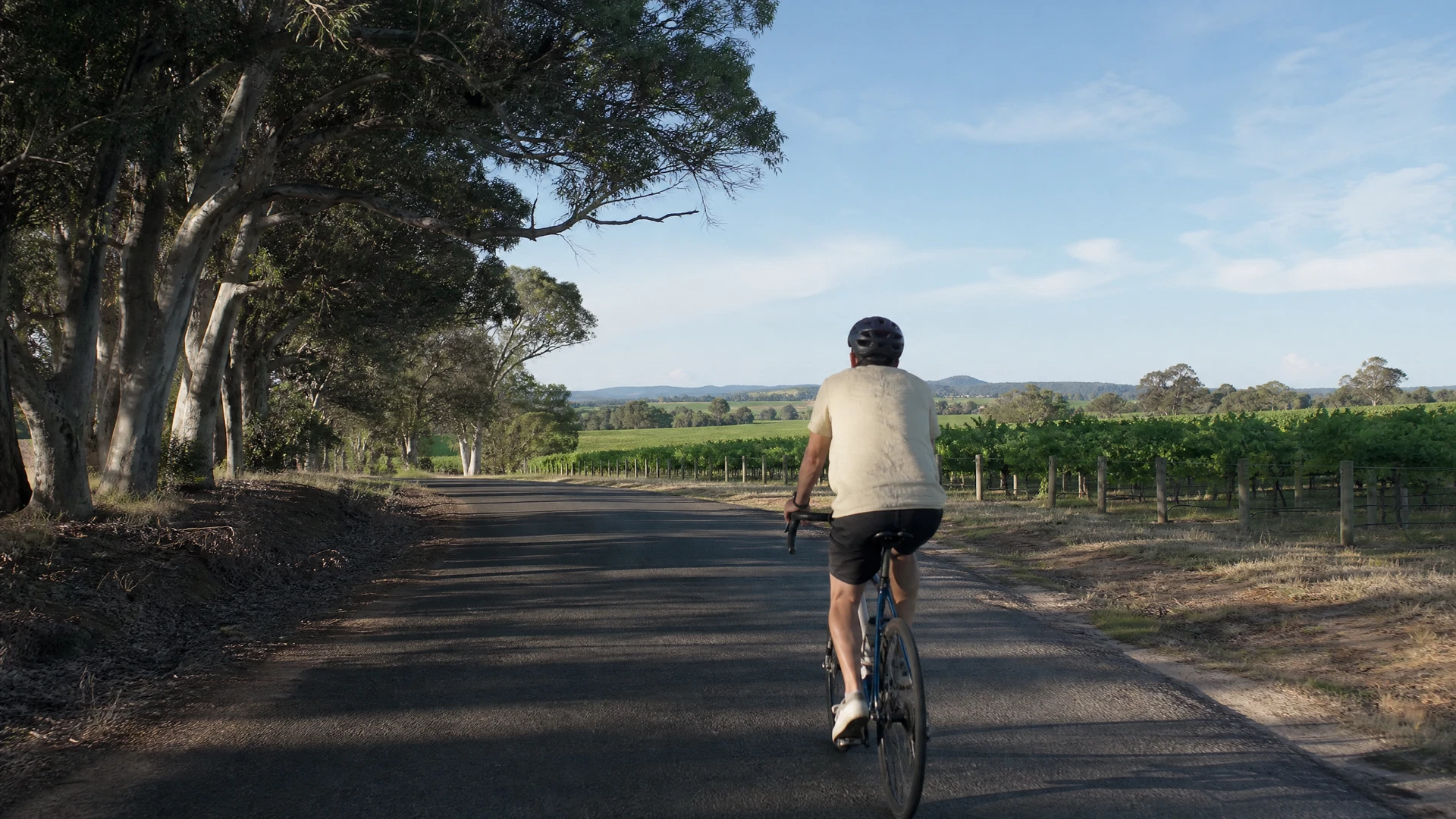
The morning begins not with a sound, but with a color—a bruised, translucent purple that clings to the jagged teeth of the Broken Back Range. In this corner of New South Wales, the light does not simply arrive; it seeps through the mist like ink through damp paper. Standing at the edge of a gravel path, the air is sharp enough to sting the lungs, yet there is a profound stillness. The bicycle, a sturdy companion with a silent electric heart, waits against a silver-grey fence post. To mount it is to enter a dialogue with the landscape, a slow-motion immersion into a world where the only deadline is the shifting of shadows across the ironbark-studded slopes. Here, the geometry of the vines creates a rhythmic, visual metronome.
There is a specific kind of liberation found in the hum of two wheels on a rising incline. While the Hunter Valley is celebrated for its liquid legacy, its topography is a character in its own right—a series of undulating swells and dips. The electric assist of a modern hire bike transforms these rolling obstacles into effortless glides, allowing the mind to drift even as the body remains in motion. As I crest a small rise, the vista opens to reveal the Hermitage Road cycleway, a ten-kilometre ribbon of possibility stretching toward the horizon. It is a path that invites curiosity, leading the rider past weathered facades of antique shops and quiet galleries, each a brief sanctuary from the sun now burning through the silver veil of the morning.
While the main cycleway offers a structured journey, there is a particular magic in the diversions. Palmers Lane, a narrower artery, feels less like a thoroughfare and more like a shared secret. Here, the vineyards press closer to the road, their tendrils reaching out to brush the handlebars of passing travelers. The traffic is sparse, often consisting of nothing more than a local utility vehicle or a wandering kangaroo startled by the silent approach of the bicycle. On this lane, the world narrows to the crunch of gravel and the rhythmic clicking of the gear shifter. It is a place for the unhurried, where the distance between tasting rooms is measured not in kilometres, but in the number of times one stops to breathe.
Autumn in the valley is a masterclass in the art of the slow fade. The lush greens of summer have surrendered to a palette of ochre, burnt sienna, and a gold so bright it feels borrowed from a different sun. Each row of vines tells a story of seasonal exhaustion and rest, their leaves curling at the edges like the pages of an old book. To cycle through this mosaic is to move through a living gallery. The light, filtered through the thinning canopy, casts long, skeletal shadows across the path, creating a flickering strobe effect that heightens the sense of being in a dream. There is a melancholy beauty in this transition, a reminder that the most profound growth occurs in the quiet periods of dormancy.
The logistics of the journey are handled with a quiet efficiency that preserves the rider's sense of freedom. At the various cellar doors, there is no need to worry about the burden of a heavy backpack or the precarious balance of a bottle strapped to a rack. A local tradition of complimentary delivery means that any discovery—a crisp Semillon or a deep, peppery Shiraz—is whisked away by unseen hands, destined to reappear at one's accommodation or the central hire hub. This small act of service allows the rider to remain light, both physically and metaphorically. It turns the act of wine tasting into a series of vignettes rather than a shopping excursion, keeping the focus on the sensory experience of the glass and the view.
As the midday sun reaches its zenith, the valley takes on a different texture. The mist has long since evaporated, leaving the Broken Back Range sharp and blue against a sky that has bleached to a cinematic cerulean. The heat brings out the scent of the eucalypts—a sharp, medicinal tang that mingles with the sweeter notes of the drying vines. Stopping for a moment under the shade of an ancient gum tree, the history of the region feels tangible. These lanes have seen generations of viticulturists, their hands stained by the same soil that now dusts my boots. There is a sense of continuity here, a feeling that by navigating these paths, one is participating in a long-standing ritual of appreciation for the land’s persistent bounty.
The physical act of cycling creates a unique intimacy with the Hunter’s geography. In a car, the landscape is a film viewed through a screen; on a bike, it is a tactile reality. You feel the drop in temperature as you descend into a small gully where the air remains trapped and cool. You smell woodsmoke from a distant farmhouse and hear the cackle of a kookaburra in the canopy. The rolling hills reveal their individual quirks—a sudden patch of wildflowers, a historic slab hut, or a row of olive trees standing like silver sentinels. Every pedal stroke is a commitment to seeing the valley in high definition, acknowledging the small details that make this region more than just a collection of wineries.
As the shadows lengthen, signaling the return of the evening, the return journey feels like a slow descent from a dream. The legs are tired, a pleasant ache that speaks of miles covered, but the mind is remarkably clear. Returning the bicycle to its rack, there is a momentary reluctance to step back into the world of engines and schedules. The quiet lanes of the Hunter offer a rare commodity: the permission to be slow. In the rotation of the wheels and the steady pulse of the landscape, I found a rhythm that felt more honest than the frantic pace of the everyday. Long after the dust has been washed away, the memory of that amber light and the silent glide will remain—a wistful reminder of a day spent in unhurried motion.