Photography
The contact sheet is making a quiet comeback among young photographers.
While digital sensors offer infinite convenience, young photographers are rediscovering the contact sheet as a vital editorial tool, finding new value in the raw, sequential narrative of film and the patient, tactile discipline of the darkroom.
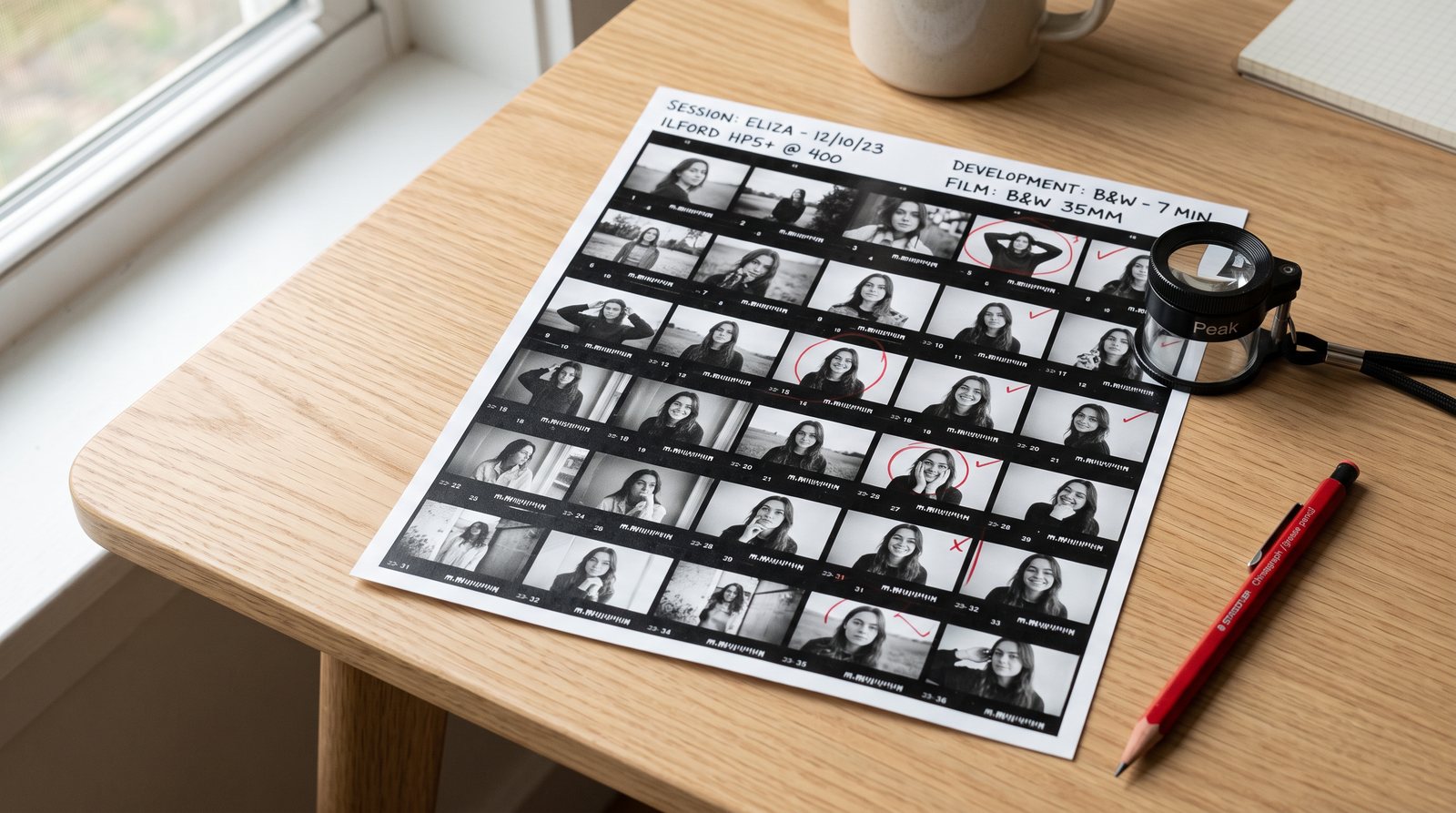
The digital age has brought an unprecedented ease to photography, yet a significant segment of young practitioners is looking backward to the tactile roots of the medium. Among the most striking returns is the revival of the contact sheet—a physical print of a roll of film that displays every frame in chronological order. Once a standard part of the darkroom workflow, the contact sheet was largely discarded in the transition to digital sensors and instant previews. Today, however, it is re-emerging not merely as a technical necessity, but as a prized editorial object. Young photographers are finding that the physical constraints of film and the sequential nature of the contact sheet offer a profound alternative to the infinite, often overwhelming, abundance of digital imagery. This comeback is quiet but steady, signaling a shift toward intentionality in a culture of rapid consumption.
At its core, a contact sheet is a direct record of a photographer's process. It is created by placing strips of developed film directly onto a sheet of light-sensitive paper and exposing them to light. The resulting print shows each frame at its original size—typically 35mm or 120 format—allowing the photographer to view the entire roll at a glance. In the traditional darkroom, this was the first time a photographer could see their work in positive form, using a magnifying loupe to inspect sharpness and expression. For the modern student of photography, this process introduces a physical relationship with the image that digital files cannot replicate. The contact sheet represents the raw data of a shoot, preserving the technical settings, the lighting conditions, and the mechanical behavior of the camera in a single, unalterable document.
The resurgence of the contact sheet is inextricably linked to the return of film itself. Unlike the digital camera, which allows for thousands of exposures on a single card, a standard roll of 35mm film offers only thirty-six frames. This limitation forces a different kind of mental engagement. Every press of the shutter has a literal cost and a physical consequence. Young photographers often speak of the "weight" of a film frame, a concept that is visually manifest on the contact sheet. When every shot is visible on one page, the gaps between them—the moments where the photographer chose not to shoot—become as important as the frames themselves. This scarcity breeds a discipline that digital photography often lacks, encouraging a slower, more considered approach to composition and subject matter.
One of the most compelling aspects of the contact sheet is the narrative it reveals. It is a chronological diary of a photographer’s decision-making process. On a single sheet, one can see the photographer "working" a scene—moving around a subject, adjusting the exposure, waiting for the light to change, and experimenting with different angles. The contact sheet does not hide the failures; the blurred shots, the accidental exposures, and the missed focuses are all there, surrounding the "hero" shot. This transparency is particularly attractive to a generation raised on the curated perfection of social media. The contact sheet offers a more honest look at the labor of art, showing that a great photograph is rarely a lucky accident but rather the result of a patient, iterative process.
Beyond its functional utility, the contact sheet has developed a distinct aesthetic value. The marginalia of the darkroom—the red grease pencil marks used to select frames, the handwritten notes on the borders, the sprocket holes of the film, and the chemical stains of the developer—have become iconic symbols of authenticity. Many young photographers are now treating the contact sheet as a finished work in its own right, rather than a mere stepping stone to a final print. It serves as a visual map of a creative session, an artifact that carries the physical DNA of the moment it was captured. In an era where images are often ephemeral and intangible, the contact sheet provides a sense of permanence and materiality that resonates with those seeking a deeper connection to their craft.
In photography schools and independent workshops, the contact sheet is being rediscovered as a powerful educational tool. Using a loupe to examine a contact sheet requires a level of focus and physical proximity that scrolling through a screen does not. It encourages the photographer to look at the structure of an image—the relationship between the edges of the frame and the subject—without the distraction of post-processing software. By seeing the sequence of shots, students can analyze their own habits, identifying where they hesitate or where they tend to repeat themselves. This form of self-critique is fundamental to developing a unique visual voice. The contact sheet acts as a mirror, reflecting not just the world as it appeared, but the specific way the photographer chose to interpret it.
Paradoxically, the comeback of the analog contact sheet is being fueled by digital platforms. Young photographers frequently share scans of their contact sheets on social media, using the hashtag-driven landscape to showcase their process. This practice serves two purposes: it validates their use of film in a digital world and provides a "behind-the-scenes" look that followers find engaging. While some might see this as a contradiction, it actually highlights the hybrid nature of modern photography. The contact sheet becomes a bridge between the slow, physical world of the darkroom and the fast, interconnected world of the internet. It allows the photographer to maintain the integrity of the analog process while still participating in the contemporary visual conversation, proving that old methods can find new relevance in a different context.
Ultimately, the quiet comeback of the contact sheet is not about nostalgia for a bygone era, but about the enduring need for a deliberate way of seeing. In a world saturated with images, the contact sheet offers a sanctuary of structure and sequence. It reminds the photographer that every image is part of a larger whole, a single note in a longer composition. As young photographers continue to embrace the challenges and rewards of film, the contact sheet will likely remain a vital part of their practice. It is a testament to the idea that the process of making art is just as important as the final product. By returning to the contact sheet, a new generation is not just looking back; they are moving forward with a renewed sense of purpose, patience, and precision.