Sport
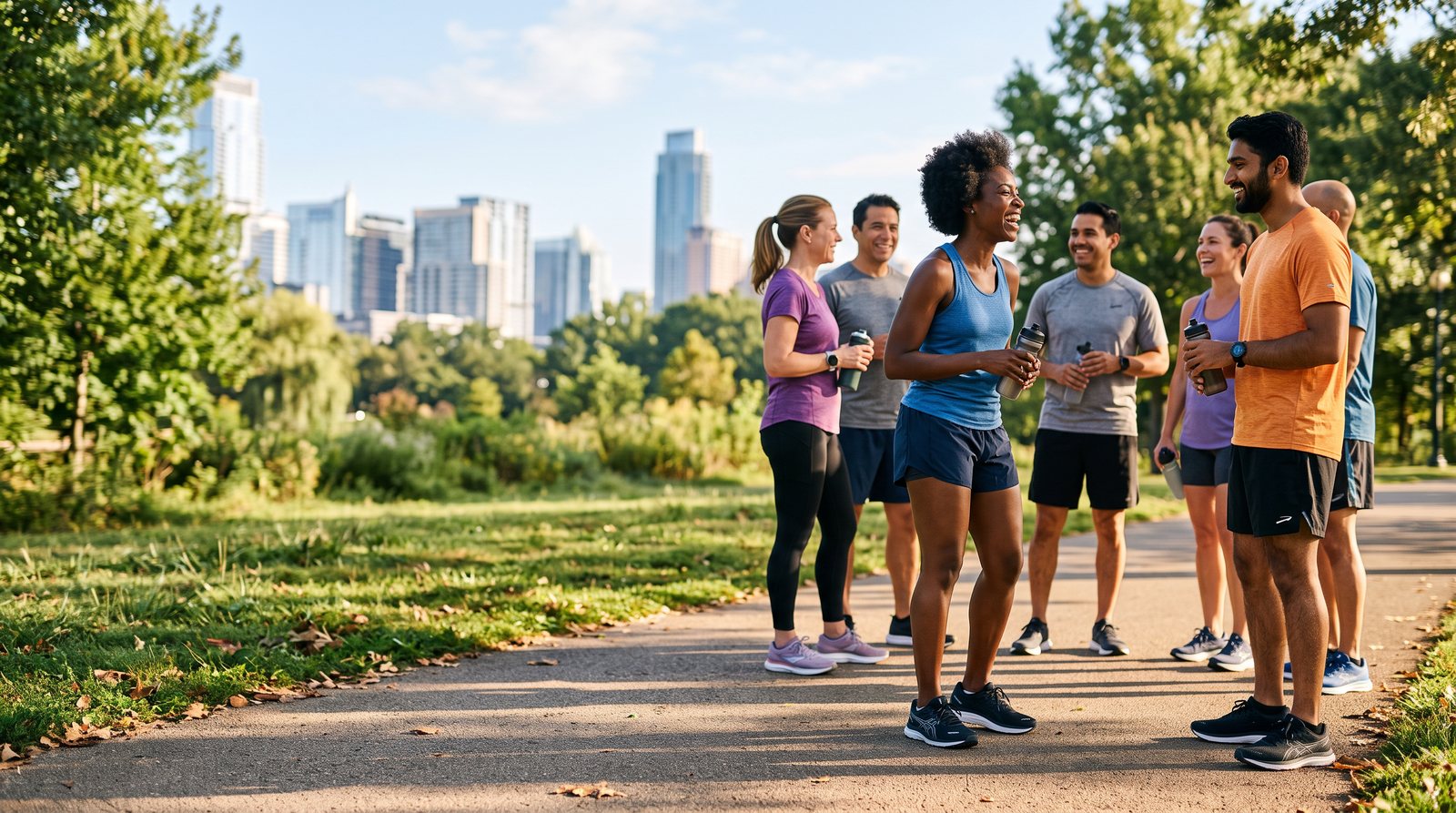
The local running club is becoming a powerful social circuit.
As Australia’s oldest inland settlement, Bathurst balances the quiet dignity of Victorian sandstone architecture with the high-speed legacy of Mount Panorama, offering a unique cultural mosaic at the gateway to the Central Tablelands.
Bathurst stands as a singular intersection of Australian history and high-octane energy, where the quiet dignity of 19th-century sandstone architecture meets the roar of one of the world’s most demanding motor racing circuits. As the nation’s first inland European settlement, established in 1815, it serves as a foundational chapter in the story of the continent’s expansion beyond the coastal fringe. Yet, for many, the name Bathurst is synonymous not with colonial records, but with the steep, winding asphalt of Mount Panorama. This duality defines the city: a place that respects the patient pace of its heritage while celebrating the extreme velocity of its modern sporting culture. The resulting atmosphere is one of profound continuity, where the Macquarie River flows past Victorian spires and the scent of eucalyptus mingles with the legacy of the Great Western Highway.
The origins of the city are inextricably linked to the first successful crossing of the Blue Mountains by Blaxland, Lawson, and Wentworth in 1813. Following their path, surveyor George Evans reached the Bathurst Plains, leading Governor Lachlan Macquarie to officially proclaim the townsite on May 7, 1815. Named in honor of the British Secretary of State for War and the Colonies, Henry Bathurst, the settlement was intended to be the gateway to the vast interior. The Macquarie River, known to the local Wiradjuri people as the Wambool, provided the essential water source for what would become a thriving agricultural and administrative hub. Today, the river remains a central feature of the landscape, its banks offering a tranquil contrast to the bustling city center and a reminder of the environmental factors that first drew settlers to this high-altitude plateau.
Walking through the central business district is an exercise in architectural observation, as Bathurst contains some of the finest examples of Victorian and Edwardian building in regional Australia. The Bathurst Courthouse, completed in 1880, is perhaps the most iconic structure, its Neo-Classical sandstone facade and grand clock tower dominating the Russell Street skyline. Designed by James Barnet, the building reflects the wealth and ambition generated by the 19th-century gold rushes in nearby Hill End and Sofala. Surrounding the courthouse, the heritage precinct of George and Keppel Streets preserves a dense collection of historic banks, hotels, and civic offices, each telling a story of a city that saw itself as a permanent and sophisticated anchor for the Central Tablelands.
Adjacent to the courthouse lies Machattie Park, a masterpiece of Victorian landscape design opened in 1890 on the site of the former Bathurst Gaol. The park is a sanctuary of manicured lawns, mature exotic trees, and ornate features like the Grand Fountain and the Begonia House. It represents a specific era of civic pride, where the creation of public space was seen as essential to the moral and social health of the community. Nearby, the Bathurst District Soldiers' Memorial Carillon stands as a solemn vertical landmark. Completed in 1933, the tower houses 35 bells that ring out across the city, serving as a permanent tribute to those who served in the First World War and reinforcing the city's deep sense of communal memory.
However, the quietude of the heritage precinct is periodically shattered by the international spectacle of Mount Panorama. Known to the Wiradjuri as Wahluu, the mountain was transformed in the mid-1930s when the Bathurst City Council envisioned a scenic tourist drive that could also serve as a racing circuit. Opened officially on March 17, 1938, the 6.213-kilometer track features a vertical climb of 174 meters and 23 challenging turns. It is a public road for most of the year, with a strict 60-kilometer-per-hour speed limit that allows visitors to experience the legendary steepness of the Mountain Straight and the technical complexity of the Dipper at a leisurely pace. During major events like the Bathurst 1000, the circuit becomes a high-speed arena, cementing the city's reputation as the spiritual home of Australian motorsport.
Beyond the track, Bathurst offers a surprising depth of scientific and industrial history. The Australian Fossil and Mineral Museum, housed in the restored 1876 public school building, contains the world-renowned Somerville Collection. Its centerpiece is a nearly complete Tyrannosaurus Rex skeleton, one of the few on display in the Southern Hemisphere, alongside thousands of rare mineral specimens that illuminate the geological history of the region. Complementing this is the Bathurst Rail Museum, which opened in 2020 in the historic railway precinct. Through intricate scale models and preserved artifacts, the museum explores the critical role the railway played in connecting Bathurst to the coast and driving the industrial development of the New South Wales interior.
The city also preserves the intimate, domestic side of Australian history through sites like the Chifley Home and Abercrombie House. The former, located at 10 Busby Street, was the residence of Ben Chifley, Australia’s 16th Prime Minister, and his wife Elizabeth. The house remains almost exactly as it was during their occupancy, offering a rare, unpretentious look at the life of a national leader who preferred the simplicity of his local community. In contrast, Abercrombie House, built in the 1870s, is a sprawling Tudor-Gothic mansion that reflects the wealth of the colonial elite. These two sites, along with the various smaller museums maintained by the Bathurst District Historical Society, provide a balanced view of the social strata that built the city.
The natural environment surrounding Bathurst continues to shape its identity, from the cool-climate vineyards that dot the slopes of the Macquarie Valley to the rugged wilderness of the nearby Abercrombie Caves. The region’s elevation ensures a distinct four-season climate that colors the city’s parks and gardens throughout the year. The Macquarie River remains a vital corridor for local biodiversity and a popular spot for recreation, bridging the gap between the urban environment and the rural landscape. This connection to the land is a constant thread in Bathurst’s history, from the early days of sheep grazing to the modern focus on sustainable agriculture and regional tourism.
In the end, Bathurst is a city that succeeds by not choosing between its various identities. It is simultaneously a museum of colonial ambition, a center of scientific inquiry, and a temple of modern speed. The preservation of its heritage architecture does not prevent it from hosting world-class sporting events, and its status as the oldest inland settlement does not keep it from innovating. To visit Bathurst is to see the layers of Australian history laid bare, from the ancient sandstone of the Central Tablelands to the latest developments in regional culture. It remains a gateway, just as Governor Macquarie intended, but today it leads to a deeper understanding of the Australian character.