Homes
A smaller kitchen is teaching designers to value the useful shelf.
As kitchens contract in modern living, the humble shelf is reclaiming its status as the most honest piece of domestic infrastructure, proving that a smaller footprint often leads to a more precise and generous way of cooking.
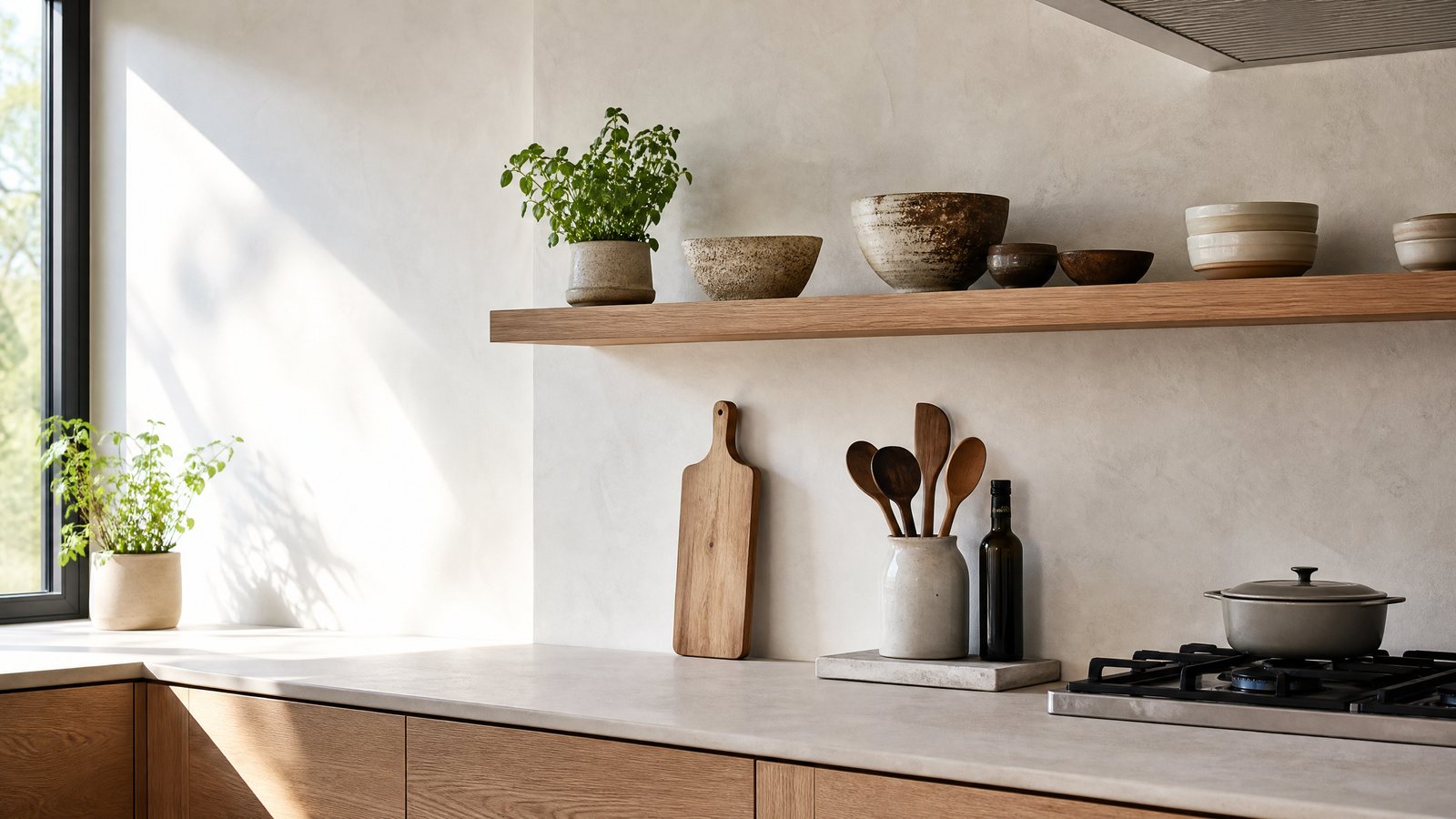
The modern kitchen is undergoing a quiet contraction. For decades, the domestic ideal was one of expansion—larger islands and cabinetry designed to hide the mechanics of cooking. Yet, as urban living becomes more constrained, the small kitchen is emerging as a site of design innovation. This shift is most visible in the return of the useful shelf. Unlike deep cupboards where appliances are forgotten, the shelf demands attention. It is infrastructure that rewards the eye and the hand, forcing a reconsideration of what we actually need. In these spaces, designers discover that the most generous decision is to make the tools of the house visible, treating the kitchen as a working archive of daily life.
The philosophy of the useful shelf rejects the "hidden" kitchen. When everything is tucked behind identical doors, the kitchen loses its character. A shelf creates a visual map of a cook’s habits, showing which bowls are reached for every morning and which pots have earned their patina. This visibility is practical; in a small kitchen, the shelf eliminates the friction of opening doors. Designers now value the shelf for its ability to open up a room, allowing light to travel through the space rather than being blocked by heavy cabinets. This transparency makes even a small galley feel spacious, connecting the cook to the rest of the home by turning storage into an honest form of display.
Ergonomics in a constrained space require a precision that large kitchens often ignore. When you only have a few square meters, every centimeter must be justified. The useful shelf is a critical tool here, placing frequently used items at eye level and within arm’s reach to reduce the physical toll. There is a choreography to a small space—a pivot from sink to stove, a reach for a cutting board. In this loop, the shelf acts as a waypoint, holding essential tools exactly where the body expects them. Designers are increasingly looking at professional kitchens to inform domestic layouts, resulting in a kitchen that feels less like a showroom and more like a well-tuned instrument.
The evolution of "Domestic" design reflects a change in how we perceive the home. Historically, the kitchen was a service area, meant to be invisible. As it moved to the center of the home, it brought industrial-scale expectations that seldom fit. Today, Rina Cole and other designers advocate for a return to human-scaled domesticity. The smaller kitchen responds to modern life, where the home is a multi-functional space. A shelf holding books alongside mixing bowls recognizes that the kitchen is a living room, too. This new domesticity values the quality of materials—the grain of wood, the coolness of stone—over sheer quantity of space. It is a design language that speaks to care and longevity.
Ritual is at the heart of the kitchen, and a smaller footprint enhances these daily acts. In a sprawling kitchen, making a meal can feel disjointed, a series of walks between stations. In a small kitchen, the ritual is more intimate; the sound of the kettle and the warmth of the oven are contained within a single sensory envelope. The useful shelf provides the satisfaction of reaching for a familiar object without the interruption of a hinge. This closeness fosters a deeper connection to the act of making. When tools are always present, the barrier to starting is lowered. Guided by the familiar arrangement of shelves, the cook stays present, rather than getting lost in logistics.
Practically, the useful shelf requires a thoughtful approach to materials and lighting. Because items are exposed, they must be in regular rotation to stay clean. Designers opt for hard-wearing materials like timber or stainless steel to handle the weight of daily use. Lighting also must be reconsidered; instead of overhead glare, small kitchens benefit from targeted task lighting that turns objects into soft sources of reflected light. This creates a layered atmosphere that changes with the time of day—bright in the morning, warm in the evening. The shelf is not just a horizontal surface; it is a platform for the interplay of light, contributing to the overall visual temperature and character of the environment.
Beyond utility, the move toward smaller kitchens has environmental implications. A smaller kitchen requires fewer materials and less energy to maintain. It also discourages the accumulation of unnecessary gadgets that often end up wasted. When storage is visible and limited, you become a more conscious consumer, buying what you need and maintaining what you value. This intentionality is a form of sustainability that starts at the home level. The useful shelf acts as a natural editor, preventing the kitchen from becoming a graveyard for forgotten appliances. In this way, the small kitchen is a model for a sustainable way of living, proving we can live better with less, provided that the "less" is designed with purpose.
Lessons from the small kitchen are influencing the rest of domestic design. Principles of visibility and intentionality are being applied to bathrooms and home offices. We are seeing a move away from "built-in" everything toward flexible, open systems that adapt to the inhabitants. The shelf is a versatile piece of furniture that can move and change as we do, reminding us that homes should be responsive to our lives, not just static containers for possessions. As we look to the future of housing, the small kitchen stands as a testament to the power of thoughtful design to overcome physical limitations. It shows that beauty and utility are not dependent on square footage, but on the quality of our surroundings.
In conclusion, the smaller kitchen and its championing of the useful shelf represent a maturing of domestic design. We are moving away from the "dream kitchen" and toward the "working kitchen." This space celebrates the labor of the home and the beauty of the everyday object. By valuing the shelf, we value the act of looking and choosing, creating rooms that are more generous to the people who live in them. Rina Cole’s vision is one where the most important ingredient is not the size of the room, but the care with which it is arranged. The useful shelf is a simple, honest answer to modern living, a small piece of infrastructure that holds the weight of our daily rituals with grace.