World city
The Resilient Stillness of Antigua Guatemala
Nestled beneath the watchful gaze of three towering volcanoes, this former colonial capital preserves a legacy of architectural defiance and vibrant Mayan tradition within its earthquake-scarred walls.
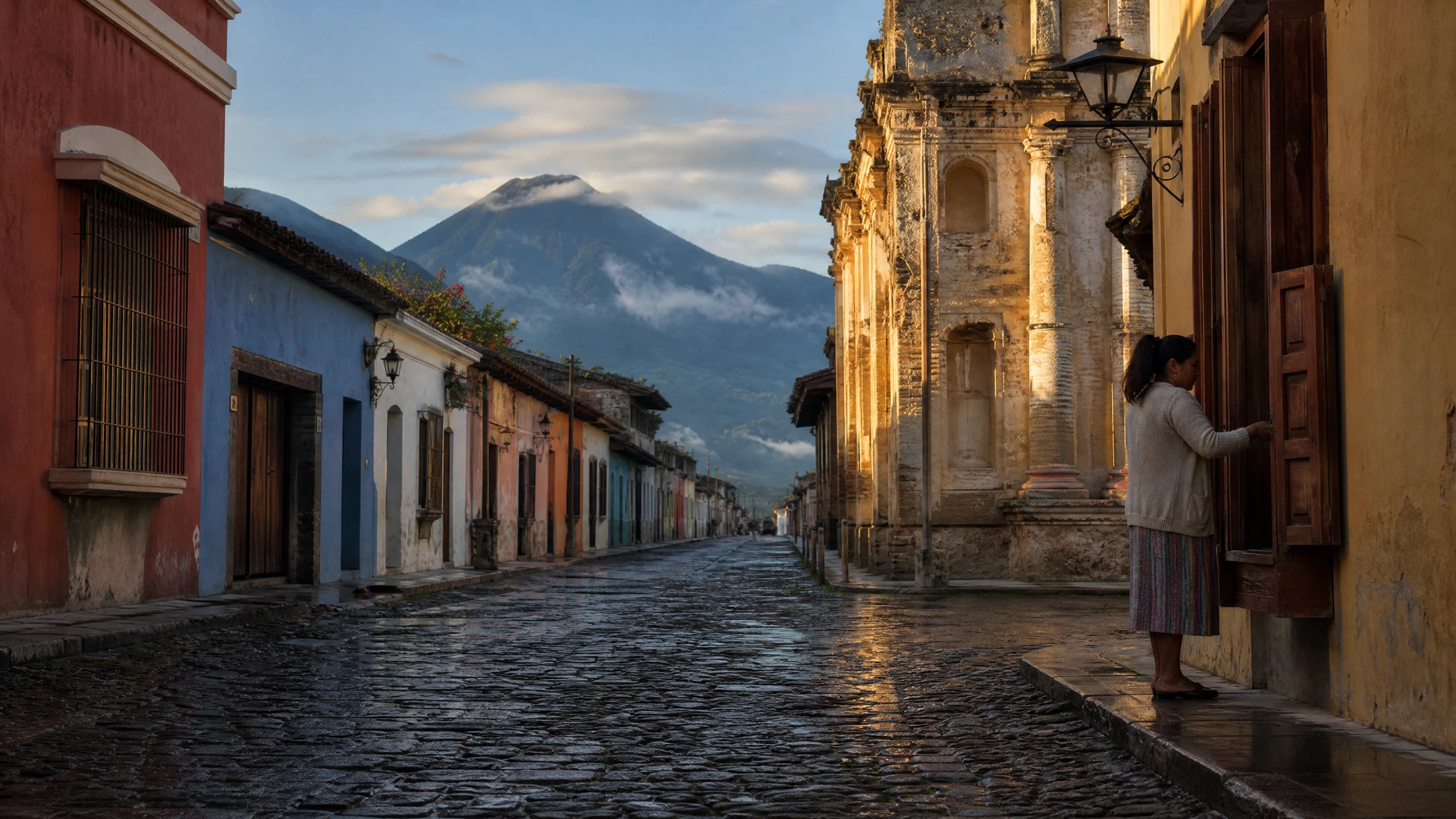
The journey from Guatemala City to Antigua is more than a mere transit; it is a profound temporal shift. As the modern capital’s chaotic pulse and concrete sprawl recede, the air begins to cool, and the landscape softens into verdant hills. The transition takes roughly an hour, but by the time the wheels of your shuttle encounter the first uneven cobblestones of Antigua, the 21st century feels like a distant memory. This is a city that exists in a state of preserved colonial stillness, a UNESCO World Heritage site where every street corner offers a vista that could have been painted three centuries ago. The immediate sensation is one of being grounded, both by the heavy, low-slung architecture and the literal weight of history that permeates the humid mountain air.
At the heart of Antigua’s urban identity is the Barroco Antigüeño, a distinctive architectural style born from necessity. Unlike the soaring cathedrals of Europe, Antigua’s buildings were designed to survive a landscape that refuses to stay still. The city sits in a seismically volatile zone, and its history is a cycle of destruction and rebirth. Consequently, the Earthquake Baroque aesthetic favors massive walls, low profiles, and thick, squat columns that look as though they are bracing for impact. Walking past these structures, one feels the solidity of the ochre and terracotta stucco, often weathered to reveal the volcanic stone beneath. It is a resilient beauty, a physical manifestation of a culture that has learned to adapt to the unpredictable whims of the earth without sacrificing its artistic soul.
No landmark encapsulates the spirit of the city quite like the Santa Catalina Arch. Originally built in the 17th century to allow cloistered nuns to cross the street unseen, the bright yellow arch has become the definitive symbol of Antigua. At dawn, before the midday heat and the influx of visitors, the arch serves as a majestic frame for the Agua Volcano. The volcano’s perfect, mist-crowned cone looms in the distance, a silent giant that defines the northern horizon. The contrast between the vibrant yellow of the arch and the deep greens of the mountain creates a visual tension that is both breathtaking and humbling. It is a reminder that while the city is a triumph of human preservation, it remains perpetually in the shadow of nature’s overwhelming power.
To truly understand the scale of the seismic forces that have shaped Antigua, one must wander through the ruins of the Convento de las Capuchinas. Once a sprawling complex that housed 18th-century nuns, the convent now stands as a hauntingly beautiful skeletal remain. The earthquake-scarred walls and collapsed ceilings have created open-air chambers where moss and ferns now thrive in the damp shadows. The most striking feature is the circular courtyard, surrounded by massive pillars that once supported the nuns' private cells. Standing in the center of this ruin, one can almost hear the echoes of the quiet, cloistered life that was abruptly interrupted by the great earthquakes of 1773. The ruins are not treated as eyesores but as sacred spaces, where the passage of time and the fragility of human endeavor are laid bare.
While the ruins offer a window into the past, the Tanque La Unión provides a vibrant pulse of contemporary local life. This public laundry plaza, with its long rows of stone basins and neoclassical columns, remains a central social hub for the city’s residents. Even today, you can find local women gathered here, their hands moving rhythmically against the stone as they wash vibrant textiles, the air filled with the scent of soap and the sound of shared laughter. The plaza is a testament to the enduring social fabric of Antigua, where traditions are not merely preserved for the benefit of tourists but are lived daily. The backdrop of the surrounding volcanoes and the nearby ruins of the San Pedro Church adds a layer of monumental gravity to these simple, everyday acts of community.
The three volcanoes—Agua, Fuego, and Acatenango—are the true architects of Antigua’s atmosphere. They are ever-present, their peaks often hidden in the clouds only to emerge in the golden light of late afternoon. While Agua is the silent sentinel, Fuego is a more restless neighbor, frequently sending plumes of ash and smoke into the sky, a dramatic reminder of the subterranean energy that fuels the region. Acatenango, the highest of the three, offers a challenging trek for those who wish to look down upon the city from above. This proximity to such raw geological power infuses Antigua with a sense of precarious beauty. There is a wistful quality to the city, a recognition that its elegance is temporary and that the very mountains that provide such a stunning backdrop are the same ones that have, time and again, brought it to its knees.
Beyond the stone and stucco, the city is saturated with the colors of Mayan culture. The indigenous influence is most visible in the textiles that are sold in the markets and worn by the people moving through the streets. These huipiles are not just garments; they are intricate maps of identity, with patterns and colors that denote specific villages and histories. During Semana Santa, the week leading up to Easter, this artistry reaches its zenith. The cobblestone streets are covered in alfombras—elaborate carpets made of dyed sawdust, pine needles, and flower petals. These ephemeral masterpieces are created with painstaking detail, only to be trodden upon by the religious processions that follow. It is a poignant display of devotion and a reflection of the city’s broader theme: the creation of immense beauty in the face of inevitable transience.
For the visitor, the best time to experience this living museum is during the dry season from November to April, when the skies are clear and the volcanic vistas are at their most sharp. Walking through Antigua is an exercise in mindfulness; the uneven stones demand your attention, forcing you to slow down and notice the small details—the iron-wrought balconies, the hidden courtyards filled with bougainvillea, and the way the light changes on the volcanic peaks. It is a city that rewards the patient traveler, offering a quiet sanctuary from the frenetic pace of modern life. As you leave, bumping back over the cobblestones toward the airport, you carry with you a sense of the resilient stillness that defines Antigua, a city that has turned its scars into its most enduring and beautiful features.