World city
The Resilient Rhythm of the Windy City.
Perched on the edge of the world, Wellington balances its cinematic ambitions and deep-rooted heritage against a backdrop of wild maritime energy and a sophisticated, caffeine-fueled urban pulse.
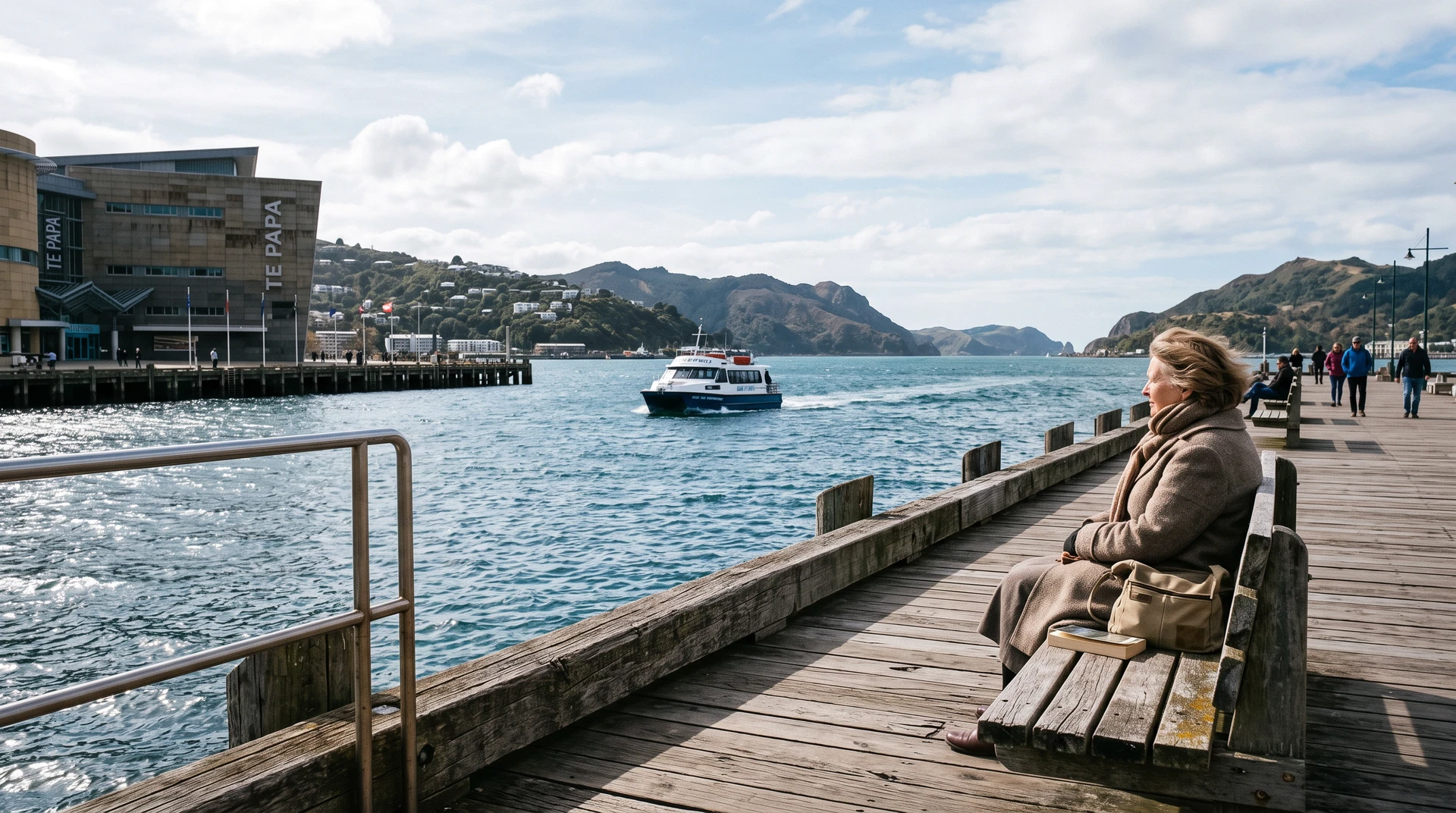
Wellington is a city defined by its edges, a compact cluster of glass and timber squeezed between the emerald slopes of steep hills and the churning waters of the Cook Strait. Known as the Windy City, the New Zealand capital possesses a raw, elemental energy that dictates the rhythm of daily life. Here, the salt spray of the harbor often mingles with the aroma of freshly roasted coffee, creating a sensory profile that is as distinctive as the city’s geography. It is a place where the wildness of the South Pacific feels perpetually present, yet it is simultaneously home to a refined, cosmopolitan culture. Navigating Wellington requires physical resilience, but those who embrace its mercurial temperament are rewarded with a destination that feels both intimate and expansive, a Creative Capital that celebrates the intersection of nature and innovation.
To understand Wellington, one must first understand its relationship with the bean. The city reportedly boasts more cafés per capita than New York City, and this is a fundamental part of the social fabric. The coffee culture here is not about convenience, but rather a sophisticated craft. In the early morning, the streets hum with the sound of grinders as commuters gather in tucked-away espresso bars to debate the merits of a flat white over a long black. This obsession with quality extends to the roasteries themselves, many of which are situated in repurposed industrial spaces where the science of the roast is treated with academic rigor. The Wellington café is the city’s true living room, a space where the Creative Capital earns its title through countless conversations fueled by some of the finest brews in the southern hemisphere.
At the heart of Wellington’s bohemian soul lies Cuba Street, a pedestrianized thoroughfare that serves as a vibrant microcosm of the city’s eclectic spirit. It is a place where the iconic, brightly colored Bucket Fountain stands as a whimsical sentinel over a landscape of vintage boutiques and artisan bakeries. Cuba Street is the antithesis of the sterile shopping mall; it is loud and unapologetically creative. On any given afternoon, the air is thick with the sounds of street performers and the scent of international cuisines, ranging from Malaysian laksa to contemporary New Zealand fare. The architecture is a patchwork of Victorian facades and modern interventions, housing galleries that showcase local artists and bars specializing in regional craft beers. It is a district that rewards the aimless wanderer, offering constant visual surprises that reinforce Wellington’s reputation as a hub for the unconventional.
Dominating the waterfront is Te Papa Tongarewa, the Museum of New Zealand, a structure that serves as the nation’s cultural heartbeat. The name translates to 'Our Place,' and the museum lives up to this promise by offering an immersive journey into Māori heritage and natural history. Te Papa is not a static repository but a dynamic space that challenges visitors to engage with the complexities of the country’s identity. The 'Gallipoli: The Scale of Our War' exhibition, created with Wētā Workshop, is a hauntingly realistic tribute to the New Zealand soldiers of the First World War, featuring hyper-detailed sculptures that bring the human cost of conflict into sharp focus. By grounding the visitor in the stories of the past and the realities of the environment, Te Papa provides an essential context for understanding the resilience of the people who call this rugged corner of the world home.
Just a short journey from the city center, the urban landscape gives way to Zealandia Te Māra a Tāne, a world-first predator-proof ecosanctuary. Enclosed by a specialized fence that keeps out invasive mammals, this 225-hectare valley has become a sanctuary for some of the world’s rarest birds and reptiles. Walking through the lush forest trails, visitors might encounter the kākāpō, a rare flightless parrot, or the prehistoric tuatara, a reptile that predates the dinosaurs. The success of Zealandia is a testament to the city’s commitment to conservation, as species once on the brink of extinction now thrive within sight of the capital’s suburbs. The sanctuary is a living laboratory, where the sounds of native birdsong create a primordial soundtrack that reminds visitors of the fragile beauty of the natural world, successfully blurring the boundaries between the urban and the wild.
Wellington’s creative reach extends far beyond its shores, thanks to its world-leading film industry, dubbed Wellywood. At the center of this powerhouse is Miramar, a suburb that houses the Wētā Workshop, the creative engine behind global blockbusters like The Lord of the Rings. A visit to the Wētā Cave provides a fascinating look behind the scenes, showcasing the incredible craftsmanship involved in creating props, costumes, and visual effects. The workshop is a hive of activity where traditional artistry meets cutting-edge technology, and its influence is felt throughout the city in the form of public sculptures and a general sense of cinematic ambition. This industry has attracted a global community of artists to Wellington, contributing to a diverse workforce that fuels the city’s creative strategy. The presence of such a high-profile creative sector gives Wellington a unique global standing, proving that a small capital can become a significant player through sheer creative willpower.
Navigating Wellington is a tactile experience, best accomplished on foot due to its compact central business district. However, the city’s steep topography often demands mechanical assistance, most famously provided by the iconic red Cable Car. Running from the Lambton Quay shopping district to the Kelburn lookout, the Cable Car offers a functional link and a spectacular vantage point overlooking the harbor. Yet, no discussion of Wellington is complete without a warning about the weather. The 'four seasons in one day' phenomenon is a literal reality, where a sunny morning can transform into a gale-force rainstorm within minutes. Locals have learned to eschew umbrellas in favor of high-quality technical layers. This unpredictable climate is a defining characteristic, infusing the city with a sense of maritime drama that makes every clear day feel like a hard-won victory.
Ultimately, Wellington is a city that thrives on its contradictions. It is a government seat that feels like a bohemian village, a high-tech film hub surrounded by ancient forests, and a sophisticated culinary destination tethered to a wild, wind-swept coast. Its small size is its greatest strength, fostering a sense of community and accessibility that is rare for a national capital. Whether you are standing on the deck of a ferry crossing the Cook Strait, lost in the stacks of a second-hand bookstore on Cuba Street, or watching the sunset from the heights of Mount Victoria, there is a palpable sense of place. Wellington does not hide its rough edges; it polishes them, offering a travel experience that is both authentic and unforgettable. It is a city that invites you to lean into the wind and discover for yourself why this resilient capital is considered one of the most creative cities on the planet.