World city
The Sandstone and the Subversive: A Journey to the Edge of the World in Hobart
Perched on the wild periphery of the Southern Ocean, Tasmania’s capital is a city of profound dualities, where the dark echoes of a convict past harmonize with a daring, avant-garde future beneath the watchful gaze of kunanyi.
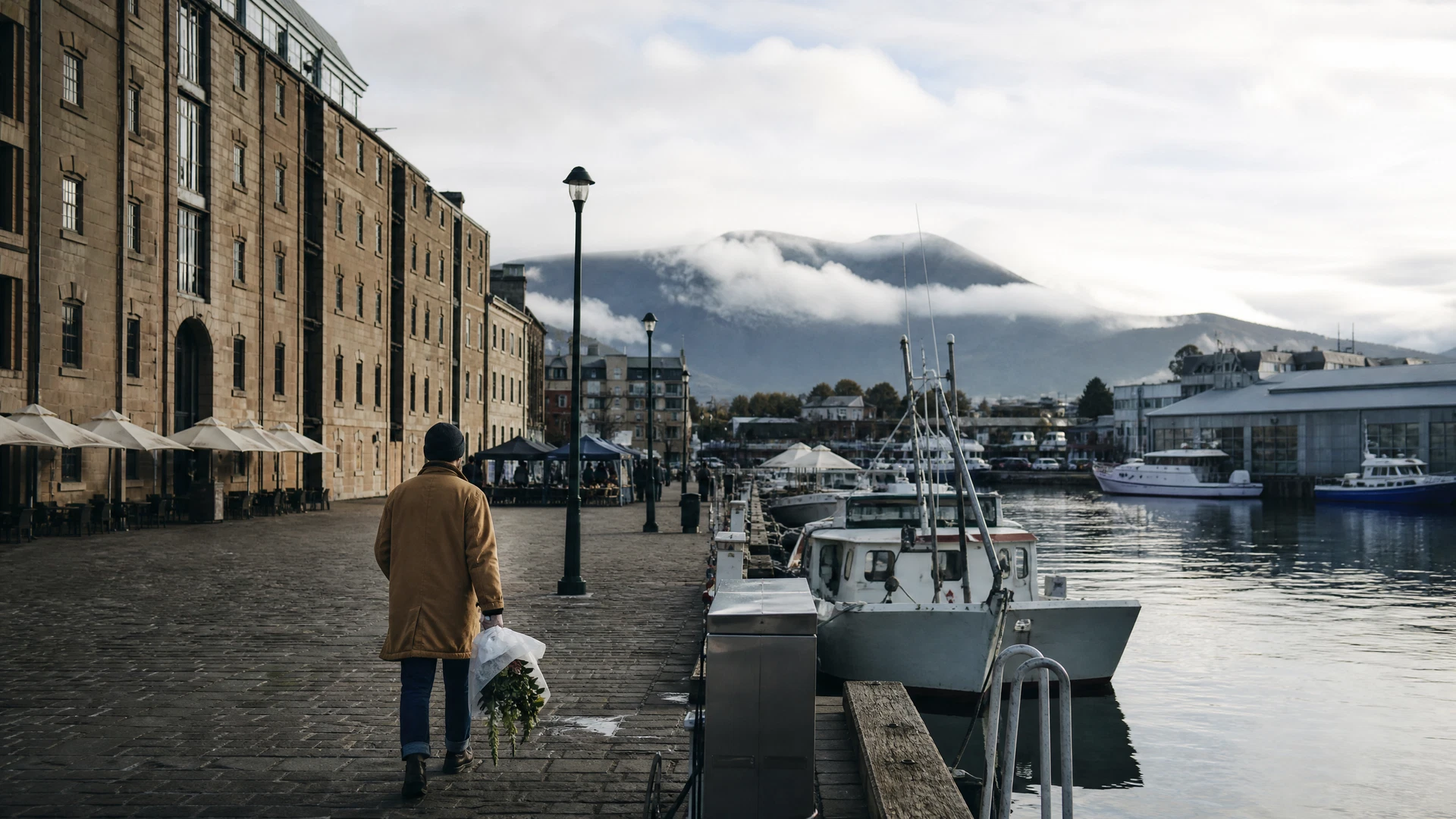
Hobart sits at a curious threshold, where the elegance of a colonial port meets the ferocity of the Southern Ocean. As Tasmania’s capital, it is defined by isolation and a deep connection to the elements. To arrive here is to feel the immediate presence of kunanyi, or Mount Wellington, a 1,271-meter giant looming over the city like a silent sentinel. Its peaks are often snow-dusted, providing a rugged backdrop to the vibrant harbor below. The air is famously clean, carrying the salt-tanged scent of the sea and the perfume of ancient rainforests. It is a city of historic stone and modern glass clustered around the deep Derwent River, the last major stop before the icy expanse of Antarctica.
The heart of Hobart’s social life beats along the waterfront at Salamanca Place. Here, 1830s sandstone warehouses stand as a testament to the city’s early days as a whaling port. Once filled with whale oil and grain, these golden structures now house galleries, theaters, and cafes. On Saturdays, the area transforms into the world-renowned Salamanca Market, a sensory explosion of local crafts and organic produce. Walking beneath the heavy stone arches, one hears the phantom echoes of 19th-century merchants. The architecture is remarkably preserved, providing a tactile link to a period when Hobart was a pivotal maritime node, and today it serves as a sophisticated canvas for Tasmania’s thriving creative community.
A short climb up Kelly’s Steps leads from the waterfront into the quiet streets of Battery Point. This is one of Australia’s most intact historic suburbs, a maritime village that feels like a living museum of Georgian architecture. Narrow lanes wind past cottages with picket fences and grand residences once owned by sea captains. The atmosphere is one of hushed reverence; there are no neon signs to break the spell. Strolling through the village, visitors encounter Arthur Circus, a charming circle of tiny 1840s cottages. Battery Point remains a cherished residential enclave where the scent of woodsmoke and the sound of footsteps on cobblestones create a poignant sense of historical continuity.
Beneath the surface lies a darker narrative—the grim and gritty heritage of Hobart's origins as a penal colony. Founded in 1804 to deter French exploration, the city was built on the labor of thousands of convicts. This history is integrated into the city’s modern identity, providing a somber depth to its beauty. The physical effort of the convict era is visible in the massive stone wharves and colonial buildings. This legacy of hardship has fostered a unique Tasmanian character: resilient, slightly rebellious, and deeply connected to the land. Exploring these sites provides a grounding perspective on the cost of empire and the endurance of the human spirit, imbuing Hobart with a soulful gravity.
In 2011, Hobart’s identity was transformed by the Museum of Old and New Art, or MONA. Reached via a high-speed catamaran from Brooke Street Pier, MONA is a subversive, underground playground for adults. Founded by David Walsh, the museum is carved into ancient siltstone, featuring windowless, subterranean galleries that house a jarring collection of antiquities and avant-garde art. MONA intentionally challenges museum etiquette, eschewing traditional labels and embracing themes of sex and death. The MONA effect has sparked a cultural renaissance, turning Hobart into a global destination for the curious. It proves that even a city steeped in tradition can become a vanguard of the new, blending the provocative with the historical.
This coexistence of the colonial and the contemporary creates a clash of temporalities. Hobart is a city where you can spend the morning in a 19th-century pub and the afternoon immersed in a digital art installation. This tension is Hobart’s greatest strength; it allows its past and future to exist in a productive, often startling friction. The avant-garde energy of MONA and festivals like Dark Mofo draw inspiration from the island’s isolation and dark history. This cultural layering is visible in the dining scene, where chefs use hyper-local ingredients in historic stone cellars. Hobart invites visitors to embrace this duality, offering a travel experience that is intellectually stimulating and visually stunning.
No visit is complete without engaging with kunanyi, the mountain defining the city’s skyline. To the Muwinina people, this is nipaluna, a sacred site with history stretching back millennia. The ascent to the summit via the Explorer Bus is a journey through shifting ecosystems, from lush fern gullies to wind-blasted sub-alpine heath. From the summit, the view is a panoramic tapestry of the Derwent estuary and distant wilderness peaks. The weather is notoriously fickle, with clear skies often replaced by swirling mists in minutes. This unpredictability is a reminder of the mountain’s power and the city’s vulnerability to nature. Standing on the dolerite columns, one feels the true scale of the Tasmanian landscape.
The lifeblood of Hobart remains the Derwent River and the harbor that serves as its gateway. The waterfront is a theater of maritime activity, where Antarctic icebreakers dock alongside traditional wooden fishing boats. This connection reaches a fever pitch every December during the Sydney to Hobart Yacht Race, which transforms the city into a jubilant festival ground. Outside of race season, the harbor is a place of constant motion and reflection. The ferries zipping across the water offer the best views of the city—the way afternoon light hits the sandstone and the mountain’s shadow stretches across the waves. The harbor links this remote island to the world while maintaining its distinct character.
Hobart is a city that lingers in the mind, offering a rare kind of authenticity where the layers of time are visible. Whether it is the dignity of a Battery Point cottage, the jarring brilliance of MONA, or the bracing wind at the summit of kunanyi, the city demands an emotional response. It is a destination for those who seek to feel the pulse of a place comfortable with its contradictions. In Hobart, the edge of the world does not feel like an ending, but a beginning—a vantage point to see the beauty of the past and the possibilities of the future. It remains a wistful corner of the globe where the spirit of Tasmania is found in every breath of Southern Ocean air.