World city
The Labyrinth of the Southern Latitude: Finding the Soul of Melbourne in its Hidden Hinge.
Beyond the grand Victorian facades and the roar of the cricket ground lies a city built on the intimate scale of a coffee cup and the vibrant, shifting canvas of a laneway wall.
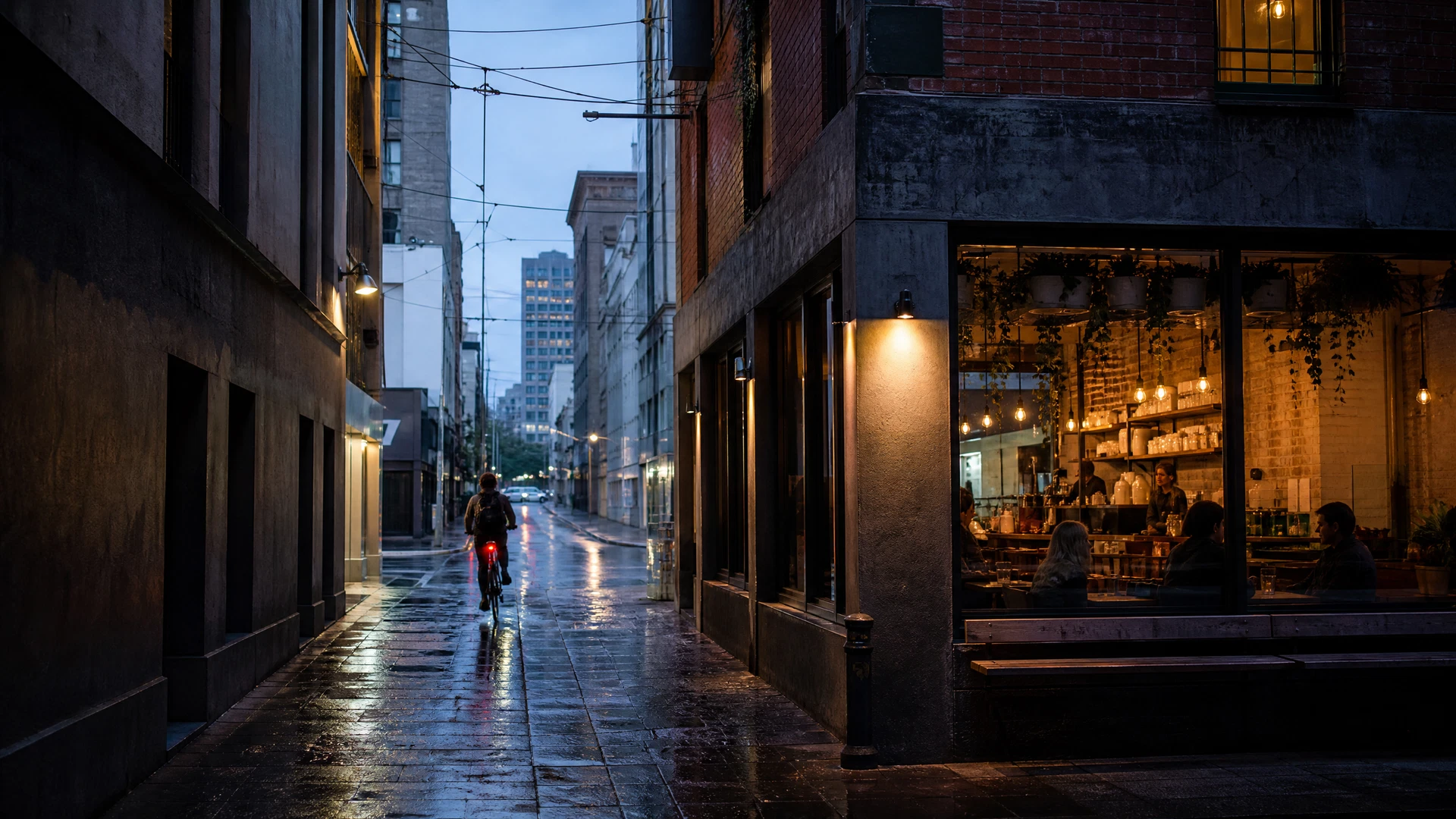
Melbourne does not reveal itself in a single, sweeping panoramic view; instead, it invites you to look closer and embrace the unpredictable. Known for its 'four seasons in one day,' the city's weather is a mercurial companion that dictates the rhythm of daily life. One moment, the sun glints off the glass towers of the central business district, and the next, a brisk wind from the Southern Ocean sweeps through the grid, bringing rain. This atmospheric volatility creates a sense of renewal, grounding the city in a rugged reality that belies its sophisticated veneer. For the visitor, this means witnessing the city in a thousand different lights, from the silver-grey of a misty morning to the golden warmth of autumn. It is a place where the environment is an active participant in the urban narrative, shaping how people move and seek shelter.
At the heart of Melbourne's identity is its intricate network of laneways, a hidden world parallel to the grand thoroughfares of Collins and Bourke Streets. These narrow passages, once service entries for 19th-century warehouses, have been reclaimed as creative arteries. In places like Hosier Lane, the walls are a riot of color, a living gallery where street artists leave their mark in layers of spray paint. The air here smells of fresh paint and roasting coffee, a sensory signature that is uniquely Melburnian. Walking through Degraves Street, you find yourself in a thicket of espresso bars and boutiques, where the scale is human and the pace is slow. These lanes are the city's 'hidden hinge,' connecting the commercial weight of skyscrapers to the intimate pulse of the people. They are spaces of discovery, where a nondescript doorway might lead to a world-class cocktail bar.
To understand Melbourne is to understand its sophisticated obsession with coffee. This is not merely a caffeine fix; it is a cultural cornerstone, a legacy of post-war European migration that transformed the culinary landscape. The 'flat white' is the local standard-bearer, a testament to a pursuit of perfection involving precision roasting and meticulous milk-texturing. From high-end laboratories to humble hole-in-the-wall windows, the quality is remarkably consistent and the passion is palpable. Baristas here are treated with the reverence of master craftsmen, and the morning ritual of queuing for a brew is a shared social contract. This coffee culture is the social glue of the city, providing fuel for creative conversations and warmth for colder days. It reflects a wider Melburnian value: a commitment to the artisanal, the independent, and the exceptionally well-made.
Crossing the CBD boundary into northern Fitzroy is to enter the city's bohemian soul. Here, Victorian terrace houses stand as silent witnesses to a neighborhood that has transitioned from working-class grit to creative gold. Gertrude Street serves as the district's spine, lined with independent galleries, fashion boutiques, and celebrated dining rooms. The atmosphere is one of curated rebellion, where the old and the new are in constant tension. You might find a century-old pub serving craft ales next to a minimalist vegan bakery, or a heritage-listed factory repurposed as a light-filled studio. It is a neighborhood that prides itself on its distinctiveness, a place where artistic energy is visible in every mural-covered alley. For the visitor, Fitzroy offers a glimpse into the city's restless intellect and its enduring love for the alternative.
To the south, the city meets the sea at St Kilda, a district that carries a wistful air of nostalgia. The historic St Kilda Pier is home to a colony of fairy penguins that nest among the breakwater rocks, providing a wild encounter just minutes from the urban center. Nearby, the iconic mouth of Luna Park has been welcoming thrill-seekers since 1912, its vintage wooden roller coaster creaking with the weight of a century of laughter. St Kilda has always been a place of transition, a playground for the wealthy in the 19th century and a gritty hub for artists in the late 20th. Today, it retains a faded glamour, with its grand apartments and the cake shops of Acland Street offering a sweet slice of history. The sea breeze here carries the scent of salt, a reminder that Melbourne remains a port city at heart.
Melbourne's identity is further defined by its status as Australia's sporting and cultural capital. The East End's theater district, with its grand Victorian playhouses like the Princess and the Regent, hosts world-class productions in settings of gilded opulence. Yet, just a short walk away, the intensity shifts to the Melbourne Cricket Ground (MCG), a colossal stadium that serves as the city's secular cathedral. Whether it is the roar of a football match or the rhythmic clatter of a Boxing Day Test, the MCG is where the city's heart beats loudest. This duality--the refined elegance of the stage and the raw passion of the arena--speaks to the broad-minded nature of the Melburnian spirit. It is a city that values the arts as much as the athlete, where a morning at a gallery is just as essential as an afternoon cheering.
Navigating this metropolis is made possible by its iconic tram network, the largest in the world. The green-and-gold W-class trams, with their varnished wood interiors and rhythmic 'ding-ding' of the bell, are more than just transport; they are moving monuments to the city's history. In the central business district, the Free Tram Zone allows for a seamless exploration of the grid, connecting historic markets to modern shopping precincts. To venture further afield, the Myki card becomes the key to the city, allowing you to join the flow of commuters heading to the leafy suburbs or coastal fringes. Riding a tram through rain-slicked streets at twilight, watching city lights blur through the glass, is a quintessential Melbourne experience. It provides a slow-motion perspective on the urban landscape, a chance to observe the changing architecture and the diverse faces of the people who call this place home.
Ultimately, Melbourne is a city of balance, managing to be both gritty and refined, historic and cutting-edge. It is a city that rewards the patient observer, the one willing to wander down a lane or wait for the perfect pour of a flat white. The wistfulness of Melbourne lies in its ability to hold onto its past--colonial sandstone, vintage trams, migrant traditions--while relentlessly pushing toward a creative future. It is a destination that feels lived-in and authentic, where the culture is not a performance but a genuine expression of its residents' passions. As the sun sets over the Yarra River and city lights begin to twinkle against the darkening sky, there is a profound sense of belonging that settles over the streets. Melbourne is not just a place to visit; it is a city to be felt.