World city
The Glass Cathedral of the Pacific Northwest
Vancouver stands as a masterclass in urban equilibrium, where the relentless ambition of glass-and-steel Vancouverism yields gracefully to the ancient, rain-drenched majesty of the Coast Salish wilderness.
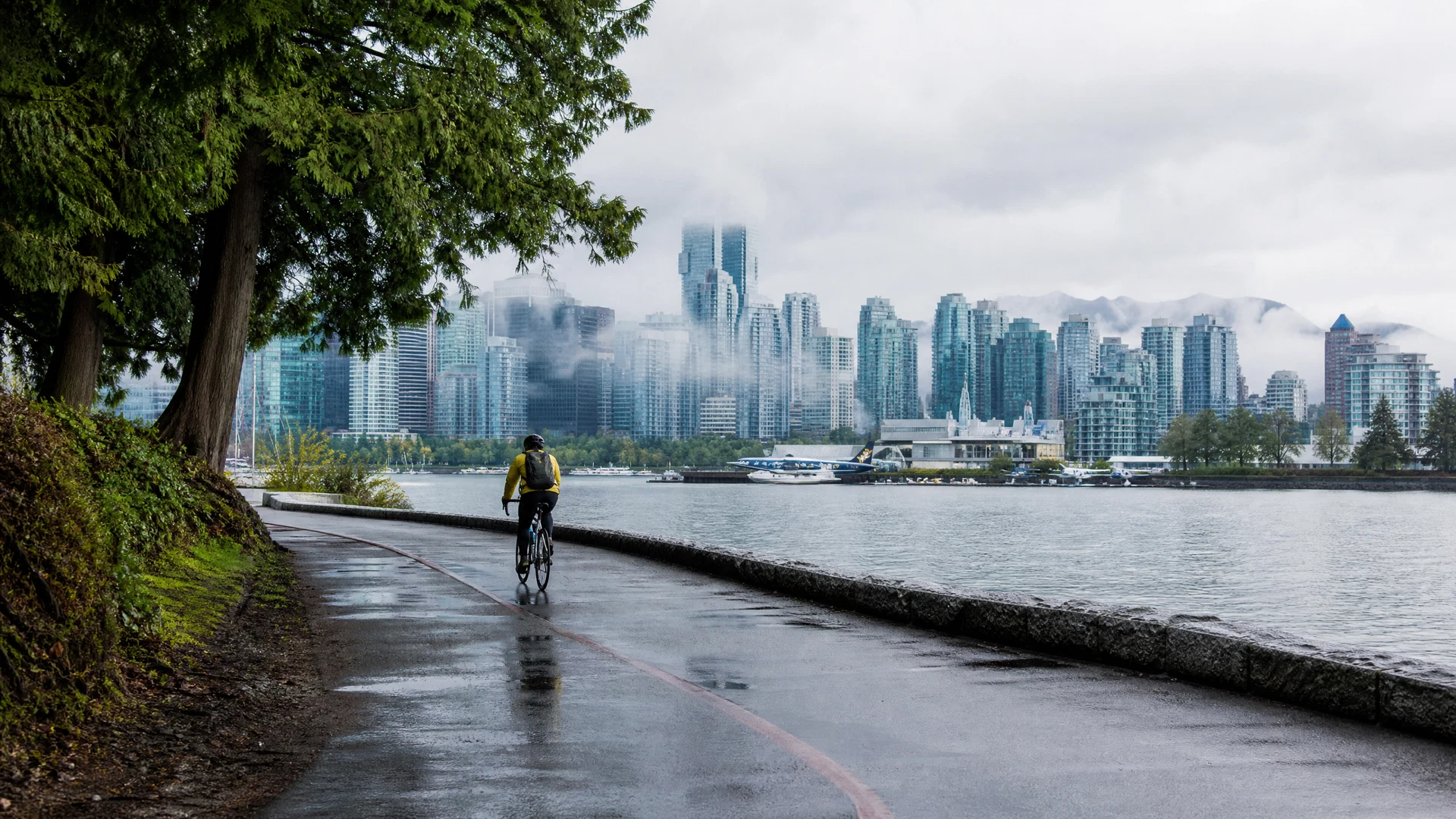
Arriving in Vancouver is less a descent into a city and more an immersion into a geography that refuses to be ignored. As the SkyTrain snakes toward the downtown core, the first thing a visitor notices is the presence of the North Shore Mountains, their snow-dusted peaks looming over the Burrard Inlet. This is a city that has grown up in the shadow of giants, a place where the salt-tangled air of the Pacific meets the bracing scent of old-growth cedar. The urban experience here is defined by its transparency; the glass-walled towers of Coal Harbour do not block the light, but rather capture and reflect the shifting moods of the sky, turning the skyline into a shimmering mirror for the elements.
The city’s unique urban identity is codified in a philosophy known as Vancouverism, a planning model that has become a global benchmark for livability. It is a deliberate dance between density and breathing room, characterized by slender "point towers" that rise from low-slung residential podiums. This design is a democratic commitment to the "view corridor." By keeping towers thin and spaced apart, the city ensures that the sight of the mountains and sea remains a public good. Walking through neighborhoods like Yaletown, once a district of industrial warehouses and now a hub of chic patios and brick-lined walkways, one feels the success of this vision. The streets are walkable, the parks are integrated into the daily commute, and the constant visual connection to the wilderness provides a grounding sense of scale.
To truly understand the city's soul, one must follow the curve of the Seawall into Stanley Park. This 400-hectare rainforest peninsula is the city’s emerald crown, where manicured lawns give way to a dense, primeval canopy. Traversing the nine-kilometer Seawall is a rite of passage, offering a panoramic perspective of the city’s dual nature. On one side, the Pacific churns against volcanic rock; on the other, Douglas firs and Western red cedars stand in moss-covered ranks. The air here is noticeably cooler, heavy with moisture and the earthy perfume of the forest floor. It is a reminder that despite the sleekness of the nearby skyscrapers, the wild is never more than a few minutes away.
At Brockton Point, the park offers a poignant encounter with the land’s original stewards. The collection of Indigenous totem poles stands as a powerful testament to the history and resilience of the Coast Salish, Kwakwaka’wakw, and Haida peoples. Each carving—the wide-winged eagle representing the air, the whale signifying the sea, and the watchful raven—tells a story of ancestry and spiritual connection. These are not merely monuments; they are living expressions of a culture that predates the city by millennia. Standing before them, one feels the weight of the "unceded territory" on which Vancouver is built. It is a necessary pause in the city’s narrative, acknowledging the deep roots that anchor this glass-and-steel dream to the earth.
Moving away from the park’s quietude, the historic Gastown district offers a different kind of nostalgia. As the city’s oldest neighborhood, its cobblestone streets and Victorian architecture provide a textured contrast to the smooth surfaces of the modern core. The iconic Steam Clock remains the district’s most photographed resident, its whistles and white vapor marking time with mechanical regularity. Gastown is a place of shadows, where the ghost of "Gassy Jack" Deighton still lingers in brick-lined alleys. Today, the district is a vibrant mix of boutiques and galleries, proving that history is a foundation for reinvention.
A short hop across False Creek on a colorful mini-ferry leads to Granville Island, an industrial wasteland turned artisan sanctuary. The Granville Island Public Market is the sensory heart of the city, a bustling labyrinth where the smell of smoked sockeye salmon mingles with the yeasty warmth of artisanal sourdough. It is a place to get lost among the stalls of local cheesemakers, florists, and fruit vendors, or to watch street performers draw crowds under the massive yellow girders of the Granville Street Bridge. The island is also a hub for the city’s creative community, housing artist studios and galleries that celebrate the handmade. This artisan energy serves as a necessary counterpoint to the globalized gloss of the downtown shopping districts.
Navigating Vancouver is an exercise in appreciating the "blue highways" that define its geography. The SeaBus connects the downtown Waterfront Station to the rugged slopes of the North Shore in a mere twelve minutes. This short journey offers perhaps the best view of the city’s skyline, especially at dusk when the lights of the towers begin to twinkle like a fallen constellation. On the North Shore, the landscape becomes even more dramatic, with the Capilano Suspension Bridge and the hiking trails of Grouse Mountain offering a vertical exploration of the Pacific Northwest. The ease with which one can transition from a world-class cocktail bar to a mountain trailhead is the city’s greatest luxury, a testament to a lifestyle that refuses to choose between urban sophistication and outdoor adventure.
Of course, no story of Vancouver is complete without the rain. The city’s "Raincouver" reputation is well-earned, particularly during the long, grey months of winter when a persistent mist clings to the mountains. Yet, there is a wistful beauty to this dampness; it is the reason the parks are so green and the air so clean. For the visitor, the optimal window remains the dry, golden stretch between July and September, when the city erupts in a celebration of the sun. The beaches at English Bay and Kitsilano become the city’s living rooms, and the sunset over the Strait of Georgia becomes a daily event of collective worship. Even in the height of summer, however, a light jacket is a necessity—a reminder that the cool breath of the mountains is always close at hand.
Ultimately, Vancouver is a city of intersections: between the past and the future, the urban and the wild, the land and the water. It is a place that invites a slower pace of exploration, encouraging the visitor to look up at the mountains and down at the tide pools. Whether you are sipping a locally roasted coffee in a Gastown cafe or watching the fog roll in over the Seawall, there is a persistent sense of being exactly where you are supposed to be. It is a glass cathedral built in a rainforest, a sanctuary of modern design that never forgets the ancient wilderness that surrounds it. As you depart, the image that lingers is not just the skyline, but the way the light hits the water at twilight—a fleeting, shimmering reminder of a city that has found a way to live in harmony with the edge of the world.