World city
The Rhythms of the Marvelous City: A Carioca Journey Through Rio de Janeiro.
Beyond the postcard-perfect vistas of Christ the Redeemer and Sugarloaf Mountain lies a city defined by the sophisticated sway of Bossa Nova, the deep-rooted heritage of Little Africa, and a unique urban symbiosis where the lush Atlantic Forest weaves through modernist concrete.
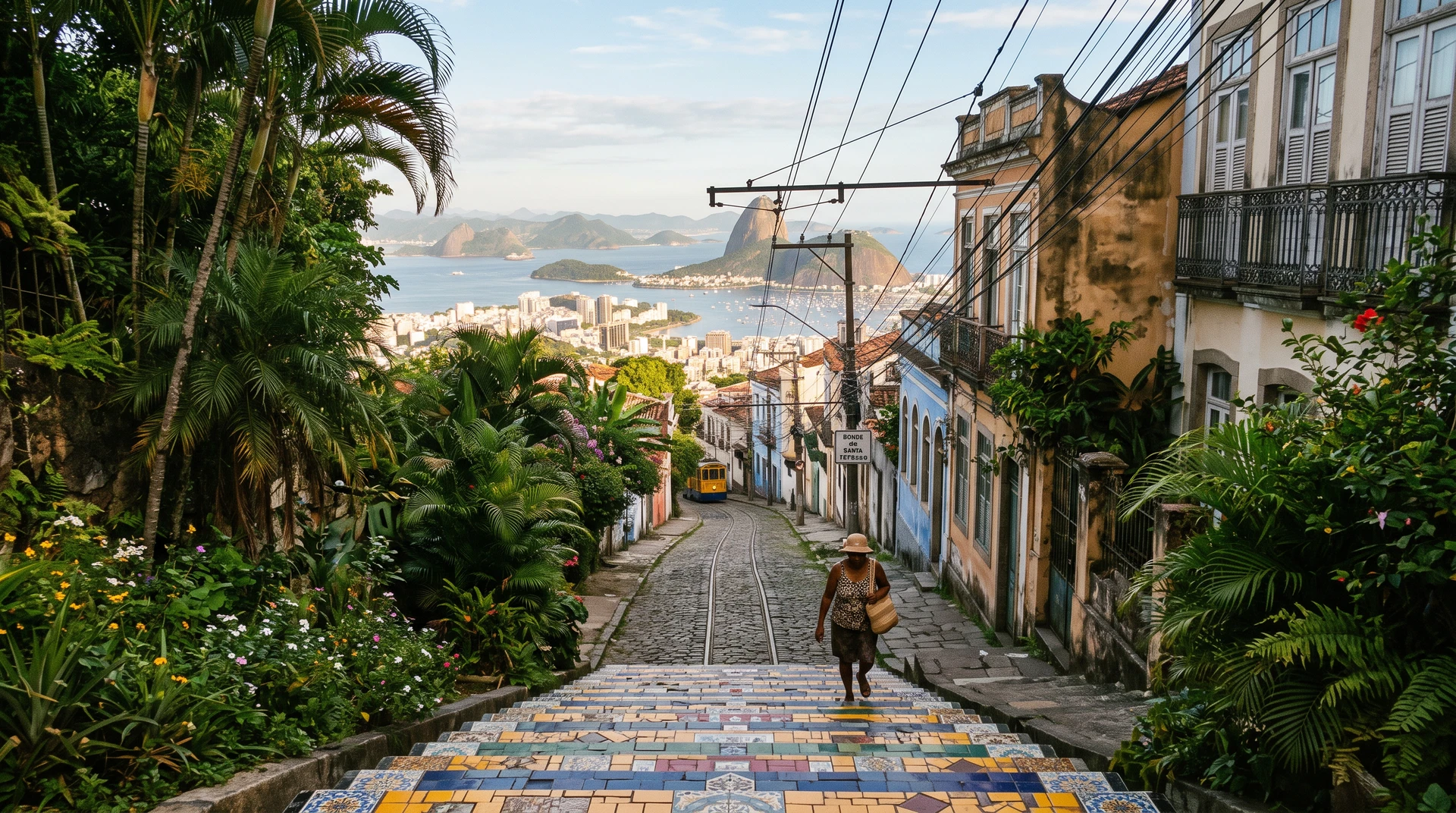
To arrive in Rio de Janeiro is to witness a dramatic negotiation between untamed earth and human ambition. The city is entangled with the Atlantic Ocean, squeezed between granite peaks and the crashing surf. Known as the Marvelous City, Rio’s identity is far more complex than its famous beaches. It is a place where the air is thick with sea salt and tropical humidity, and where the sound of a distant drumbeat is never out of earshot. This metropolis is built on the edge of a rainforest, a landscape where the Morro da Urca and Corcovado stand as silent sentinels. To understand Rio is to look past the iconic silhouettes and into the neighborhoods where the city’s soul resides—a soul grounded in musical innovation and the relaxed Carioca lifestyle.
High above the bustling traffic, the hilltop neighborhood of Santa Teresa offers a portal into Rio’s storied past. Here, the historic yellow Bonde tram navigates narrow cobblestone streets, its open sides offering glimpses of colonial mansions reclaimed by local artists. Santa Teresa is the city’s bohemian heart, a sanctuary for painters and musicians who find inspiration in its shaded plazas. The neighborhood’s architecture is a testament to an era of coffee-fueled wealth, with weathered facades now draped in vibrant bougainvillea. As the tram crosses the Arcos da Lapa—the massive white aqueduct bridging the hilltop and the city below—the dramatic contrast of Rio’s urban planning becomes clear. It is a place where the historic and the contemporary coexist in a fragile balance, offering a quiet perspective away from the high-energy pulse of the shoreline.
Descending toward the port district of Gamboa, one enters a landscape of deep historical weight. This area, known as Little Africa, was the primary entry point for millions of enslaved people and later became the cradle of Rio’s most famous export: samba. At the heart of this district lies Pedra do Sal, a large rock where salt was once unloaded, which now serves as the sacred ground for the city’s most authentic samba circles. On Monday and Friday nights, the air vibrates with the raw energy of musicians gathered around a simple table. This is not a performance for tourists; it is a communal ritual of resilience. The graffiti-covered walls of Gamboa tell a story of a community that has fought to preserve its heritage, grounding the city’s modern identity in the traditions of the African diaspora.
While samba provides the heartbeat of the streets, Bossa Nova offers the city’s sophisticated exhale. Emerging in the late 1950s, this New Wave movement transformed the intimate gatherings of Copacabana into a global phenomenon. Its origins lie in the Beco das Garrafas, or the Alley of Bottles, where cool jazz harmonies merged with traditional samba rhythms. Bossa Nova is a sonic reflection of the Carioca lifestyle—a refined seaside existence that values the beauty of the moment. It is the sound of the breeze and the gentle lap of the waves, captured in the minimalist guitar chords of legends like João Gilberto. Even today, the spirit of Bossa Nova lingers in the quiet cafes of the South Zone, a reminder of a time when Rio redefined global cool.
For a quintessential local experience, one must head to the tranquil enclave of Urca. Tucked at the base of Sugarloaf Mountain, this neighborhood feels like a village within a metropolis, characterized by quiet streets and a low stone wall known as the Mureta da Urca. As the sun begins its descent, residents gather along this wall, perching with cold beer and plates of crispy shrimp pastéis. The ritual is simple: watch the sky turn from a brilliant blue to shades of amber and violet over Guanabara Bay. From this vantage point, the city’s dramatic geography is laid bare, with the distant silhouette of the Christ the Redeemer statue illuminated against the darkening hills. It is a moment of collective stillness, a shared appreciation for the natural beauty that defines the city, and a perfect example of the Carioca ability to find pleasure in simple rituals.
The urban identity of Rio de Janeiro is defined by a unique symbiosis between its lush natural landscape and its modernist architectural heritage. Unlike many global cities that seek to conquer their environment, Rio has often sought to integrate it. This is best exemplified by the works of landscape architect Roberto Burle Marx, whose undulating mosaic sidewalks along Copacabana Beach have become a global icon. The city’s modernist buildings are designed to frame views of the Atlantic Forest, allowing the vibrant green of the canopy to serve as a living backdrop to urban life. This relationship between the built environment and the untamed wilderness is a constant presence, from the monkeys in Jardim Botânico to the way the city’s favelas cling to the steep hillsides. It is a landscape that demands respect and adaptation, creating a city that feels as much like a garden as it does a metropolis.
Navigating a city as sprawling as Rio requires a strategic approach. The recent introduction of the Jaé card has streamlined municipal transport, making it the mandatory method for paying fares on the VLT light rail, the BRT, and the city’s extensive bus network. For those traveling between the historic center and the southern beaches, the Metro Rio remains the most efficient option, offering a clean escape from the tropical heat. To experience the city at its most temperate, visitors should aim for the dry season between May and October, when the air is crisp and the humidity has subsided. While the summer brings the world-famous Carnival, it also brings extreme heat that can make exploration a challenge. By visiting during the shoulder months, one can enjoy the city’s outdoor lifestyle and cultural offerings without the overwhelming crowds and stifling temperatures of the high season.
Rio de Janeiro is a city that lingers in the mind long after the salt has been washed from one’s skin. It is a place of profound contrasts, where the elegance of a Bossa Nova melody meets the raw power of a samba drum, and where the sophistication of modernist design is challenged by the encroaching rainforest. It is a city that has faced significant social hurdles, yet it continues to radiate a spirit of resilience that is uniquely its own. Whether wandering the historic halls of Santa Teresa, standing on the sacred ground of Pedra do Sal, or simply watching the sunset from Urca, the message of the city is clear: life is to be lived with rhythm and an unwavering connection to the land and sea. Rio is not just a destination; it is a feeling, a wistful ink that stains the soul.