World city
The Rhythms of Tranquilidad: A Slow Sojourn Through Montevideo.
Discover the mellow urban tempo and faded European elegance of Uruguay’s capital, where the scent of wood-fired asado and the pulse of Candombe drums define a city of quiet, lived-in beauty.
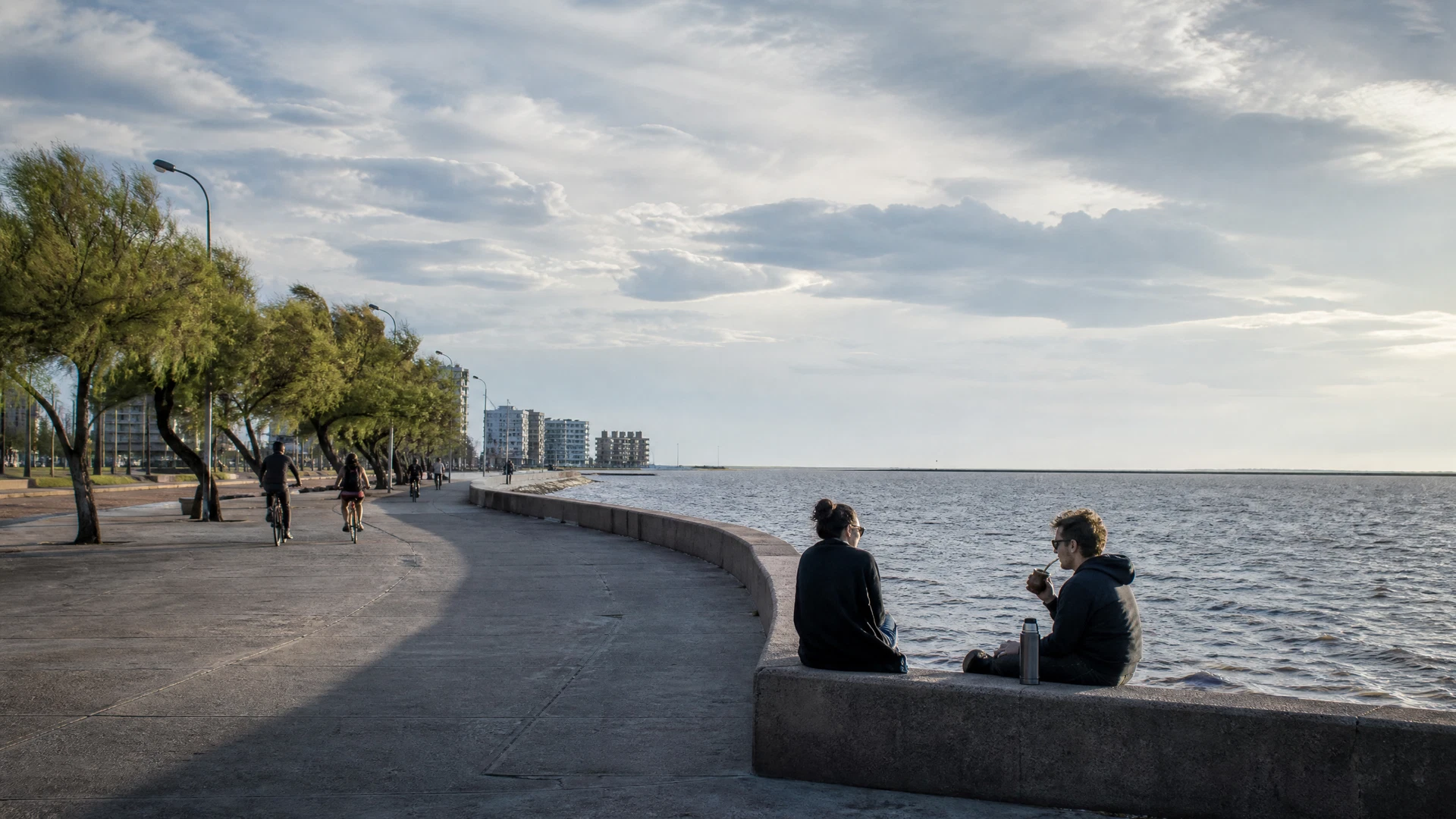
Montevideo is a city that refuses to be rushed. While its neighbor across the Río de la Plata, Buenos Aires, pulses with a frantic, cosmopolitan energy, the Uruguayan capital operates on a frequency of tranquilidad. This is not a city of grand, polished monuments designed for the tourist’s lens, but rather a place of lived-in elegance and a mellow urban tempo that invites a slower kind of exploration. To arrive here is to step into a rhythm that feels almost defiant in the modern age—a place where time is measured not by the ticking of a clock, but by the slow replenishment of hot water in a mate gourd. It is a city of long shadows, salty breezes, and a quiet, persistent beauty that reveals itself only to those willing to match its pace.
The atmospheric anchor of this slow-moving metropolis is the Ciudad Vieja, the historic heart where Montevideo’s story began. Walking through the Puerta de la Ciudadela, the last remnant of the old city walls, one enters a labyrinth of narrow streets lined with crumbling 19th-century facades that whisper of a more opulent past. Here, the air is thick with the scent of history and, more tangibly, the smoke of wood-fired asado grills emanating from the Mercado del Puerto. This Victorian cast-iron market hall is a cathedral of carnivory, where master grillers tend to vast iron pits piled high with sizzling meats. It is the city’s social hearth, a place where the clatter of plates and the rich aroma of charred beef create a sensory experience that has remained largely unchanged for over a century.
Central to the identity of every Montevideano is the ritual of mate. It is a ubiquitous sight: locals strolling through leafy plazas or browsing the city’s many independent bookshops with a leather-wrapped gourd in one hand and a thermos tucked firmly under the arm. This shared habit is more than just a caffeine fix; it is a social lubricant and a symbol of the city’s reflective nature. As a UNESCO City of Literature, Montevideo’s soul is deeply entwined with the written word. From the grand halls of the National Library to the dusty shelves of second-hand stalls in the Tristán Narvaja street market, the city honors its poets and novelists with a reverence usually reserved for saints. In the quiet corners of these literary sanctuaries, the steam from a silver bombilla rises like incense, grounding the city in a culture of contemplation.
The urban landscape of Montevideo is a nostalgic tapestry of architectural styles, a blend of faded European elegance and Art Deco curiosities. No building captures this eclectic spirit more poignantly than the Palacio Salvo. Once the tallest building in South America, its eccentric silhouette—a mix of Gothic, Neo-Romanesque, and surrealist flourishes—looms over Plaza Independencia like a lighthouse for a forgotten era. It is a structure that feels both futuristic and ancient, a physical manifestation of the city’s wistful charm. Throughout the downtown area, one finds hidden gems of Art Deco design, their geometric patterns and ornate balconies serving as reminders of a time when Montevideo was one of the wealthiest cities in the world. Today, these buildings wear their age with a graceful, unpretentious dignity.
If the Ciudad Vieja is the city’s heart, the Rambla is its lungs. This 22-kilometer-long riverside promenade stretches along the curve of the Río de la Plata, serving as a continuous stage for the city’s public life. In the late afternoon, as the sun begins its descent, the Rambla fills with a cross-section of Montevideano society. Runners, cyclists, and families sharing mate gather to witness the daily ritual of the sunset. The water here, a tea-colored mix of river and sea, reflects the changing hues of the sky, turning from a hazy lavender to a deep, bruised purple. It is a space of democratic leisure, where the vast horizon provides a sense of openness and possibility that balances the dense, historic textures of the city’s interior neighborhoods.
As evening falls, a different kind of energy begins to stir in the neighborhoods of Barrio Sur and Palermo. This is the home of Candombe, an Afro-Uruguayan drumming tradition that serves as the rhythmic heartbeat of the city. Recognized by UNESCO as Intangible Cultural Heritage, Candombe is a powerful expression of identity and resistance rooted in the history of enslaved Africans. During weekend rehearsals and the spectacular Carnival season, the streets erupt with the sound of the chico, repique, and piano drums. The polyrhythmic patterns are infectious, drawing residents out of their homes to follow the comparsas as they march through the cobblestone streets. It is a raw, visceral experience that provides a vibrant counterpoint to the city’s usual tranquilidad, reminding visitors that beneath Montevideo’s mellow exterior lies a deep well of cultural passion.
For the traveler seeking to immerse themselves in this unique atmosphere, timing is essential. The southern spring and summer, spanning from September to May, offer the most temperate conditions for exploring the city’s outdoor spaces. Montevideo is exceptionally walkable, particularly within the southern peninsula where the historic and bohemian districts are clustered. While the city’s extensive public bus system is efficient and affordable, requiring an STM card for ease of use, it operates on a schedule that mirrors the city’s own relaxed pace. Visitors should be aware that public transportation largely ceases between 11:00 PM and 5:00 AM. For those enjoying the late-night bohemian offerings of the Cordón district—a hub of craft breweries and indie bars—taxis or rideshares are a necessary and reliable way to navigate the nocturnal city.
Montevideo does not demand your attention with neon lights or towering spectacles; instead, it earns your affection through its quiet consistency and authentic charm. It is a city that rewards the patient observer—the one who notices the intricate tilework on a hidden patio, the sound of a distant drum, or the way the light catches the silver rim of a mate cup. In a world that often feels increasingly homogenized and hurried, the Uruguayan capital remains a sanctuary of character and tranquilidad. To leave Montevideo is to carry away a sense of its mellow tempo, a reminder that there is profound value in the slow ritual, the shared story, and the simple act of watching the sun set over a wide, brown river. It is a destination that stays with you, a wistful ink stain on the map of a traveler’s heart.