World city
The Vertical Renaissance of the Aburrá Valley
In the heart of the Colombian Andes, Medellín has shed its turbulent past to emerge as a global beacon of social urbanism, where innovative transit systems and a resilient Paisa spirit weave together a tapestry of high-altitude hope and valley-floor vitality.
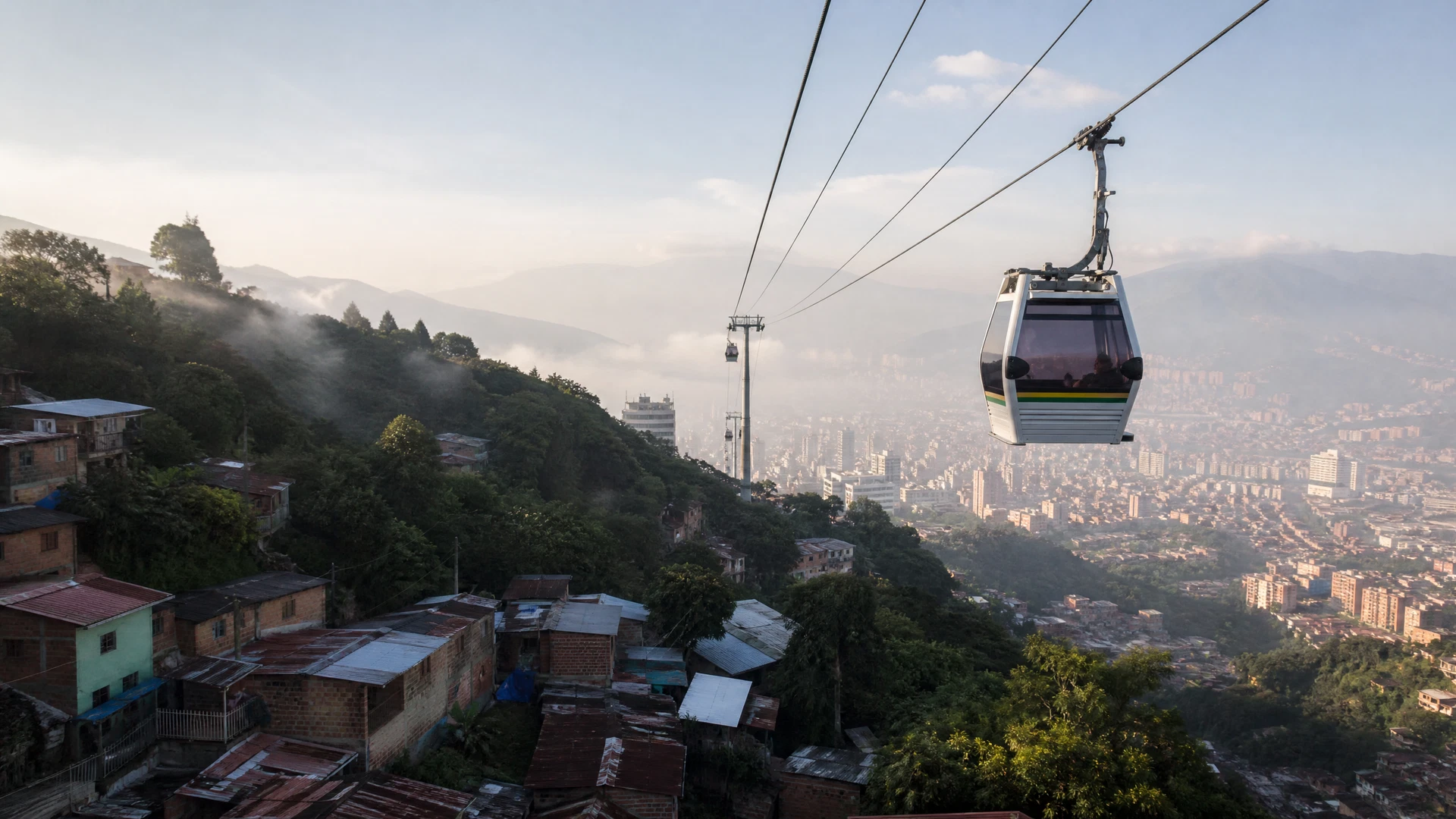
To arrive in Medellín is to descend into a bowl of verdant light, where the Aburrá Valley cradles a metropolis that seems to defy the laws of gravity. Known as the ‘City of Eternal Spring’ for its year-round temperate climate, the first impression is one of overwhelming texture: a sea of orange-brick dwellings clinging to the steep emerald slopes of the Andes. For decades, these hillsides were synonymous with isolation, but today, they represent a remarkable urban transformation. The air carries a mixture of mountain oxygen and the scent of roasting coffee, grounding the visitor in a place that is as much a geographical marvel as it is a testament to human resilience. As the sun sets, casting a violet hue over the peaks, the valley twinkles with a million amber lights, signaling the start of a night in a city that has fought hard for its future.
The most potent symbol of this metamorphosis is the Metrocable, a network of gondolas that glide silently over the rooftops. It has done more than just move people; it has bridged the chasm between marginalized hillside communities and the economic heart of the valley. Gliding upward from the Acevedo station, the city unfolds in a dizzying mosaic of life. You see the intricate geometry of a community that was once cut off from the world, now connected by a system that embodies social urbanism—the radical idea that the highest quality infrastructure should be reserved for those who have historically had the least. As the white cabins ascend toward the mist-shrouded peaks, the sense of physical elevation mirrors a profound social shift, where dignity is delivered via a cable and a clean, efficient carriage.
Nowhere is this spirit of creative defiance more palpable than in Comuna 13. Once considered one of the most dangerous neighborhoods in the world, it is now a vibrant open-air gallery of hope. The centerpiece of this revival is a series of six outdoor escalators that snake up the steep hillside, replacing exhausting concrete steps with a smooth, mechanical ascent. As you ride upward, you are surrounded by a kaleidoscope of street art—massive murals that tell the story of the community’s struggle and eventual triumph. Local guides speak with a fierce Paisa pride about how art and innovation saved their streets. The sound of hip-hop beats and the smell of fried empanadas fill the air, creating a sensory experience that is both a memorial to the past and a celebration of a hard-won present.
Beyond the dense urban clusters of the hillsides, the Metrocable continues its journey into a different kind of sanctuary. Reaching the summit at Santo Domingo, travelers transfer to a final line that glides over a dense canopy of pre-Hispanic forest to arrive at Parque Arví. This sprawling ecological reserve offers a profound counterpoint to the high-energy pulse of the city below. Here, the air is cooler, scented with pine and damp earth, providing a necessary breath of fresh air for a populace that is always looking toward the next horizon. Walking along ancient stone paths, one feels the immense scale of the Andean landscape, where the city’s frantic innovation gives way to the steady rhythms of nature.
Descending back into the valley floor, the city’s rhythm shifts from vertical drama to the sophisticated sprawl of its residential heartlands. While many visitors flock to the glitz of El Poblado, the savvy traveler finds their way to Laureles. Characterized by its unique circular street layouts and lush, tree-lined boulevards, Laureles offers an authentic glimpse into the daily life of the Medellín middle class. Here, the Paisa identity is on full display in a thriving independent cafe culture. In these leafy enclaves, third-wave coffee shops serve beans harvested from the nearby mountains, prepared with a precision that reflects the city’s entrepreneurial spirit. It is a neighborhood of parks and plazas where the sound of clinking coffee cups mingles with the rustle of giant rubber trees, creating a sanctuary of urban tranquility.
The cultural bedrock of this transformation is the Paisa identity—a regional pride that is as sturdy as the mountains surrounding the city. This spirit fueled the transition from a site of historic conflict to a globally recognized ‘City of Innovation.’ It is evident in the library parks that serve as community hubs in the most underserved areas, and in the Botanical Garden’s Orquideorama, a stunning wooden structure that mimics a forest canopy. The city does not just build infrastructure; it builds icons of civic pride. This commitment to public space and collective well-being has fostered a sense of ownership among the citizens, who treat their Metro system with a reverence rarely seen elsewhere, keeping it spotless as a symbol of their shared progress.
For the visitor, Medellín is a city that requires both comfortable footwear and an open heart. The best time to experience its magic is during the drier months from December to March, or during the mid-year window of June to August, when the sky is often a brilliant, clear blue that makes the orange bricks of the hillsides glow with intensity. Navigating the city is a lesson in efficiency, thanks to the integrated Metro and Metrocable system. As you move between the high-altitude forests of Arví and the bustling cafes of Laureles, you begin to understand that Medellín’s true innovation isn't just in its cables or its escalators, but in its refusal to be defined by its darkest days.
Ultimately, the story of Medellín is one of light returning to the shadows. It is found in the smiles of the vendors in the Plaza Botero, surrounded by the oversized, bronze sculptures of Fernando Botero. It is found in the quiet dignity of a commuter heading home on the Metrocable, watching the sun set over a valley that no longer feels like a trap, but a home. The city’s journey is far from over, but the foundations of its renaissance are firmly laid in the orange brick and the surrounding mountains. Walking its streets is to witness a living laboratory of social change, where every new park and transit line is a bold statement of communal intent.
As you prepare to leave the Aburrá Valley, the memory of the ‘City of Eternal Spring’ lingers like the taste of a fine Colombian roast. The sight of the Metrocable cabins glowing like lanterns against the night sky serves as a final image of a city on the move. It is a destination that asks to be understood, challenging every traveler to reconsider what is possible when a community decides to rise. Whether you are exploring the rugged heights of Comuna 13 or the serene circles of Laureles, you are participating in a story of reclamation. Medellín is no longer a cautionary tale; it is a masterclass in urban resilience, a city that has finally found its voice and is singing a song of renewal.