World city
The Golden Walls of Cartagena: A Caribbean Symphony of Stone and Spirit
Beyond the sun-drenched fortifications of its UNESCO-listed heart, Cartagena de Indias reveals a complex tapestry of Afro-Caribbean heritage and magical realism that transcends its colonial facade.
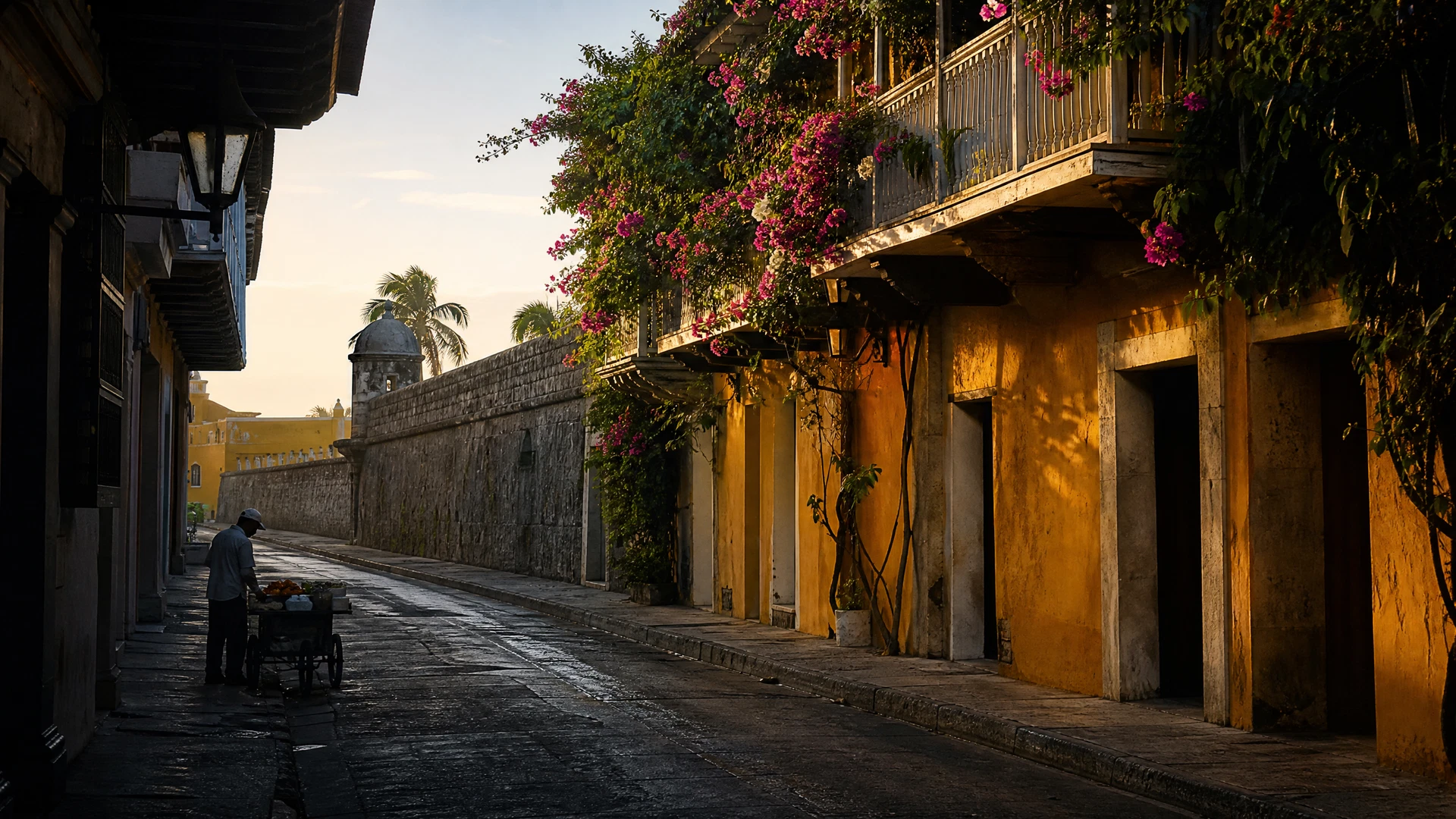
To arrive in Cartagena de Indias is to step into a sensory overload where the air is thick with sea salt and the heavy perfume of bougainvillea. The city, perched on Colombia’s northern coast, is a place where the sun turns the ochre walls of the historic center into a glowing amber labyrinth. This is the Walled City, a UNESCO World Heritage site that stands as one of the most complete examples of colonial architecture in the Americas. Here, 17th-century stone fortifications, built to repel pirates, now serve as a silent witness to a history as turbulent as it is romantic. Walking through the iconic clock tower gate, one is immediately enveloped by a world suspended in time, where horse-drawn carriages clatter over cobblestones and the heavy wooden doors of grand mansions hint at the opulence of a bygone era.
The architecture of the Walled City is a masterclass in colonial aesthetics, defined by narrow streets and overhanging balconies that sag under the weight of vibrant blossoms. These balconies, painted in turquoise and terracotta, create a vertical garden that shades the pedestrians below. As you wander deeper, you encounter plazas like the Plaza de Bolívar, each with its own rhythm and history. The San Pedro Claver Church, with its imposing stone facade, stands as a monument to the 'Apostle of the Slaves,' grounding the city’s religious heritage in a narrative of compassion. The walls themselves, known as Las Murallas, stretch for miles around the old town, offering a panoramic view of the Caribbean Sea and providing a space for locals to gather at sunset.
However, to see Cartagena only through its colonial lens is to miss the beating heart of its identity. The city is often described as a 'Small Africa in Colombia,' a living testament to the Afro-Caribbean resistance that has shaped the region for centuries. This heritage is most vibrantly embodied by the Palenqueras, the fruit sellers who roam the streets in traditional dresses, balancing silver bowls of tropical bounty on their heads. These women are descendants of San Basilio de Palenque, the first free town in the Americas, established by escaped enslaved people in the early 17th century. Their presence is a powerful reminder of the resilience of the Black community, a connection to a past that refused to be erased and a culture that continues to thrive.
This sense of history and cultural layering is what inspired the 'Magical Realism' of Nobel laureate Gabriel García Márquez, who drew deeply from the city's atmosphere. For Márquez, Cartagena was a place where the line between the possible and the impossible was perpetually blurred, where the heat and the history created a reality that felt both dreamlike and grounded. Walking through the streets, one can almost see the ghosts of his characters lingering in the shadows of the arches. The city’s 'romantic decay'—the peeling paint on a colonial facade and the rusted ironwork of a gate—is not a sign of neglect, but a badge of authenticity. It is a physical manifestation of the passage of time that Márquez captured so poignantly, where every weathered stone tells a story of the enduring Caribbean spirit.
Just outside the primary fortifications lies Getsemaní, a neighborhood that has transformed from a gritty enclave to a bohemian cultural hub. Centered around the Plaza de la Trinidad, Getsemaní offers a more raw and communal experience than the polished streets of the Walled City. Here, walls are covered in vibrant murals that tell the stories of the community’s struggles, and the air is filled with the sounds of champeta music. At night, the plaza becomes a living theater of social life, where locals and travelers sit on the steps of the Holy Trinity Church, sharing street food and watching performers. Getsemaní is where the city’s modern pulse is most palpable, a place where the traditional way of life is being preserved through art.
For those who find the humidity of the city streets too oppressive, the Caribbean Sea offers a necessary reprieve. A short boat ride from the city’s docks leads to the Rosario Islands, an archipelago of coral reefs and white-sand beaches that feel worlds away from the urban bustle. The transition from the heavy, stone-bound history of the city to the translucent turquoise waters of the islands is a stark and beautiful contrast. Here, the rhythm of life slows down, dictated by the tides and the movement of the sun. The islands are a sanctuary for biodiversity, offering opportunities for snorkeling among vibrant fish and exploring the mangroves. It is in this juxtaposition—between the solid history of the mainland and the fluid beauty of the sea—that the true spirit of Cartagena is found.
Navigating Cartagena requires strategic planning, particularly regarding the climate. The dry season, from December to March, is the best time to visit, as the heat is tempered by the 'brisa,' a cooling sea breeze that sweeps through the narrow streets. During these months, the city is at its most vibrant, hosting festivals that celebrate its music and literature. Even in the heat, the city is best explored on foot, allowing for the serendipitous discoveries that define the experience—a hidden courtyard or a tiny cafe serving world-class Colombian coffee. For longer distances, the iconic white taxis are the standard, though the lack of meters means that a quick negotiation of the fare is a necessary part of the local ritual.
As the sun sets over the Caribbean, the city takes on a different character. The harsh light of the day softens into a warm glow, and the walls of the fortress become a silhouette against the darkening sky. This is the hour when the city’s wistful nature is most apparent, a time for reflection on the layers of history that have built this place. From the indigenous people who first inhabited the coast to the Spanish colonizers and the enslaved Africans who fought for their freedom, Cartagena is a city of intersections. It is a place where the weight of the past is always present, yet it is carried with a vitality that is uniquely Caribbean. To visit Cartagena is to be reminded that history is not just something found in books.
Ultimately, the allure of Cartagena lies in its ability to be many things at once: a fortress of stone, a cradle of culture, and a literary dream. It is a city that demands you slow down and pay attention, to look beyond the colorful facades and engage with the stories of the people who call it home. Whether you are wandering the quiet alleys at dawn or dancing to the rhythms of Getsemaní at midnight, Cartagena leaves an indelible mark on the soul. It is a place of enduring beauty and profound resilience that continues to stand as a beacon of the Caribbean spirit, welcoming all who seek to lose themselves in its magical embrace.