World city
The Poetic Suspension of Havana: A Journey Through Cuba's Resilient Time-Capsule.
Between the salt-sprayed curves of the Malecón and the crumbling Baroque grandeur of Habana Vieja, Havana exists in a state of beautiful, defiant suspension, where five centuries of architectural history meet the resourceful pulse of a people who have turned survival into a vibrant art form.
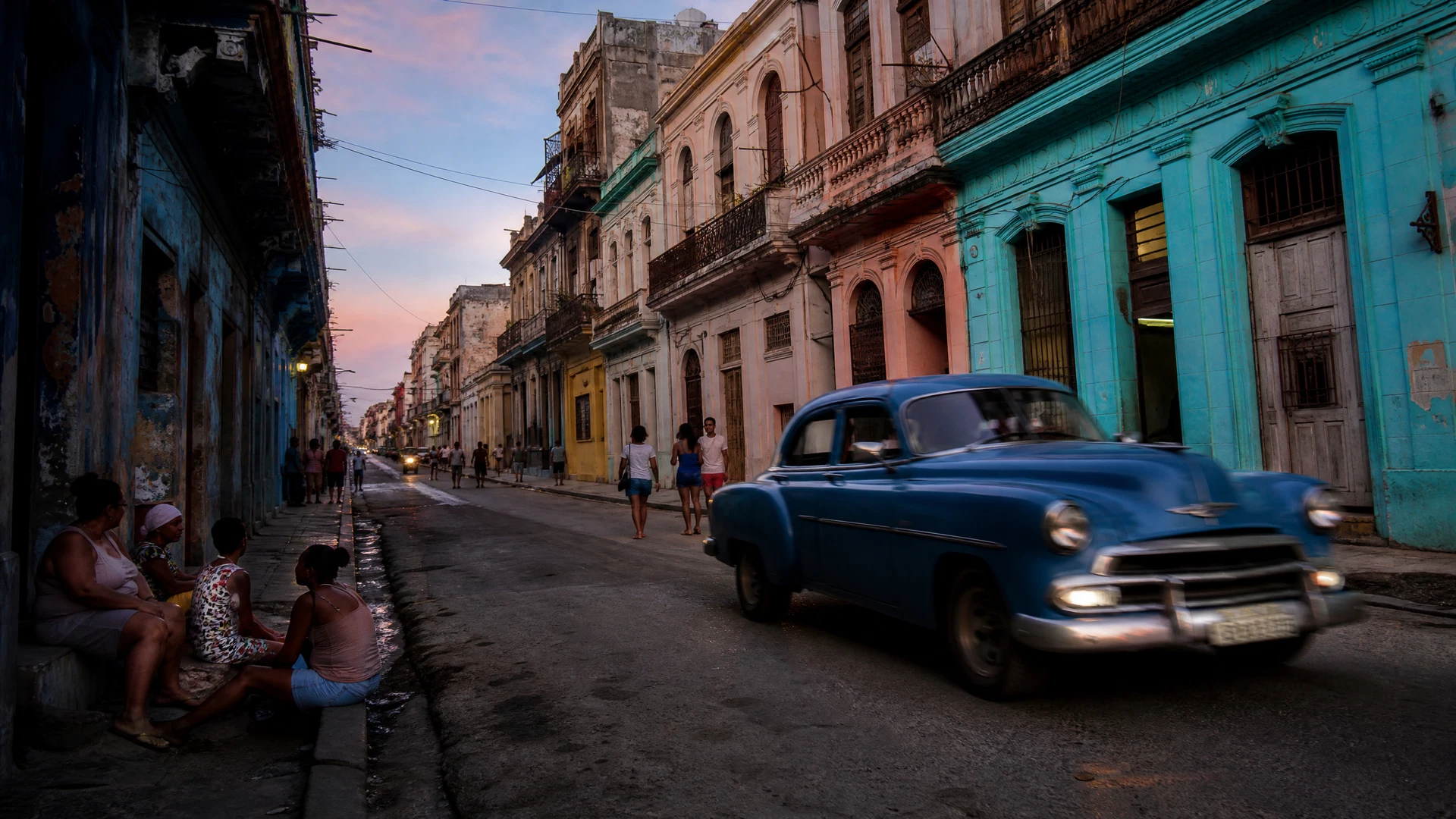
Stepping into Havana is less like arriving in a foreign capital and more like walking onto a film set where the director has long since departed, leaving the actors to improvise their own vibrant sequels. The air feels thick with a specific alchemy—a mixture of salt spray from the Atlantic, the blue-grey exhaust of mid-century American engines, and the sweet, heavy scent of tropical decay. Here, time does not move in a linear fashion; it loops, stalls, and occasionally leaps forward in unexpected bursts of modernity. To understand Havana, one must first accept its Resilient Time-Capsule Urbanism, a state where five hundred years of history remain visible in every cracked facade and polished chrome bumper. It is a city that refuses to be forgotten, existing instead in a state of poetic suspension that challenges every conventional notion of urban progress.
The heart of this suspension beats most clearly in Habana Vieja, the UNESCO-protected old city that serves as the anchor for Havana’s urban fabric. Under the careful guidance of the Office of the City Historian, a rigorous Master Plan has been enacted to balance the restoration of Baroque plazas with the raw, lived-in reality of decaying tenements. Walking through the Plaza de Armas or the Plaza Vieja, one sees the results of this painstaking work—columns returned to their former glory and cobblestones scrubbed clean. Yet, just a few blocks away, laundry flutters like prayer flags from wrought-iron balconies of buildings that seem held together by sheer willpower. This tension between historical permanence and the gritty necessity of the present is what gives the old city its unique Genius Loci, a spirit of place that is as much about the people who inhabit these ruins as it is about the stones themselves.
Beyond the architecture, it is the resourceful pulse of the Habaneros that truly defines the city’s character. In a landscape where resources are often scarce, the inhabitants have mastered the art of creative reclamation. This is most evident in the rise of paladares, private restaurants tucked away in the living rooms of grand, fading apartments, where the flavors of traditional Cuban cuisine are reinvented with whatever ingredients the day provides. These spaces are more than just eateries; they are improvised community hubs where the weight of the past is constantly negotiated. The city’s public life is a masterclass in social resilience, where neighbors gather on salt-eroded marble stoops to discuss the day’s news and children play baseball with sticks in the shadows of crumbling fortresses. It is an urban poetry of survival, a testament to a collective spirit that refuses to let the city’s grand structural decay dampen its human vitality.
Moving west, the atmosphere shifts into the denser, more frantic energy of Centro Habana. This is the city’s engine room, a place of narrow streets and high-intensity living. It is here that one finds the Callejón de Hamel, a small, vibrant sanctuary dedicated to Afro-Cuban identity. What was once a neglected alleyway has been transformed by artist Salvador González Escalona into a psychedelic wonderland of murals and shrines. Every Sunday at noon, the alley erupts in the rhythmic thunder of Rumba, a performance that is less a spectacle for tourists and more a profound reclamation of cultural heritage. The explosive energy of the dancers and the complex polyrhythms of the drums provide a visceral counterpoint to the city’s colonial aesthetics, grounding Havana in a history that is as much about African resistance and spirituality as it is about Spanish grandiosity.
The spirit of creative reclamation extends to the outskirts in the fishing village of Jaimanitas. Here, the artist José Fuster has spent decades turning his neighborhood into Fusterlandia, a sprawling mosaic wonderland that brings to mind the whimsical works of Gaudí. Every surface—from bus stops to the walls of private homes—is covered in bright, intricate tiles depicting Cuban life and folklore. Fusterlandia is a physical manifestation of the city’s communal resilience, a project that began with a single house and grew to encompass an entire community. It serves as a reminder that in Havana, art is not something confined to galleries; it is a tool for transformation, a way to reimagine a neglected landscape into something extraordinary through sheer collective will and a few thousand shards of broken ceramic.
Navigating Havana requires a willingness to embrace its layered and idiosyncratic transport system. The iconic Almendrones—the vintage 1950s American Chevrolets and Fords that have become the city’s visual shorthand—are not merely museum pieces; they are the workhorses of the urban commute. Functioning as shared taxis, they follow fixed routes along the major calzadas, their engines kept running through a miraculous combination of ingenuity and pure stubbornness. For shorter hops, the yellow, egg-shaped Coco-taxis offer an open-air alternative that zips through traffic with terrifying efficiency. Meanwhile, in the narrowest alleys of the old city, the human-powered Bici-taxis remain the most practical choice, their drivers providing a slow-motion tour of hidden corners. To ride in any of these vehicles is to participate in the city’s unique rhythm, a pace dictated by the mechanical limits of the past.
For the visitor, timing is essential to experiencing Havana at its most atmospheric. The city is best visited during the dry season, from November to April. During these months, the oppressive humidity of the Caribbean summer relents, replaced by a mild, sun-drenched clarity that highlights the textures of the city’s weathered stone. This period also avoids the Atlantic hurricane season, which peaks between August and October and can bring dramatic weather to the island. Even in the dry season, the Malecón—the city’s famous five-mile sea wall—remains a site of constant drama. As the sun sets, the blue hour settles over the city, and the sea spray from the crashing waves catches the fading light, creating an ethereal backdrop for the thousands of locals who gather there to fish, romance, and escape the heat of their homes.
Ultimately, Havana is a city that demands a specific kind of attention. It is not a place for those who seek the seamless convenience of modern global capitals, nor is it a sanitized theme park. It is a living contradiction—a place where grand historical permanence is constantly being eroded by the salt air, yet simultaneously being rebuilt by the tireless energy of its people. To walk its streets is to witness a unique urban poetry, one that finds beauty in the cracks of a Baroque facade and dignity in the roar of a seventy-year-old engine. Havana leaves the visitor with a sense of wistful admiration, a feeling of having glimpsed a world that has somehow managed to stay true to itself in the face of relentless change. It is a city that does not just survive; it endures, wrapped in a poetic suspension that is as fragile as it is unbreakable.