World city
The Luminous Edge of the North: Finding the Soul of Reykjavík.
Between the crashing surf of the North Atlantic and the jagged silhouette of Mount Esja, Iceland’s capital thrives as a sanctuary of geothermal warmth, literary devotion, and avant-garde design.
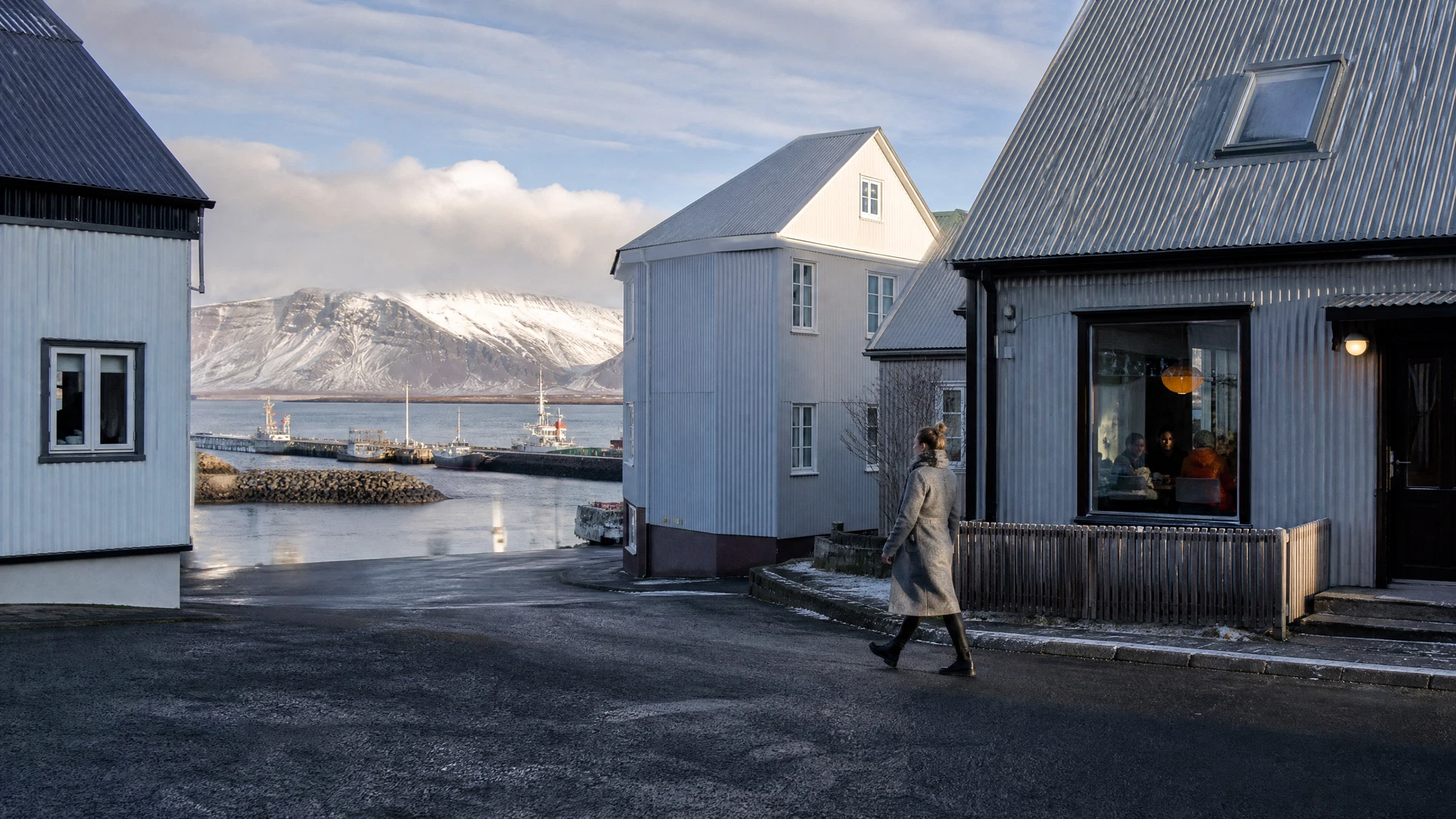
As the Flybus winds across the lunar landscape of the Reykjanes Peninsula, a transition occurs that feels like a gradual awakening. The raw, moss-covered lava fields give way to the colorful rooftops of Reykjavík, a city that clings to the edge of the world with stubborn resilience and sophisticated grace. Here, the North Atlantic wind is a constant companion, a bracing reminder of the elements that have shaped this nation for a millennium. Yet, despite its proximity to the Arctic Circle, the city radiates a surprising warmth. The skyline is dominated by the expressionist concrete wings of Hallgrímskirkja and the shimmering glass honeycomb of the Harpa Concert Hall. For the visitor, Reykjavík offers an immediate intimacy; it is a capital that retains the soul of a fishing village while harboring the creative ambitions of a global metropolis.
Nowhere is this creative ambition more evident than in the Grandi Harbour District, a once-gritty industrial zone reimagined as the city’s most vibrant cultural frontier. Historically the heart of the fish-processing industry, Grandi’s weathered warehouses now pulse with a different energy. The Marshall House, a former herring factory, has been transformed into a sleek bastion of contemporary art, while the scent of roasting cacao from the Omnom Chocolate factory bridges the city’s industrial past and its artisanal present. A climb up the Þúfa, a grassy, dome-shaped art installation, provides a moment of quiet contemplation. From its summit, the panoramic views of Faxaflói Bay serve as a reminder that even in the heart of urban transformation, the wild remains just a glance away.
The Old Harbour remains the city’s emotional anchor, where the rhythmic clinking of masts provides a soundtrack to the daily ritual of arrival and departure. At its center stands Harpa, a geometric marvel whose glass facade was inspired by the basalt landscapes of Iceland. Designed in collaboration with artist Ólafur Elíasson, the building is a masterclass in light and reflection. During the day, thousands of glass panels capture the shifting moods of the sky, turning from steel gray to brilliant gold. At night, it becomes a glowing beacon, reflecting the deep indigo of the harbor. To stand on the pier at dusk, watching the deep blue of the North Atlantic meet the sharp lines of modern architecture, is to witness the very essence of Reykjavík: a city that is as much a product of its environment as it is a defiance of it.
While the architecture may capture the eye, the true social heart of Reykjavík is found in the geothermal waters of its public swimming pools, or sundlaugar. For Icelanders, the pool is a secular town square, a site of essential community bonding. At Laugardalslaug, the city’s largest pool complex, the ritual of the pottar (hot tubs) is a cornerstone of daily life. Here, in the steam-shrouded warmth, "poolside politics" are conducted with a unique brand of egalitarianism. Doctors and students sit shoulder-to-shoulder, discussing everything from government scandals to the quality of the local fish. This bathing culture is a tactile expression of the Icelandic soul—a recognition that in a land of fire and ice, warmth is something to be shared. It is in these hot tubs that the visitor truly begins to understand the city’s rhythm, a sociality that thrives even when the winter wind howls outside.
Reykjavík’s intellectual life is just as deep as its geothermal wells, a fact recognized by its status as a UNESCO City of Literature. The city is a sanctuary for the written word, where books are essential companions. This literary devotion culminates in the annual Jólabókaflóð, or "Christmas Book Flood," a tradition where a surge in publishing occurs during the final months of the year. On Christmas Eve, the national ritual is simple: residents exchange books and spend the night reading. This quiet, collective immersion in storytelling reflects a culture that has always used narrative to navigate the long, dark winters. Walking past the city’s many independent bookstores and the sleek City Library, one senses a pervasive respect for the imagination. It is a city where every street corner holds a story, and where reading is considered as vital as breathing.
The passage of time in Reykjavík is dictated by dramatic shifts of the seasons, each bringing its own atmospheric weight. In June, the Midnight Sun bathes the city in an ethereal, never-ending twilight, turning the nights into a playground of golden light. The usual boundaries of time dissolve, and it is common to see people hiking Mount Esja or strolling along the shore at three in the morning. Conversely, the winter months bring a heavy darkness punctuated by the dance of the Northern Lights. To witness the aurora borealis swirling over the city’s colorful rooftops is a transformative experience, though it requires fortitude. Navigating the winter chill demands high-quality windproof and thermal gear, as the North Atlantic wind can be unforgiving. Yet, there is a wistful beauty in this season—a sense of the city huddling together against the cold, illuminated by the warm glow of windows.
Despite its remote location, Reykjavík is an exceptionally accessible city. The 45-minute transit from Keflavík International Airport is a seamless introduction to the island’s stark beauty, and once in the city, the downtown core is remarkably walkable. For those looking to explore the wider capital area, the Strætó bus system provides reliable coverage, though the city’s true character is best discovered on foot. One can spend an afternoon wandering the narrow streets of the old town, admiring the corrugated iron houses painted in bold primary colors, or exploring the hidden gardens that thrive in the lee of the wind. There is a sense of safety and openness here that is rare in modern capitals, a feeling that you are a guest in a welcoming home. Whether browsing the vintage shops on Laugavegur or enjoying a quiet moment in the botanical gardens, the city invites a slow, deliberate pace.
Ultimately, the allure of Reykjavík lies in its contradictions. It is a city that feels ancient yet is relentlessly modern, a place of raw natural power and sophisticated cultural refinement. It is a capital that doesn't demand attention with noise, but earns it through quiet integrity and atmospheric depth. As you stand on the shore of Faxaflói Bay, watching the light fade over the water, you realize that Reykjavík is more than just a destination; it is a state of mind. It is a place that teaches you the value of warmth, the power of a well-told story, and the importance of finding beauty in the face of the elements. Long after the North Atlantic wind has faded, the memory of the city’s luminous edge remains—a wistful reminder of a world where the wild and the urban exist in perfect, precarious harmony.