World city
The Pavement of Time: Navigating the Layered Echoes of Sarajevo
At the geographic and spiritual heart of the Balkans, Bosnia and Herzegovina’s capital stands as a living museum of coexistence and resilience, where the transition from Ottoman bazaars to Austro-Hungarian boulevards is marked by a single line on the street.
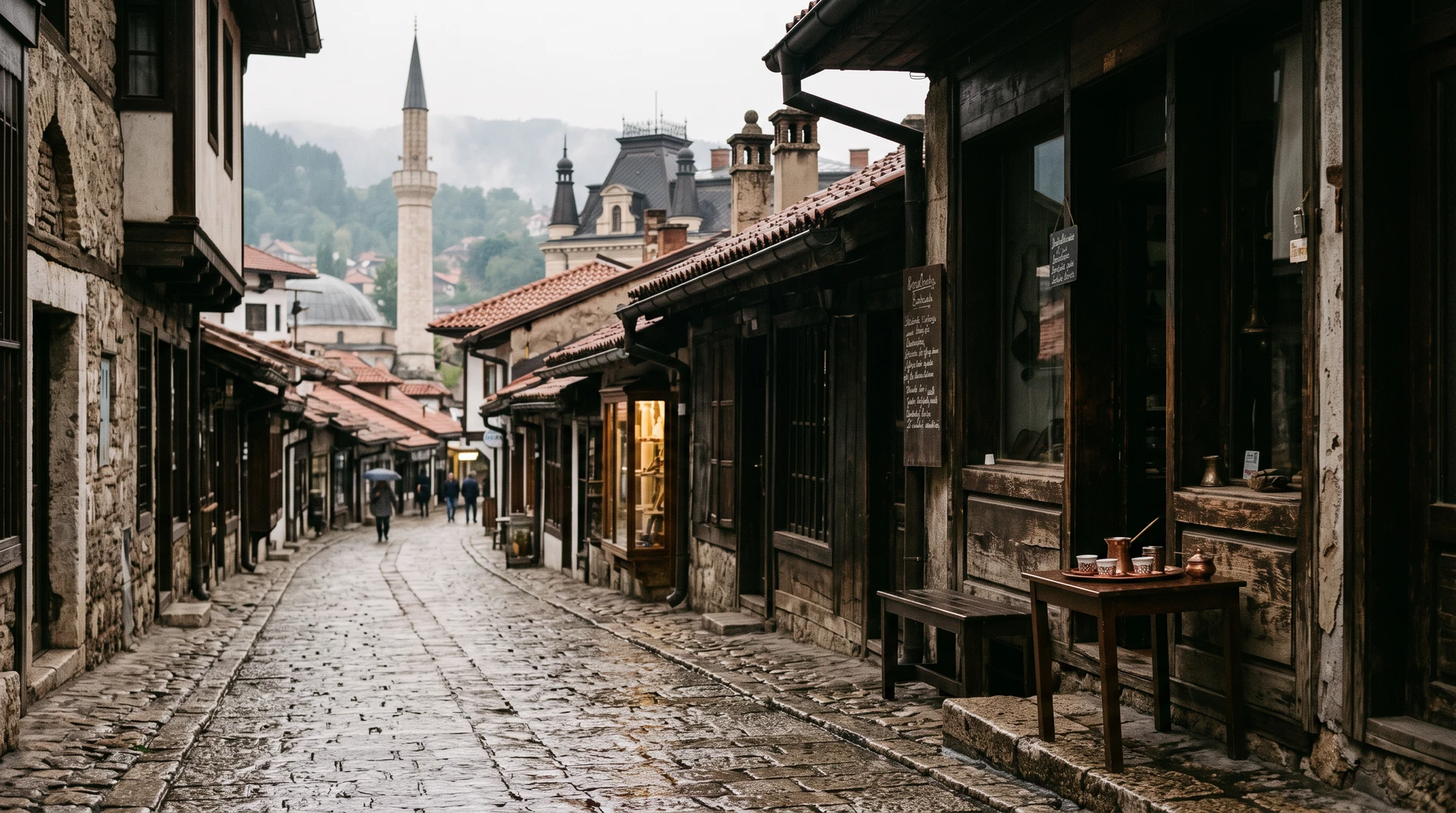
To enter Sarajevo is to step into a sensory tapestry where the air itself seems thick with history and the scent of grilled meat. At the heart of the city lies Baščaršija, the 15th-century Ottoman bazaar that serves as Sarajevo’s historical and cultural anchor. Here, the narrow, cobblestoned alleys are a labyrinth of small shops and traditional eateries, where the rhythmic clinking of coppersmiths in Kazandžiluk street provides a metallic soundtrack to the morning. This is the place where the city’s pulse is most palpable, as visitors navigate the Sebilj fountain and the surrounding stalls selling everything from intricate metalwork to the finest Turkish-style coffee. The atmosphere is one of timelessness, a preserved fragment of the East nestled within the heart of Europe, where the call to prayer from the nearby Gazi Husrev-beg Mosque echoes against the stone walls, grounding the traveler in a world that feels both exotic and deeply familiar.
Walking west from the bazaar along Ferhadija Street, one encounters a literal and metaphorical threshold known as the Sarajevo Meeting of Cultures. Marked by a simple line in the pavement, this spot is where the worn, irregular stones of the Ottoman era abruptly give way to the smooth, neoclassical slabs of the Austro-Hungarian period. It is a startling transition; in a single step, the architecture shifts from the low-slung, timber-framed shops of the 16th century to the grand, multi-story facades of 19th-century Vienna. This line is more than just a tourist photo opportunity; it is a physical manifestation of Sarajevo’s identity as a geographic and cultural crossroads. To stand here is to see the city’s dual soul laid bare, a place where the Islamic East and the Catholic West have not just met, but have lived in a constant, sometimes strained, yet always profound dialogue for centuries.
This architectural diversity is mirrored in the city’s spiritual landscape, earning Sarajevo the moniker Jerusalem of Europe. Within a few square blocks, the minarets of mosques, the spires of Catholic cathedrals, the onion domes of Orthodox churches, and the silent walls of ancient synagogues stand in remarkable proximity. This coexistence is not merely a historical relic but a living reality. The Sacred Heart Cathedral, with its twin towers, looms over the street just a short walk from the Gazi Husrev-beg Mosque, while the Ashkenazi Synagogue sits quietly by the Miljacka River. Perhaps the most poignant symbol of this interfaith resilience is the Sarajevo Haggadah, a 14th-century Jewish manuscript that was protected by Muslims during the Second World War and hidden again during the 1990s siege. It serves as a testament to a shared heritage that has survived the darkest chapters of the 20th century, proving that the city’s fabric is woven from many threads.
Nowhere is the city’s resilience more evident than at the Vijećnica, the Sarajevo City Hall. Originally built in the Moorish Revival style during the Austro-Hungarian administration, the building is a masterpiece of intricate patterns and stained glass. During the siege of the 1990s, it was targeted and burned, resulting in the loss of millions of books and manuscripts—a cultural catastrophe that shocked the world. Today, the Vijećnica has been meticulously restored, its grand central hall once again glowing with light. It stands as a symbol of Sarajevo’s refusal to be erased, a phoenix rising from the ashes of its own destruction. For the visitor, walking through its arched corridors is a somber yet uplifting experience, a reminder that while buildings can be destroyed, the intellectual and cultural spirit they house is far more difficult to extinguish.
To truly understand the city’s geography, one must look upward toward the surrounding mountains. The Trebević Cable Car, recently reopened, whisks passengers from the old town to the slopes of Mount Trebević in just a few minutes. From the summit, the entire valley opens up, revealing the red-roofed houses clinging to the steep hillsides. However, the mountain also holds the ghosts of the past. Here, the ruins of the 1984 Winter Olympic bobsled track snake through the forest, now covered in vibrant layers of graffiti. These concrete remains are a hauntingly beautiful intersection of sporting glory and urban decay; during the siege, the track was used as a sniper position, turning a site of international celebration into a place of terror. Today, it is a favorite spot for hikers and street artists, a place where nature and art are slowly reclaiming a landscape once scarred by war.
Despite its heavy history, Sarajevo is a city that knows how to live in the present. The daily rhythm is dictated by the Bosnian concept of finding pleasure in small, slow moments, known locally as ćeif. This is most evident in the coffee culture. Ordering a Bosnian coffee is a ritual: it arrives on a copper tray with a small pot, a ceramic cup, a glass of water, and a cube of Turkish delight. It is meant to be sipped slowly, often accompanied by sevdah, the traditional, melancholic folk music that is the soul of the country. The city’s tram system, one of the oldest in Europe, provides a more practical but equally atmospheric way to see the city. The rattling cars connect the historic core to the modern administrative districts, offering a window into the everyday lives of Sarajevans as they navigate their way between the echoes of the past and the demands of the future.
For the traveler, Sarajevo requires a specific mindset—one that is open to both beauty and sorrow. The best time to visit is during the late spring or early autumn, when the weather is mild enough for the steep climbs up the city’s hills. While the city is increasingly modern, it remains a heavily cash-reliant society; carrying Bosnian Marks is essential for the best experiences in the traditional markets and small cafes. It is a city that rewards those who walk its streets without a strict agenda, allowing the layers of history to reveal themselves in their own time. Sarajevo is not a destination you simply visit; it is a place that you feel, a city that stays with you long after you have crossed back over the Meeting of Cultures line and headed for home.
Ultimately, Sarajevo is a city defined by its capacity for survival and its insistence on beauty. Whether it is the light reflecting off the rain-slicked stones of Ferhadija, the smell of woodsmoke in the winter air, or the warmth of a stranger’s greeting, there is an undeniable magic to this Balkan capital. It is a place where the weight of the past is balanced by the vibrancy of the present, and where the scars of conflict have become part of a complex, beautiful mosaic. To spend time here is to witness the enduring power of the human spirit and the profound importance of cultural memory. Sarajevo is a city that remembers everything, yet continues to look forward with a quiet, resilient grace.