World city
The Gilded Grime of Naples: A Love Letter to the Living Museum.
Between the laundry-strewn alleys of the Spanish Quarter and the sublime majolica cloisters of Santa Chiara, Naples reveals a visceral, unapologetic beauty that challenges every traveler to look beneath its weathered surface.
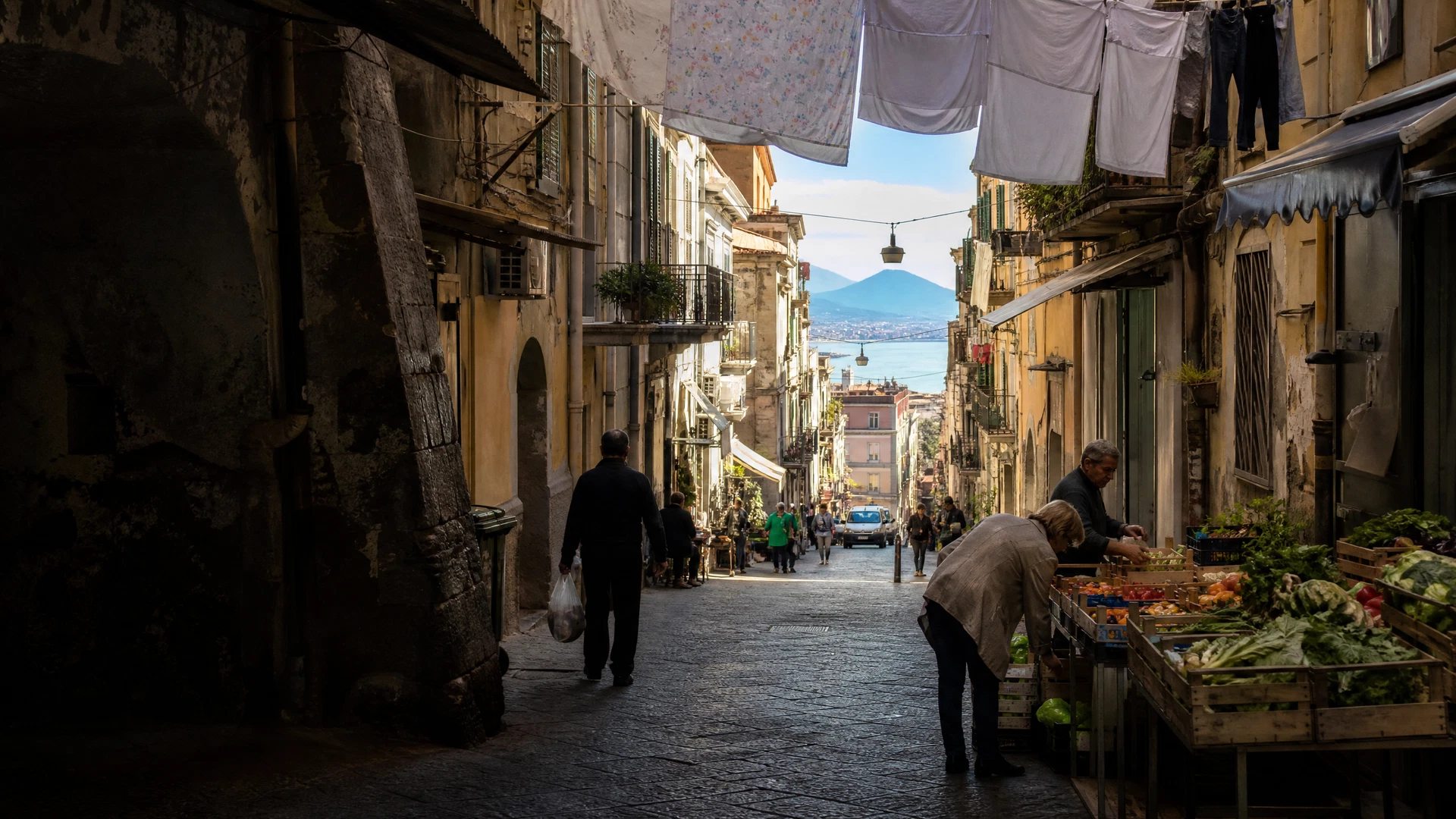
To arrive in Naples is to be immediately and violently awake. The city does not ease you in with the manicured elegance of Florence; instead, it greets you with a cacophony of screeching scooters, the thick aroma of espresso, and a visual density like a physical weight. This is the 'bella confusione'—a beautiful confusion that defines the Neapolitan spirit. Here, streets are narrow canyons where laundry lines crisscross overhead like festive bunting, and the air is filled with the rhythmic shouting of shopkeepers and the distant chime of church bells. It is a visceral immersion into a Mediterranean life that has remained stubbornly authentic despite the pressures of global tourism. To walk through the city is to navigate a living museum where the exhibits are lived in, breathed upon, and occasionally scarred by the very people who call them home.
The heart of this experience lies in the Centro Storico, a UNESCO site that preserves the grid of ancient Neapolis. Walking down Spaccanapoli, the street that literally 'splits' the city, you encounter a jarring yet harmonious duality. Gritty, graffiti-scarred facades and overflowing bins sit directly adjacent to portals of sublime Baroque opulence. Step inside the Santa Chiara cloister, and the city’s roar vanishes, replaced by the silent, sun-drenched serenity of 18th-century majolica tiles depicting pastoral scenes in vibrant yellows and blues. A few blocks away, the Sansevero Chapel houses the Veiled Christ, a marble sculpture so hauntingly realistic that it seems to breathe beneath its stone shroud. This tension between the neglected exterior and the resplendent interior is the defining aesthetic of Naples—a city that hides its greatest treasures behind a veil of urban decay, rewarding those willing to look closer.
Nowhere is the city’s raw energy more concentrated than in the Quartieri Spagnoli. Originally built to house Spanish garrisons, this dense grid of narrow lanes is a theater of daily life. Here, the 'bassi'—ground-floor apartments opening directly onto the street—blur the line between private and public space. You might see a grandmother folding pasta while a teenager on a Vespa zips past her doorway, or a makeshift shrine to Diego Maradona adorned with fresh flowers. The scent of frying dough from a local friggitoria mingles with the salty sea breeze and the pervasive aroma of coffee. It is a neighborhood that feels perpetually on the brink of chaos, yet it functions with a rhythmic precision that is uniquely Neapolitan. It is here that you understand the city’s resilience; it is a place where every square inch of stone is claimed by life.
To speak of Naples without mentioning its culinary soul would be a grave omission. This is the birthplace of pizza, and the ritual of eating it is a sacred, unpretentious act. At legendary spots like Da Michele or Sorbillo, the menu is sparse, the service is brisk, and the prices remain refreshingly low. A margherita pizza, with its blistering crust and vibrant San Marzano tomatoes, is a masterclass in simplicity. But the city’s appetite extends far beyond the wood-fired oven. The morning air is thick with the scent of sfogliatella—a flaky, shell-shaped pastry filled with sweetened ricotta—and the 'fiocco di neve,' a cloud-like cream puff from the Rione Sanità that has become a modern icon. Coffee here is not just a beverage; it is a social lubricant, served short, dark, and searingly hot at crowded marble bars where the clatter of porcelain provides the soundtrack to the morning rush.
Beneath the frantic pace of the modern streets lies a literal foundation of history spanning two millennia. Napoli Sotterranea, a labyrinthine network of Greek-Roman aqueducts and tunnels, reveals how the city has built itself upon its own past. During World War II, these subterranean chambers served as bomb shelters, and today, they offer a cool, silent refuge from the heat and noise above. Further north, the San Gennaro Catacombs in the Rione Sanità provide a more somber perspective. These vast underground burial sites, decorated with early Christian frescoes, are a testament to the city’s long-standing relationship with the dead. In Naples, the past is never truly buried; it is a constant presence, a geological layer that supports the weight of the present. This verticality of history—from the dark tuff stone of the catacombs to the sunlit heights of the Vomero—gives the city a depth few other urban centers can match.
The Rione Sanità itself is a microcosm of the city’s ongoing transformation. Once a marginalized valley, it has recently experienced a social and cultural rebirth. Community-led initiatives have restored ancient sites and opened new galleries, turning the neighborhood into a hub of creative energy. It is here that you find the Palazzo dello Spagnolo, with its grand staircases that exemplify the theatricality of Neapolitan Baroque. The neighborhood is a reminder that Naples is not a stagnant relic but a shifting, evolving organism. The residents here possess a gregarious warmth and a fierce pride in their district, welcoming visitors with a sincerity that feels earned. It is a place where the gritty reality of urban life is constantly being re-imagined through the lens of community and art, proving that even the most neglected corners of the city can bloom with unexpected beauty.
For a change of perspective, one must ascend. The funicular systems, such as the Centrale or Montesanto, offer a cinematic transition from the dense historic center to the upscale Vomero district. As the cable car climbs the steep hillside, the city unfolds beneath you like a vast, textured tapestry. From the ramparts of Castel Sant’Elmo, the view is peerless: the entire Bay of Naples stretches out toward the horizon, with the looming silhouette of Mount Vesuvius standing as a silent sentinel over the sprawl. Even the city’s modern infrastructure is an art form; Metro Line 1 features 'Art Stations' like Toledo, where shimmering blue mosaics create an immersive underwater atmosphere. This juxtaposition of the ancient fortress and the futuristic metro station encapsulates the Neapolitan ability to bridge the gap between centuries with effortless, albeit chaotic, grace.
Leaving Naples is as visceral an experience as arriving. The city leaves a layer of grit on your skin and a restless energy in your mind, a wistful longing for the 'bella confusione' you once found overwhelming. It is a city of intense contrasts—opulence and decay, noise and silence, life and death—all coexisting in a vibrant equilibrium. For the visitor, the lesson of Naples is one of authenticity. It is a place that refuses to be anything other than itself, a city that prizes the raw, uninhibited energy of the moment over the polished surface of a postcard. Whether navigating the unruly scooter traffic near Piazza Garibaldi or sitting in the quiet shade of a limestone shrine, you are part of a continuous, three-thousand-year-old conversation. Naples does not ask for your approval; it simply invites you to witness its textured survival, and in doing so, it changes you forever.