World city
The Alchemist’s Labyrinth: Unveiling the Mystical Heart of Prague.
Beyond the Gothic spires and Baroque facades lies a city steeped in alchemical secrets and Kafkaesque intrigue, where the past remains etched into every rain-slicked cobblestone.
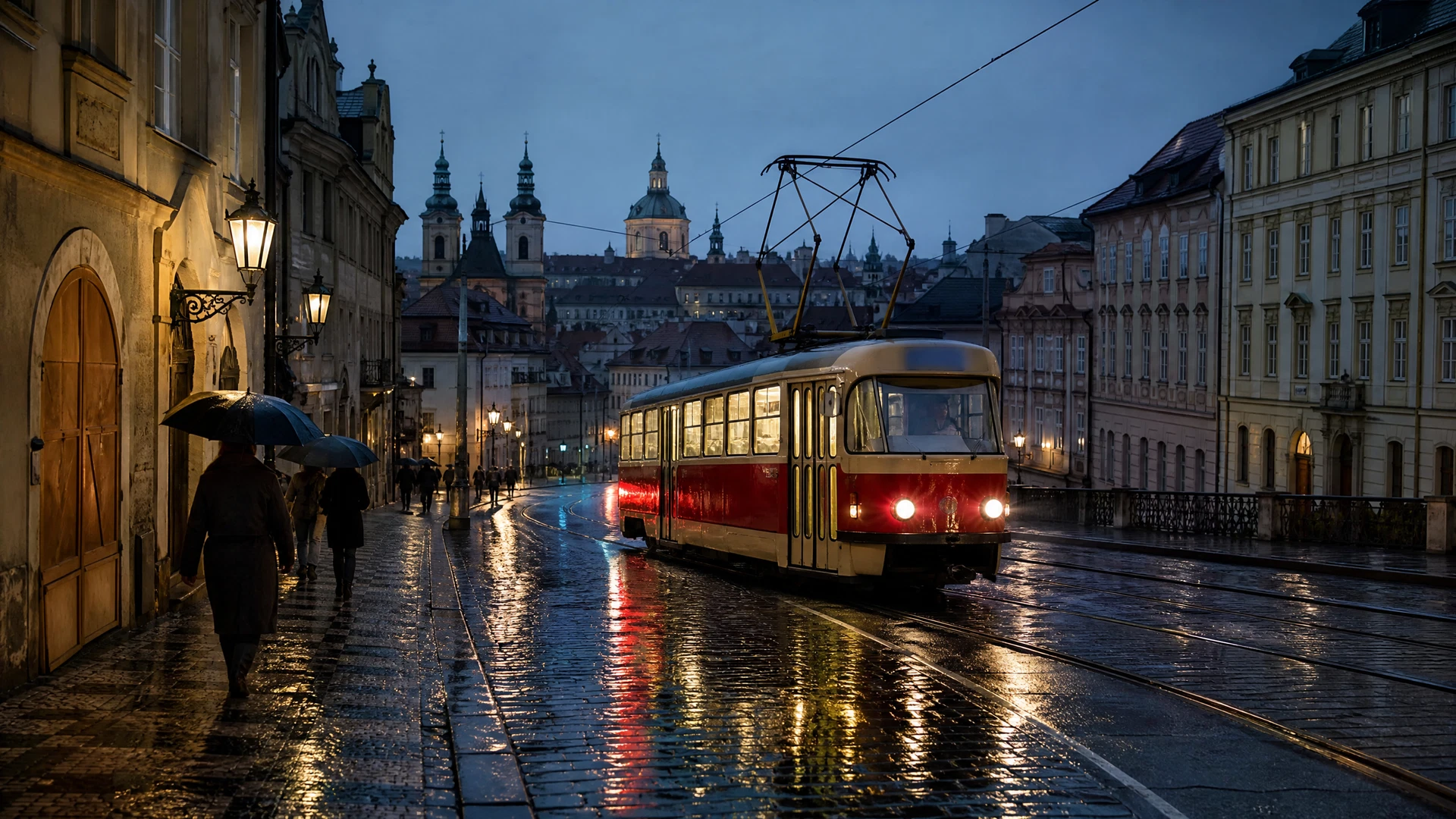
Prague is a city that refuses to be defined by a single era, presenting a layered tapestry of mystical and alchemical legacies. Known as the “Magic City,” its identity was forged during the reign of the Habsburgs, under Emperor Rudolf II, who transformed the capital into a global center for occult sciences and the arts. This esoteric history is not merely a collection of legends but a living presence that permeates the atmosphere. Walking through the winding streets of the Old Town, one feels the weight of centuries-old secrets. The city’s architectural landscape is a “Kafkaesque” juxtaposition of labyrinthine Gothic structures and grand Baroque ornamentation, fostering a sense of timeless mystery. It is a place where the legend of the Golem and the tales of the “Golden Lane” serve as foundational narratives, grounding Prague in a unique blend of historical fact and atmospheric folklore.
The historical character of the city finds its most elegant expression in Malá Strana, the Lesser Town. This district, a cluster of Baroque palaces and cobbled inclines, sits beneath the watchful gaze of Prague Castle. Maintaining a preserved Renaissance aesthetic, Malá Strana feels like a step back in time, where the ornate facades of noble residences tell stories of imperial grandeur. The district is defined by steep, winding streets that lead visitors through a maze of hidden gardens and quiet courtyards. Each turn reveals a new perspective of the city's red-tiled roofs and the distant spires of the Old Town. The atmosphere here is one of refined antiquity, where the echoes of history seem to linger in the air. It is a neighborhood that invites slow exploration, rewarding those who wander away from the main thoroughfares with glimpses of a Prague that has remained largely unchanged for centuries.
For those seeking a deeper connection to the city’s occult past, the Speculum Alchemiae in the Jewish Quarter offers a rare experience. This rediscovered 16th-century alchemical laboratory was the playground of Emperor Rudolf II’s court, where the finest minds sought the elusive Philosopher’s Stone. Descending into these subterranean chambers, visitors are transported to an era of intellectual ferment and mystical pursuit. The laboratory, preserved with its glass retorts and stone hearths, serves as a silent testament to a time when the boundaries between science and magic were fluid. The air in these hidden rooms is thick with the scent of old parchment and forgotten knowledge. It is here that the “Magic City” label feels most earned, as the physical remnants of alchemical experimentation provide a tangible link to the esoteric ambitions that once drove the Habsburg court.
The Jewish Quarter, along with the surrounding Old Town, reinforces the city’s reputation for labyrinthine complexity. The narrow alleys and historic synagogues are imbued with a sense of “Kafkaesque” intrigue, a term that captures the feeling of being lost in an incomprehensible system. The legacy of Franz Kafka, the city’s famous son, is felt in the way the architecture seems to fold in on itself, creating pockets of shadow and mystery. The legends of the Golem, a clay creature brought to life to protect the community, add another layer of mystical grounding to the district. These stories are not just curiosities; they are part of the city’s psychological fabric, contributing to an urban identity that values the unexplained and the atmospheric over the purely rational.
In contrast to the historical core, the Žižkov neighborhood offers a glimpse into Prague’s alternative spirit. Once a gritty working-class district, Žižkov has evolved into a hub of creative energy, home to a network of local taverns and a thriving independent arts scene. The neighborhood is dominated by the Žižkov Television Tower, a high-tech structure that stands in opposition to the city’s Gothic spires. The tower is famously adorned with David Černý's giant “Babies” sculptures, which crawl up its steel sides like strange intruders. This juxtaposition of the futuristic and the bizarre is typical of modern Prague, a city as comfortable with avant-garde provocations as it is with its imperial past. Žižkov’s tavern culture remains authentic, providing a space where locals gather to discuss politics and art over mugs of beer, far from the polished surfaces of the tourist centers.
The transition from historical fact to atmospheric folklore is most evident in the Golden Lane, a street of brightly colored houses tucked within the Prague Castle complex. While traditionally associated with the alchemists of Rudolf II’s court, the lane’s history is a mix of reality and romanticized legend. The tiny dwellings, once home to castle guards and later to craftsmen, now serve as a picturesque reminder of the city’s human scale. Walking through the lane at dusk, when the crowds have thinned and soft light illuminates the pastel walls, it is easy to see why these stories took hold. The Golden Lane represents the intersection of Prague’s imperial ambitions and its everyday life, a place where the grand narratives of history are distilled into the intimate textures of wood, stone, and shadow.
Navigating this complex metropolis is made easy by the Prague Integrated Transport (PID) network, recognized as one of Europe’s most efficient systems. The Lítačka mobile app is the standard tool for modern visitors, allowing for the seamless purchase of digital tickets and providing real-time navigation for the city’s extensive Metro and tram lines. For those who wish to experience the city’s beauty without the effort of walking its steep inclines, Tram Line 22 remains the premier public transit route. The tram winds through the historical core, offering a comprehensive sightseeing loop that takes in the National Theatre, the Malá Strana district, and the approach to Prague Castle. It is a quintessential Prague experience, providing a moving window into the city’s architectural diversity while functioning as a vital artery for its daily rhythm.
The atmosphere of Prague shifts dramatically with the seasons, offering rewards for the patient traveler. The shoulder seasons of May and September are the most beautiful, providing ideal weather for festivals and outdoor markets. However, for those who seek the “wistful” atmosphere that defines the Wistful Ink aesthetic, a winter visit in January is unparalleled. During these colder months, the city’s snow-covered spires and empty cobblestone bridges can be appreciated without the distraction of peak-season crowds. The silence of a snowy morning in the Old Town Square, broken only by the chime of the Astronomical Clock, creates a sense of quiet introspection. It is in these moments of stillness that Prague’s true character—mystical, melancholic, and beautiful—is most clearly revealed, inviting visitors to become part of its ongoing, alchemical story.