World city
The Harbor of Human Scale: A Journey Through Copenhagen’s Wistful Modernity.
Discover how the Danish capital balances 17th-century charm with cutting-edge urbanism, fostering a culture of social trust and cozy contentment known as hygge.
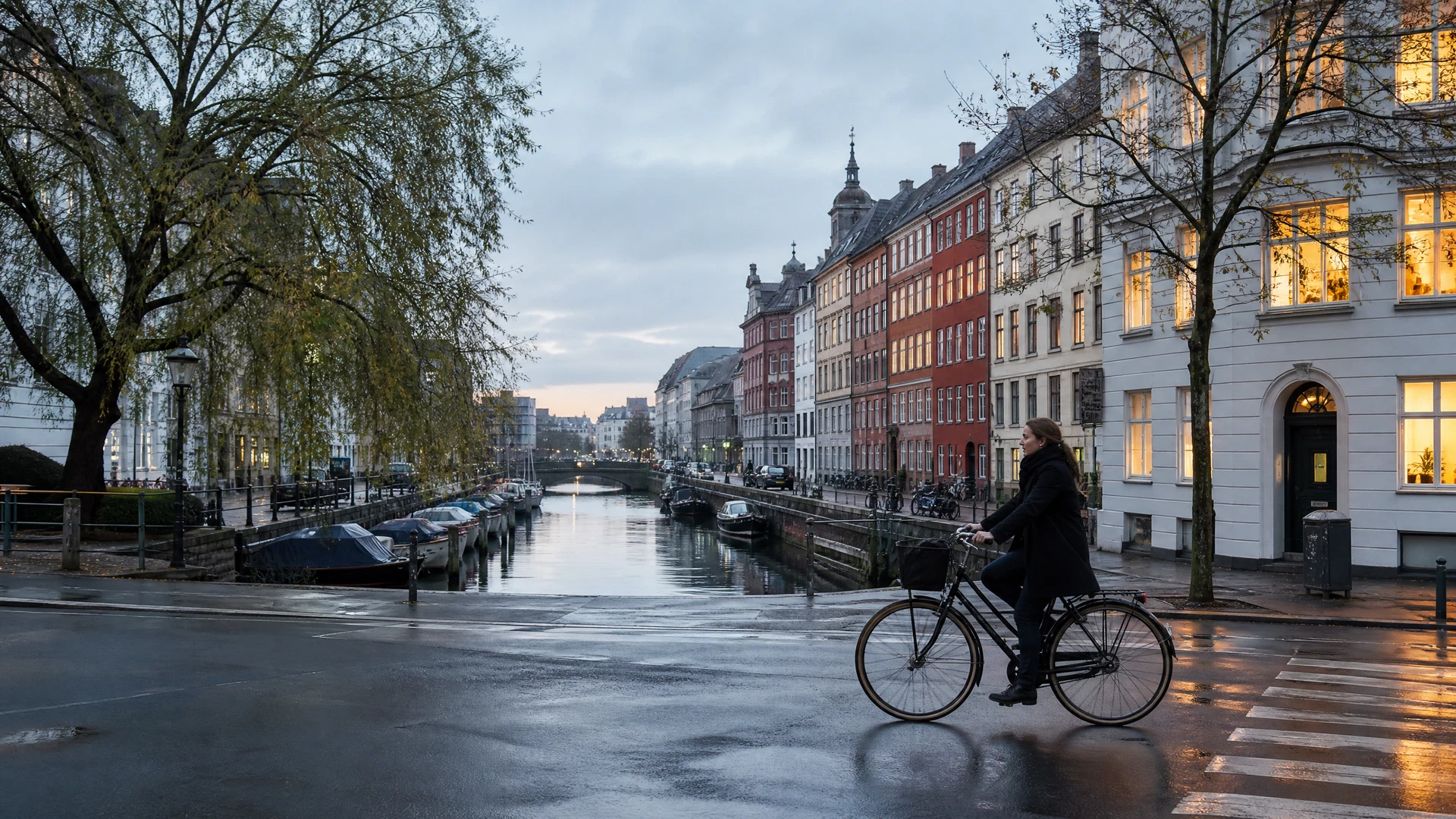
Copenhagen does not simply exist; it breathes in a rhythm dictated by the soft hum of bicycle tires and the gentle lapping of harbor waves. As the sun dips below the horizon during late summer, the city enters the 'Blue Hour,' a state where modern architecture softens against the pastel hues of historic townhouses. This urban fabric is a masterclass in 'Copenhagenization,' a philosophy pioneered by Jan Gehl that places the human experience at the center of all design. By prioritizing cyclists and pedestrians, the city fosters a profound sense of social trust and equity. Walking through the streets, one feels an invitation to slow down and participate in a collective experiment in civilized living, where the environment is perfectly tuned to the pace of a person on foot.
Venturing north into Nørrebro, the city reveals its most eclectic face. This neighborhood is a vibrant tapestry anchored by the artisanal spirit of Jægersborggade, a cobblestone sanctuary for independent ceramicists and organic bakeries. The air is thick with the scent of freshly baked sourdough and the low murmur of neighbors catching up on stoops. Nearby lies Superkilen, a surreal urban park that celebrates diversity through curated artifacts from around the world, ranging from Moroccan fountains to Japanese swings. In Nørrebro, the 'wistful ink' of Copenhagen’s history is overwritten with the bold, colorful strokes of a modern, inclusive community. It is a place that refuses to be defined by a single narrative, instead embracing the grit and creativity of its residents to create a landscape that feels both alien and intimately familiar.
Crossing the water into Christianshavn, the atmosphere shifts toward a contemplative, maritime nostalgia. Established in the 17th century, this district is defined by its network of canals and the imposing, spiraling spire of the Church of Our Saviour. The houses here, painted in deep ochres and burnt siennas, lean against one another as if sharing secrets from centuries past. To walk along the quays is to step back in time, yet the presence of sleek houseboats reminds you that Copenhagen never truly stands still. The canals are the city’s arteries, carrying the reflections of the sky and the history of a seafaring nation. There is a quiet dignity to Christianshavn, a sense that the past is a living part of the daily commute, where the chime of church bells mingles with the distant hum of the automated Metro.
Further out, where the city meets the industrial edge of the Oresund, lies Refshaleøen. Once a massive shipyard, it has been reclaimed by a new generation of creators and culinary pioneers. The transformation is miraculous; cavernous steel structures that once housed ocean-going vessels now host the massive art installations of Copenhagen Contemporary. Outside, the vibrant Reffen Street Food market hums with activity, as repurposed shipping containers serve up flavors from every corner of the globe. The juxtaposition of rusted industrial relics and cutting-edge creativity creates a tension that is uniquely Copenhagen. It is a place where the city’s blue-collar heritage meets its high-tech future, all while maintaining a laid-back vibe. The grit of the old shipyard provides a grounding texture to the ethereal beauty of the art, reminding visitors that functional spaces can be reborn as sites of wonder.
At the heart of the Danish experience is the concept of 'hygge,' a cultural theme of cozy contentment and communal well-being. Hygge is more than just comfort; it is the practice of creating a warm atmosphere and enjoying the good things in life with good people. In the winter, it is the soft glow of a lamp in a window; in the summer, it is a shared picnic on the grass of a public park. This pursuit of 'quiet, shared pleasures' is what makes Copenhagen feel so intensely human. The city’s design encourages these moments, from the wide wooden benches that line the harbor to the car-free zones that allow for uninterrupted conversation. Hygge is the emotional glue that holds the city together, fostering a sense of security and happiness that is palpable even to the most transient visitor.
The physical manifestation of this social trust is the city’s legendary cycling culture. In Copenhagen, the bicycle is a fundamental right, not just a lifestyle choice. The network of cycle superhighways allows residents to glide across the city with an efficiency that puts most subway systems to shame. This is 'Copenhagenization' in its purest form—a commitment to prioritizing the most vulnerable road users to create a safer, quieter, and more equitable urban environment. To watch the morning rush hour is to see a silent, graceful ballet of thousands of cyclists, from parents with toddlers in cargo bikes to executives in tailored suits. This dedication to human-scale urbanism reduces noise, cleans the air, and brings people into direct contact with their surroundings, proving that a city’s greatness is measured by the quality of its public spaces.
Modern infrastructure in Copenhagen seamlessly integrates technology with nature. The 24/7 automated Metro system whisks travelers from the airport to the city center in just twelve minutes, while the iconic yellow Harbour Bus offers a floating perspective on the city’s architectural evolution. During the 'white nights' of midsummer, when the sun barely sets, the city’s energy is boundless. The extended daylight provides a surreal, dreamlike quality to the landscape, allowing for midnight swims in the harbor baths. These wooden platforms, once part of a polluted industrial port, now serve as urban beaches where locals gather in clean, refreshing water. Whether it is the sleek lines of Islands Brygge or the rugged charm of Refshaleøen, these spaces represent a democratization of the waterfront, where people from all walks of life swim side-by-side, united by the simple joy of a summer dip.
As one reflects on a journey through Copenhagen, it becomes clear that the city’s magic lies in its ability to balance the historic with the cutting-edge without losing its soul. It is a place where 17th-century canals reflect the sleek, modern silhouette of the Royal Danish Opera House, and where industrial shipyards become the cradles of new culture. The 'Blue Hour' wistfulness that characterizes the city is not a longing for the past, but a quiet appreciation for the present and a hopeful gaze toward the future. Copenhagen is a city that has learned how to be modern without being cold, and how to be historic without being stagnant. It is a place that invites you to be a part of its story, leaving your own mark on its cobblestones and its waters. In the end, Copenhagen is a reminder of what a city can be when it is built for the people.