World city
The Gilded Echoes of Lisbon: A Journey Through Light and Longing
Perched on the edge of the Atlantic, Lisbon is a city where the past is not merely remembered but felt in the salt-tangled air and the haunting strains of Fado music. From the sun-drenched heights of Alfama to the creative pulse of the LX Factory, the Portuguese capital offers a sensory tapestry of azulejo-tiled facades, vintage yellow trams, and a profound sense of saudade that lingers long after the golden hour fades.
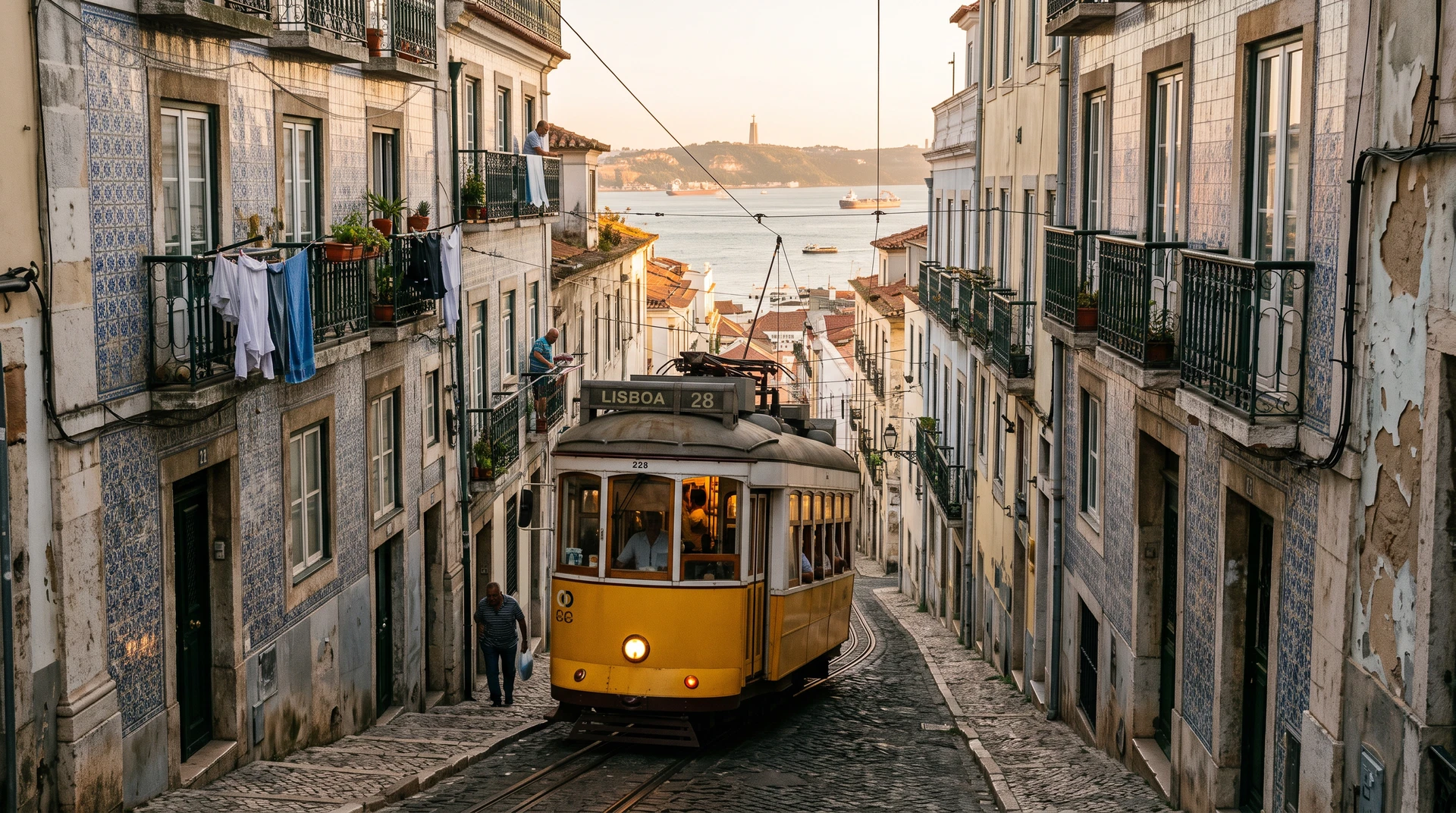
Lisbon is a city defined by its relationship with light, a luminous quality that bounces off white limestone pavements and the Tagus River with a brilliance unique to the edge of Europe. Known as the City of Seven Hills, the Portuguese capital is a vertical masterpiece where every steep ascent is rewarded with a panoramic vista stretching toward the Atlantic. To arrive here is to step into a living gallery of history, where the air carries the scent of roasting sardines and the rhythmic clatter of vintage trams. There is a beautiful weight to the atmosphere, a sentiment known as saudade—a soulful longing that permeates the streets. As the sun sets, casting a golden hue over terracotta rooftops, the city reveals its resilient, maritime soul.
The heart of this resilience beats in Alfama, the city’s oldest neighborhood and a labyrinthine survivor of the Great Earthquake of 1755. Walking through Alfama is an exercise in losing oneself as narrow cobblestone alleys wind upward in a maze of whitewashed houses and wrought-iron balconies. Life is lived in the open; laundry hangs like colorful banners between buildings, and neighbors converse across narrow gaps. The climb is arduous, but the reward is found at the Miradouro de Santa Luzia, a terrace draped in bougainvillea offering breathtaking views of the Tagus River. In Alfama, the past is a daily reality where Moorish influences still resonate in the architecture and the winding street patterns designed to provide shade from the relentless Iberian sun, allowing time to slow down for the patient visitor.
Lisbon’s visual identity is inextricably linked to the azulejo, the decorative ceramic tiles that form a shimmering skin over the city’s building facades. These tiles are more than mere decoration; they are a narrative device telling the story of the nation’s artistic evolution. From intricate Moorish geometric patterns to grand Baroque narrative scenes, azulejos are a ubiquitous presence, covering everything from grand palaces to humble metro stations. In the bright Atlantic sun, these tiles reflect light in a way that gives the city a constant, shifting glow, turning ordinary streets into open-air galleries. They also serve a practical purpose, protecting buildings from the salty river air. To walk through Lisbon is to witness a continuous tapestry of ceramic art, bridging the gap between a storied past and a vibrant present.
As evening falls, the atmospheric center of Lisbon shifts toward the taverns of Mouraria and Alfama, where the haunting strains of Fado drift through open doorways. Fado is the musical expression of saudade, a genre of urban folk music emerging from the city’s working-class docks in the 19th century. Typically performed by a solo singer accompanied by the twelve-stringed Portuguese guitar, Fado is a visceral experience of loss, fate, and the sea. In the dim light of a traditional casa de fado, the music creates an intimate bond between performer and audience, acknowledging the bittersweet nature of human existence. Mouraria remains an authentic place to experience this tradition, where voices are raw and emotions are unfiltered, reminding visitors that Lisbon’s beauty lies as much in its shadows as in its sunlit vistas.
Following the Tagus River westward leads to Belém, a district serving as a monument to Portugal’s Age of Discovery. From these shores, explorers like Vasco da Gama set sail to chart the unknown, bringing back wealth that transformed Lisbon into a global hub. The UNESCO-listed Jerónimos Monastery stands as a testament to this era, its Manueline architecture radiating imperial grandeur. Nearby, the Belém Tower rises from the water like a stone sentinel. Yet, for many, the most essential pilgrimage is to the Pastéis de Belém bakery. Serving secret-recipe custard tarts since 1837, the ritual of eating one, warm and dusted with cinnamon, is as much a part of the Lisbon experience as visiting any cathedral. This balance between the epic and the intimate encapsulates the city’s enduring charm.
While the historic center offers a deep dive into the past, the riverside district of Alcântara provides a glimpse into Lisbon’s modern evolution. The LX Factory, a sprawling industrial complex once dedicated to textiles, has been repurposed into a vibrant urban hub and a canvas for thriving street art. Within its brick walls, visitors find independent boutiques, avant-garde galleries, and innovative restaurants reflecting a contemporary Portuguese identity. The transition from industrial decay to creative regeneration is visible in every corner, from massive murals to quirky cafes. It is a place where the city’s youth and international creative community gather, proving that Lisbon is actively reinventing itself. The LX Factory shares the same spirit of resilience found in Alfama, offering a dynamic counterpoint to the city’s more traditional charms.
Navigating the City of Seven Hills is an adventure, and no experience is more iconic than a ride on Tram 28. These vintage yellow carriages have rumbled through the streets since the early 20th century, remaining the most picturesque way to traverse the steep gradients of the historic center. The journey is a sensory overload of screeching metal, ringing bells, and narrow misses with ancient walls as the tram navigates the tightest corners of Alfama. While the modern metro network, accessed via the Viva Viagem card, offers efficiency, the tram provides a connection to a bygone era. It is a mechanical relic that still serves a vital function, a reminder that in Lisbon, the old ways are often the best ways to understand the rhythm of the city.
To truly appreciate Lisbon, timing is essential. The city is most enchanting during the shoulder seasons of spring and early fall. During these months, the intense heat gives way to a pleasant warmth, and the light takes on a softer, more golden quality perfect for long walks. Spring brings blooming jacaranda trees, painting squares in lilac, while fall offers a crispness that makes the steep climbs manageable. Visiting during these periods allows for a more authentic experience, as the peak summer crowds have dissipated, leaving the miradouros and cafes to the locals. In these quieter moments, the city’s distinctive character—the blend of Atlantic breeze, historical weight, and contemporary energy—is most easily felt, allowing visitors to sink into the slow, deliberate pace of Lisboeta life.